



Turning 18 comes with a long list of new rights. You can vote, sign your own documents, and yes, you can also open a demat account and start investing in the stock market on your own name. No parent’s signature needed, no guardian standing over your shoulder approving every trade. If you are a student wondering whether this is actually allowed, the short answer is yes, and it is easier than most people think.
This guide walks you through the whole process in plain language, from what a demat account actually is, to the documents you will need, to the small mistakes that trip up first-time investors. If you already know which platform you want to use, you can open your demat account here and follow along with the steps below while you fill the form.
What Exactly Is a Demat Account?
Think of a demat account as a digital locker for your shares and other investments. Years ago, when someone bought shares, they got an actual paper certificate. People had to store these certificates carefully, and transferring them was slow and full of paperwork. A demat account got rid of all that. Now your shares sit in electronic form, the same way your money sits in a bank account instead of under your mattress.
A demat account by itself only holds your investments. To actually buy or sell shares, you also need a trading account, which works like the order-placing counter. Most brokers open both together in a single application, so you rarely have to think about this distinction while signing up.
So, Can Students Really Open One?
Yes. Age is the only real barrier here, not your occupation. Once you cross 18, you are legally allowed to open and run a demat account on your own, no different from someone with a full-time job. You do not need a salary slip, an offer letter, or your parents’ approval.
While filling the application, you will be asked to pick an occupation from a dropdown list. Just select “student” honestly and mention your actual income, even if it is pocket money or a small stipend. There is nothing to hide here, and being upfront makes the whole process smoother.
One thing worth knowing early: this income proof requirement only becomes stricter if you plan to trade in futures, options, or other high-risk segments later. For regular investing in shares, mutual funds, or ETFs, students usually sail through without needing to show any income documents at all.
What About Students Under 18?
If you are reading this on behalf of a younger sibling or you yourself are still a minor, a demat account can still be opened, but it works differently. A parent or legal guardian has to open and operate it on the minor’s behalf until the child turns 18. The minor technically owns the investments, but every buy or sell decision is made by the guardian. Once the child becomes an adult, the account gets converted into a regular one under fresh KYC.
Documents You Will Need
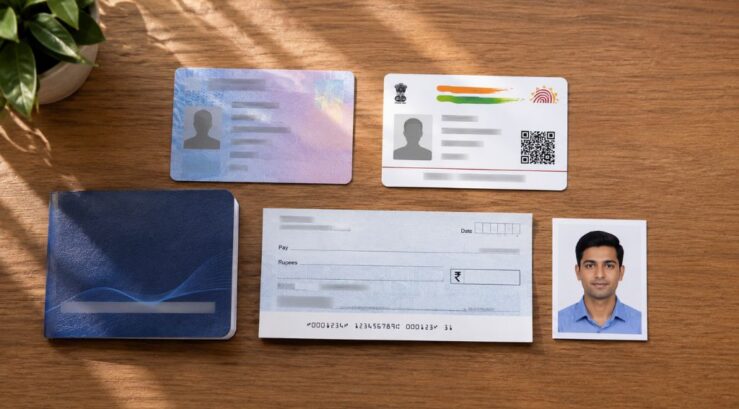
Keep these ready before you start the application, so you are not scrambling halfway through:
- PAN card, which is compulsory for every applicant
- Aadhaar card or another accepted identity and address proof
- A bank account in your own name, with a statement or a cancelled cheque
- A working mobile number and email address, since most steps involve OTP verification
- A specimen signature
- A live photo or short video for identity verification
- Nominee details, or a signed declaration if you choose to skip adding one
Also Read: Best Stocks to Buy This Month
The exact list can vary slightly depending on which provider you pick, but this covers what almost every broker will ask for.
Step-by-Step: How to Actually Open the Account
Step 1: Confirm you tick the basic boxes. You need to be at least 18, hold a valid PAN, and be able to finish the KYC process using your own documents.
Step 2: Pick a depository participant. In India, you cannot open a demat account directly with the depositories, CDSL or NSDL. You have to go through a registered depository participant, usually a bank or a broking firm. Take a few minutes to compare the annual charges, the platform’s ease of use, and how good their customer support is before you commit.
Step 3: Keep your documents ready. Gather everything from the list above so the form filling goes quickly without gaps.
Step 4: Fill the online application. Enter your name, date of birth, occupation as “student,” a realistic income range, your bank details, and nominee information carefully. A small typo in your name compared to your PAN can delay the entire process.
Step 5: Complete KYC and verification. This usually means verifying your mobile number and email with an OTP, uploading or e-verifying your Aadhaar, and completing a quick live photo or video check.
Step 6: E-sign the form. Most providers let you finish this using Aadhaar-based e-signing, so you rarely need to print or courier anything.
Step 7: Wait for activation. Once your details are verified, you will get your client ID and demat account number through your registered email or SMS. This can take anywhere from a few hours to a couple of days.
Step 8: Double-check everything. Before you add money, log in and confirm your name, PAN, bank account, nominee status, and which trading segments are active. Fixing errors before you start investing is far easier than fixing them after.
Related Article: Best Mutual Funds Plans For College Students
Understanding the Charges
A demat account rarely comes with zero charges, no matter what the advertisements say. “Free” usually means the account-opening fee is waived, not that the account costs nothing forever. Before you settle on a provider, look closely at:
- Annual maintenance charges, commonly called AMC
- Brokerage or per-transaction fees
- Depository participant charges on each sell transaction
- Charges for pledging or unpledging shares
- Fees for physical statements or call-and-trade orders
- Charges if you ever want to close or transfer the account
A useful thing to check as a student is your eligibility for a Basic Services Demat Account, often shortened to BSDA. This is a lighter category meant for investors with smaller holdings, and it can bring your AMC down to zero up to a certain holding value. Ask your provider about the current limit before you apply, since these thresholds get revised occasionally.
Getting Your Money Habits Right Before You Invest
Opening the account is the easy part. What you do after is what actually matters. A few basics worth sorting out first:
Decide how much you can genuinely afford to invest without touching money meant for tuition, rent, food, or emergencies. College life already comes with tight budgets, so this is not a step to skip.
Be clear about why you are investing. Is it to learn how markets work, to build a habit early, or to grow long-term wealth? Your answer will shape whether you lean toward simple index funds or individual stocks.
Figure out your time horizon. Money you might need in six months should not sit in volatile stocks. Money you will not touch for five or ten years can handle more ups and downs.
Be honest about how much of a dip you can watch without panicking and selling everything. Every investor, no matter how experienced, deals with red days. Knowing your own comfort level in advance saves you from making decisions out of fear later.
Learn Before You Trade Actively
A demat account is only a holding facility. It does not make decisions for you, and it definitely does not guarantee profits. Before jumping into frequent trading, spend time understanding the difference between a market order and a limit order, what delivery-based investing means, why diversification matters, and how dividends and taxes on your gains actually work.
There is no shame in starting small. Many experienced investors will tell you their first year in the market was mostly about learning what not to do.
Keeping Your Account Safe
Since your demat account holds real financial value, treat it the way you would treat your bank account:
- Turn on two-factor authentication wherever it is offered
- Use a password you have not reused anywhere else
- Never share OTPs or your trading password with anyone, no matter how convincing the call sounds
- Read every SMS and email alert about debits from your account
- Keep your registered mobile number and email updated at all times
- Download your account statements every few months and actually glance through them
- Report anything unusual to your provider immediately
Related Article: How Your Health Insurance Needs Change from 25 to 60
Watch Out for “Too Good to Be True” Promises
If someone online promises guaranteed returns, risk-free trading, or a “sure-shot” tip that will double your money, treat it as a red flag rather than an opportunity. Genuine investing involves risk, always. Never transfer money to a stranger’s personal account based on a tip you saw on social media, no matter how many followers they have.
Common Mistakes First-Time Student Investors Make
A few patterns show up again and again among people opening their first demat account, and knowing about them in advance can save you some frustration.
Rushing the KYC details. A mismatched name, an old address on file, or a typo in your PAN number is the single biggest reason accounts get stuck in verification. Take an extra two minutes to check every field before submitting.
Confusing “free” with “no cost.” As covered earlier, a waived opening fee does not mean the account runs free forever. Skipping the fine print on annual charges is a common regret.
Activating segments you do not need. Some providers bundle in access to futures and options trading by default. Unless you plan to use these immediately and understand the risks, there is no reason to switch them on just because the option exists.
Investing money meant for something else. Tuition fees, rent, and emergency funds should never end up in the stock market on a whim, even if a stock looks tempting that week.
Chasing tips instead of building understanding. It is far more valuable to spend a month reading about how markets work than to blindly follow a stranger’s stock recommendation on social media. Tips fade; understanding stays with you.
Ignoring the nominee section. It feels unnecessary at 19 or 20, but adding a nominee, or formally opting out, takes two minutes and avoids complications for your family down the line.
Forgetting to review the account periodically. At least once a year, log in and check your charges, your active segments, your nominee details, and whether your account security settings are still up to date. Accounts that sit untouched for years are also the ones most likely to have outdated information on file.
None of these mistakes are dramatic on their own, but avoiding them from day one puts you ahead of a lot of first-time investors.
A Quick Word on Taxes
Profits from selling shares, dividends you receive, and gains from mutual funds can all have tax implications depending on how long you held the investment and how much you earned. As a student, your total income might be small enough that this does not create an immediate tax bill, but it is still worth keeping your contract notes and account statements organised. A quick chat with a tax professional once a year, or even a knowledgeable family member, can save you from surprises.
Frequently Asked Questions
Can a student open a demat account without a job? Yes. There is no employment requirement for a basic account. Just select “student” as your occupation and mention your actual income honestly.
Is a PAN card compulsory? Yes, a PAN is required for every applicant, no exceptions.
Can students use their own savings account? Yes, as long as it is active and in their own name, and the details match their PAN and demat application.
Is there a minimum balance requirement for a demat account? No minimum cash balance is required, though you will still owe annual maintenance and transaction charges regardless of balance.
Can students invest in mutual funds and ETFs, not just stocks? Yes. These are often a gentler starting point for students since they spread risk across many companies instead of relying on a single stock.
Can a student open more than one demat account? Yes, individuals can hold multiple demat accounts across different providers, though each one comes with its own set of charges.
The Bottom Line
If you are 18 or older, there is nothing stopping you from opening a demat account and taking your first real step into investing. The paperwork is lighter than most students expect, and the whole process can usually be finished from your phone in a single sitting. What matters more than how quickly you open the account is how thoughtfully you use it afterward. Start small, keep learning, protect your login details, and let time do the heavy lifting on your investments.
Rules around KYC and demat accounts do get revised from time to time, so it helps to follow coverage from established financial news outlets. Business Standard has reported on the regulator’s recent push to simplify the KYC framework, and has a clear breakdown of how the process differs for accounts opened on behalf of minors, which is a useful comparison if you are helping a younger sibling get started too.