


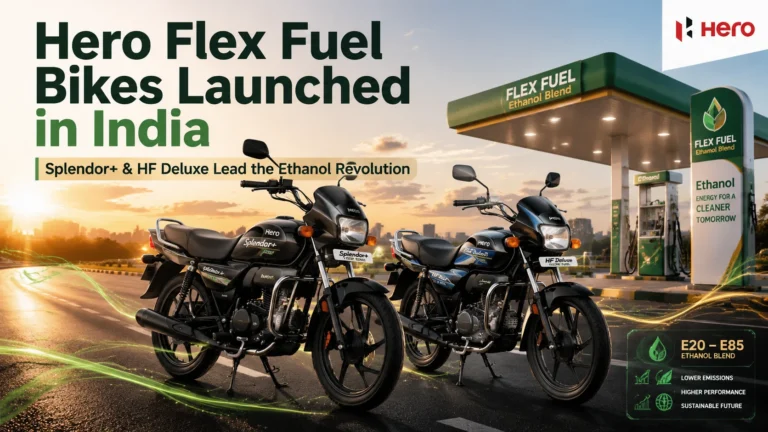
Hero MotoCorp has just made one of its more significant moves in recent years, launching flex-fuel versions of two motorcycles that between them have defined Indian commuter riding for decades. The Splendor+ Flex Fuel and HF Deluxe Flex Fuel are now official, and the company has confirmed that flex-fuel technology is heading across its entire lineup over time.
The timing is deliberate. India’s push toward ethanol-blended fuels has been gathering momentum, and with E85 fuel now available at a lower price than conventional E20, the economics of ethanol-powered riding are starting to make real sense for everyday commuters.
Hero Splendor+ Flex Fuel and HF Deluxe Flex Fuel Prices
| Model | Price (Ex-showroom, Delhi) |
|---|---|
| Hero HF Deluxe Flex Fuel | ₹72,792 |
| Hero Splendor+ Flex Fuel | ₹82,710 |
Sales begin in Delhi and selected parts of Maharashtra from July, with a wider national rollout to follow.
What Makes These Bikes Different?
The core capability is the ability to run on any ethanol blend from E20 right up to E85 — meaning fuel that’s up to 85 percent ethanol and just 15 percent petrol. That’s a significant jump from what most motorcycles on Indian roads can handle today.
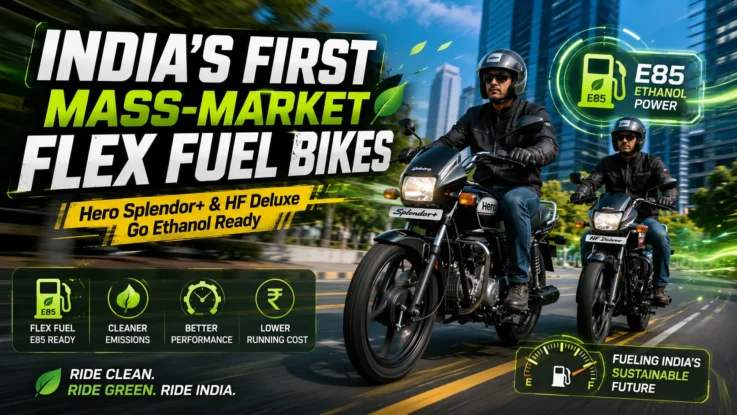
To make the engines compatible, Hero has revised the ECU calibration, upgraded the fuel pumps, added a secondary fuel filter, and made other fuel-system improvements designed to handle ethanol-rich fuel reliably over time. These aren’t cosmetic changes — they’re the kind of engineering work that makes the difference between a bike that can technically run on E85 and one that does so consistently and safely.
Engine and Performance
Both motorcycles use Hero’s familiar 97.2cc single-cylinder engine. Running on E85, the engine delivers around 8.6 hp and 8.3 Nm of torque — numbers that are suited to exactly what these bikes are used for daily: city commuting, short runs, and reliable everyday transportation.
Hero hasn’t chased power figures here. The priority has been maintaining the reliability and fuel efficiency that have made the Splendor and HF Deluxe trusted choices for millions of Indian riders over many years.
Also Read: 5 Upcoming Flex Fuel Cars in India That Could Be Introduced Anytime Soon
Why Flex Fuel Matters
Ethanol comes from agricultural sources — sugarcane, biomass — rather than imported crude oil. For India, which imports a significant portion of its petroleum needs, every liter of domestic ethanol used instead of imported petrol has a direct economic benefit.
Beyond the energy security angle, ethanol reduces vehicle emissions, potentially lowers running costs for riders, and creates demand for agricultural produce. The government has been pushing this direction for some time, and the introduction of E85 at a price below conventional blended fuel makes the argument for flex-fuel vehicles considerably more straightforward than it was even a year ago.
Hero’s Bigger Flex Fuel Vision
The Splendor+ and HF Deluxe are the starting point, not the destination. Hero has indicated that flex-fuel technology will be rolled out progressively across its full range — from entry-level commuters through to premium models. That kind of commitment from India’s largest two-wheeler manufacturer carries significant weight for the broader market.
Growing Ethanol Infrastructure
One of the legitimate concerns about flex-fuel adoption has been whether E85 pumps would actually be available where people need them. The government has addressed this directly, announcing plans for around 500 ethanol dispensing stations by the end of 2026 and a much larger network expansion beyond that.
As availability improves, flex-fuel motorcycles shift from being a forward-looking option to being a practical everyday choice for a large number of riders.
Similar Read: Flex-Fuel Vehicles in India
What Riders Can Expect Next
The Splendor+ Flex Fuel and HF Deluxe Flex Fuel combine the commuter characteristics that have made these models so widely trusted with technology that points toward where Indian motorcycling is heading. For riders already on these platforms, the transition requires no learning curve — the bikes ride the same, just with more fuel flexibility.
As more models follow and ethanol infrastructure continues growing, what starts with two iconic names could gradually reshape how the country’s two-wheeler market thinks about fuel.