


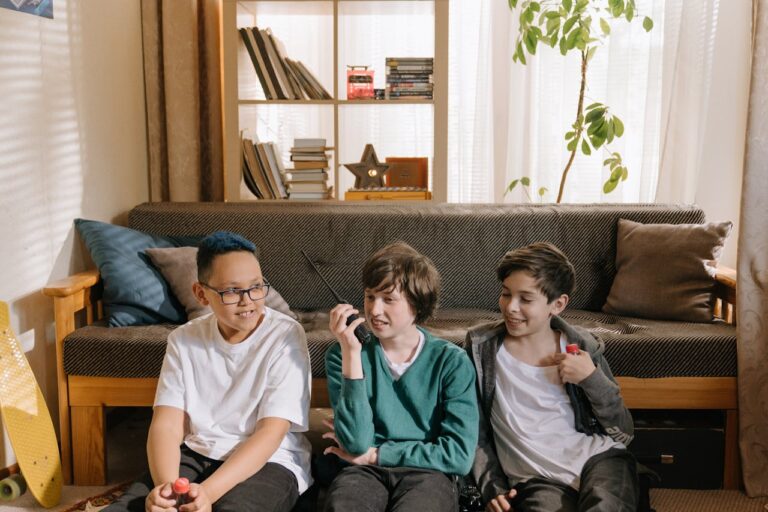
Family trips always begin with confidence.
“We’ll stay together.”
“Everyone has their phone, right?”
“It’s not that crowded.”
Then fifteen minutes later, somebody disappears inside a theme park gift shop, one kid runs toward a snack stand without warning, and the family group chat somehow becomes less useful than shouting into the wind.
Modern parenting, apparently, is just low-level event coordination with snacks.
That’s part of why the walkie talkie has quietly become such a useful tool for family safety and coordination. Not because families suddenly want to roleplay as security teams, but because instant communication solves problems before they become stressful.
And honestly, families create a surprising number of communication problems.
Phones Aren’t Always the Reliable Solution People Assume
Smartphones are great. Until they aren’t.
Battery dies. Signal disappears. Notifications get ignored. Kids forget to answer calls because they’re busy doing literally anything else. Large crowds overload cellular networks. Outdoor areas suddenly have zero coverage for reasons nobody fully understands.
A walkie talkie removes many of those issues immediately.
Instead of depending entirely on cell service, families can communicate instantly with the push of a button. No waiting for texts. No wondering whether someone saw a missed call. No awkward “where are you?” messages sent into digital oblivion.
Just direct communication when people actually need it.
Which turns out to be more often than expected.
Crowded Places Become Much Easier to Manage
Theme parks. Festivals. Campgrounds. Sporting events. Airports. Outdoor fairs.
Large public spaces have a unique talent for scattering families within minutes.
Kids move fast. Teenagers wander off confidently despite having zero sense of direction. Parents spend half the day counting heads like overwhelmed tour guides trying not to lose anyone near the food court.
A walkie talkie helps simplify coordination enormously in crowded environments.
Family members can check in instantly, communicate meeting points, share updates, and reconnect quickly without relying on overloaded phone networks. That immediate communication reduces stress for everyone involved, especially parents pretending not to panic internally while scanning crowds.
And yes, every parent knows exactly that feeling.
Outdoor Safety Gets a Huge Boost
Outdoor trips are where reliable communication becomes especially important.
Camping trips, hiking trails, amusement parks, road trips, and beach vacations often involve large areas where family members naturally spread out. Kids explore. Adults set up camp. Someone inevitably takes the “quick shortcut” that turns into an accidental twenty-minute detour.
A walkie talkie allows families to stay connected even when cellular service becomes unreliable or unavailable entirely.

That’s a major safety advantage.
Parents can communicate with children nearby, coordinate with other adults in the group, and respond quickly if plans change unexpectedly. In unfamiliar outdoor environments, immediate communication creates reassurance that smartphones alone don’t always provide.
Especially when the nearest cell tower appears to be located somewhere in another century.
Battery Life Actually Helps Reduce Stress
Family trips already involve enough logistical headaches.
Chargers get forgotten. Batteries drain faster during travel. Kids somehow turn 100% battery into 4% within an hour while claiming they “barely used it.” Modern family coordination often feels entirely dependent on keeping devices alive.
Walkie talkie devices simplify part of that problem because they focus primarily on communication.
Many systems offer long-lasting battery performance capable of lasting entire outings, camping weekends, or long travel days without constant recharging. That reliability becomes incredibly valuable during outdoor activities where charging opportunities may be limited.
Because family vacations are stressful enough without everyone fighting over the only available charging cable in the car.
Simple Communication Works Best for Families
Complicated communication systems rarely survive family use for very long.
The beauty of a walkie talkie is its simplicity. Push button. Speak instantly. Hear response immediately. Even younger children can usually understand basic operation quickly, which makes communication easier across different age groups.
No apps to install. No passwords to remember. No scrolling through notifications trying to locate the right message thread.
Simple systems reduce confusion. And families produce enough confusion naturally already.
Modern Walkie Talkie Technology Is Far Better Than People Remember
A lot of adults still picture walkie talkies as toy-like plastic radios with terrible sound quality and static-filled conversations from childhood camping trips.
Modern systems evolved significantly.
Today’s walkie talkie technology often includes digital audio clarity, long-range communication, weather-resistant construction, GPS features, and expanded coverage capabilities that make them far more dependable for real-world family use.
Audio sounds clearer. Signals travel farther. Devices operate more reliably in crowded or outdoor environments where smartphones sometimes struggle.
Which makes them surprisingly practical for modern families.
Reliable Communication Creates Peace of Mind
Most family safety tools aren’t really about preparing for worst-case scenarios. They’re about reducing everyday stress.
Reliable communication helps parents coordinate more easily, keeps groups connected during travel, improves outdoor safety, and creates reassurance during busy or unfamiliar situations. That’s why the walkie talkie continues finding its way into family vacations, camping gear, theme park trips, and travel planning.
Because when communication becomes simple and dependable, families spend less time worrying about finding each other, and more time actually enjoying being together.