


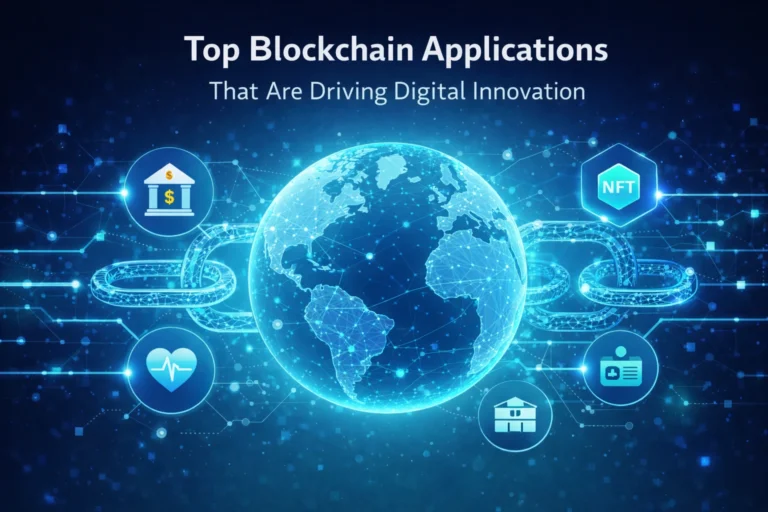
Blockchain applications are transforming how industries handle data, transactions, and digital trust. By using decentralized and tamper-proof ledgers, businesses can improve security, transparency, and efficiency without relying heavily on intermediaries.
From finance and healthcare to supply chains and digital identity systems, blockchain applications are expanding rapidly across sectors. These technologies help automate processes, reduce fraud risks, and create more reliable digital ecosystems for both organizations and individuals.
Table of Contents
Quick Overview of Top Blockchain Applications
| Application Area | Key Benefit | Industry Impact |
|---|---|---|
| DeFi & Payments | Faster transactions | Banking and finance |
| Supply Chain | Transparency | Logistics and retail |
| Healthcare Records | Data security | Medical sector |
| Smart Contracts | Automation | Legal and finance |
| Digital Identity | Fraud reduction | Online verification |
| Asset Tokenization | Liquidity | Real estate and art |
| Government Sector | Transparency | Public administration |
Top 7 Blockchain Applications
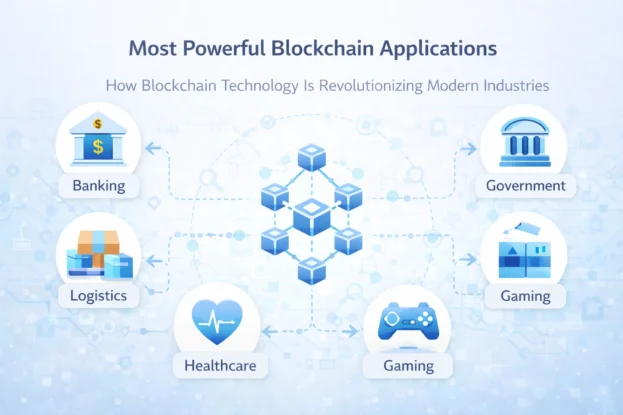
Blockchain applications are transforming industries by offering secure, transparent, and decentralized digital systems. These applications reduce reliance on intermediaries while improving trust, automation, and data security across sectors.
Today, blockchain applications are widely used in finance, healthcare, logistics, identity management, and government services. Their ability to create tamper-proof records makes them valuable for businesses and individuals alike.
1. Financial Services and DeFi
Decentralized finance is one of the fastest-growing sectors of blockchain applications. It enables lending, borrowing, trading, and payments without traditional banks.
Cross-border payments become faster and cheaper through blockchain technology. Many fintech companies are adopting these systems for efficient financial services.
2. Supply Chain and Logistics
Supply chain management is another important area where blockchain applications improve transparency. Businesses use blockchain to track goods from origin to delivery.
This reduces fraud, improves product authenticity, and strengthens trust between suppliers and consumers. It also helps in compliance and quality assurance.
3. Healthcare Data Management
Healthcare providers increasingly rely on blockchain applications for secure patient data storage. Blockchain allows authorized sharing while preventing unauthorized access.
Also Read: Best Stocks to Buy This Month
This improves interoperability between hospitals and clinics. It also supports research by safely sharing anonymized health data.
4. Smart Contracts Automation
Smart contracts are self-executing agreements coded on blockchain networks. These applications of blockchain automate transactions once predefined conditions are met.
They reduce paperwork, administrative costs, and human error. Industries like insurance, legal services, and finance benefit greatly from automation.
5. Digital Identity and Security
Digital identity verification is becoming safer through blockchain applications. Users can control their personal data while reducing identity theft risks.
Blockchain-based identity systems simplify online verification processes. Governments and businesses are exploring these solutions for secure authentication.
6. Asset Tokenization and NFTs
Tokenization converts real-world assets into digital tokens stored on blockchain. Many blockchain applications support fractional ownership of real estate, art, and collectibles.
NFT technology also enables verifiable ownership of digital assets. This has expanded into gaming, entertainment, and creative industries.
7. Government and Public Sector Use
Governments are exploring applications of blockchain to improve transparency in public records. Applications include land registries, voting systems, and public documentation.
Blockchain helps reduce corruption and ensures reliable record-keeping. Many countries are testing pilot projects in this area.
Also Read: Top 14 Best Trading Apps in India for Beginners and Experts
Emerging Trends in Blockchain Applications
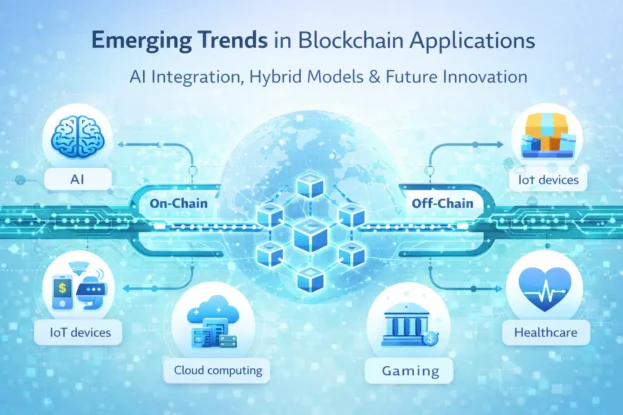
Modern applications in blockchain technology are increasingly combining on-chain security with off-chain performance. Hybrid models provide a better user experience while maintaining trust.
Integration with artificial intelligence, IoT, and cloud technology is also expanding. These combinations create new opportunities for innovation.
Benefits of Blockchain Technology
Security is one of the biggest advantages of blockchain systems. Decentralized ledgers make data tampering extremely difficult.
Transparency improves accountability across industries. Efficiency increases as automated systems reduce manual processes.
How Businesses Are Adopting Blockchain
Companies use blockchain to improve supply chains, payments, and data management. Financial institutions particularly invest heavily in blockchain innovation.
Startups are also building new services using decentralized platforms. This trend continues expanding globally.
Future Scope of Blockchain Applications
The future of applications of blockchain looks promising with increased enterprise adoption. Innovations in cross-chain interoperability and scalability are improving usability.
Industries like finance, healthcare, and public administration are expected to see stronger blockchain integration. These developments will continue shaping digital transformation worldwide.