


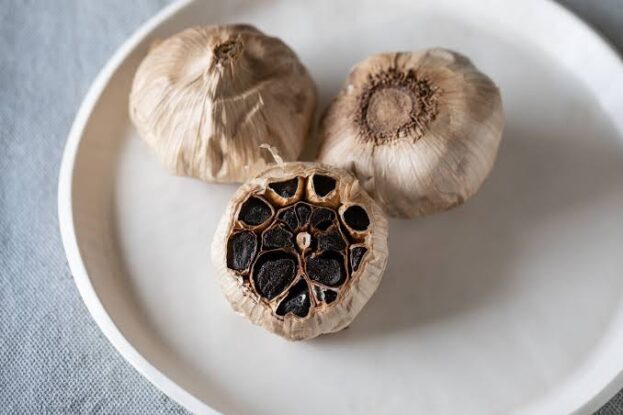
People’s interest in fitness and healthy eating is increasing steadily. Nowadays, many people experiment with the food items available at home to improve their health. Garlic has always been an important part of our diet. While most people are familiar with white garlic, black garlic has recently started gaining attention. It is believed to help improve metabolism in the body.
Black garlic is completely different from regular garlic. It is prepared by keeping normal garlic under controlled heat and humidity for a certain period. Due to this process, chemical changes take place, similar to fermentation. As a result, the cloves of white garlic turn black and develop a soft, sticky texture.
Black Garlic vs White Garlic
Doctors explain that the strong smell and antibacterial properties of white garlic come from a compound called allicin. However, allicin can sometimes be harsh on the stomach and may cause digestive discomfort.
On the other hand, during fermentation, allicin in black garlic is converted into powerful antioxidants that are easily absorbed by the body. One of the most important compounds formed is S-allyl cysteine (SAC), which has several health benefits.
Also Read-: Why You Should Eat Garlic in Winter
Experts say that SAC found in black garlic is absorbed by the body much more easily than the compounds found in raw garlic. This is why many people include black garlic in their diet for its antioxidant properties.
Black garlic is also easier to digest compared to white garlic and is gentler on the stomach. Due to these qualities, many people consume it daily as part of their meals. It is also easily available in the market.
What Do Experts Say?
According to experts, black garlic has anti-inflammatory properties and helps strengthen the immune system. It is also beneficial for heart and liver health. Some studies suggest that it may help the body fight serious diseases, including cancer.
Who Should Avoid Black Garlic?
People who have thin blood or are taking blood-thinning medicines should consume black garlic in limited amounts. Those with sensitive stomachs or frequent digestive issues should also avoid it. Most importantly, no food should be added to your diet just because it is trending. Always consult a doctor or nutritionist before including any new food item in your daily diet.