


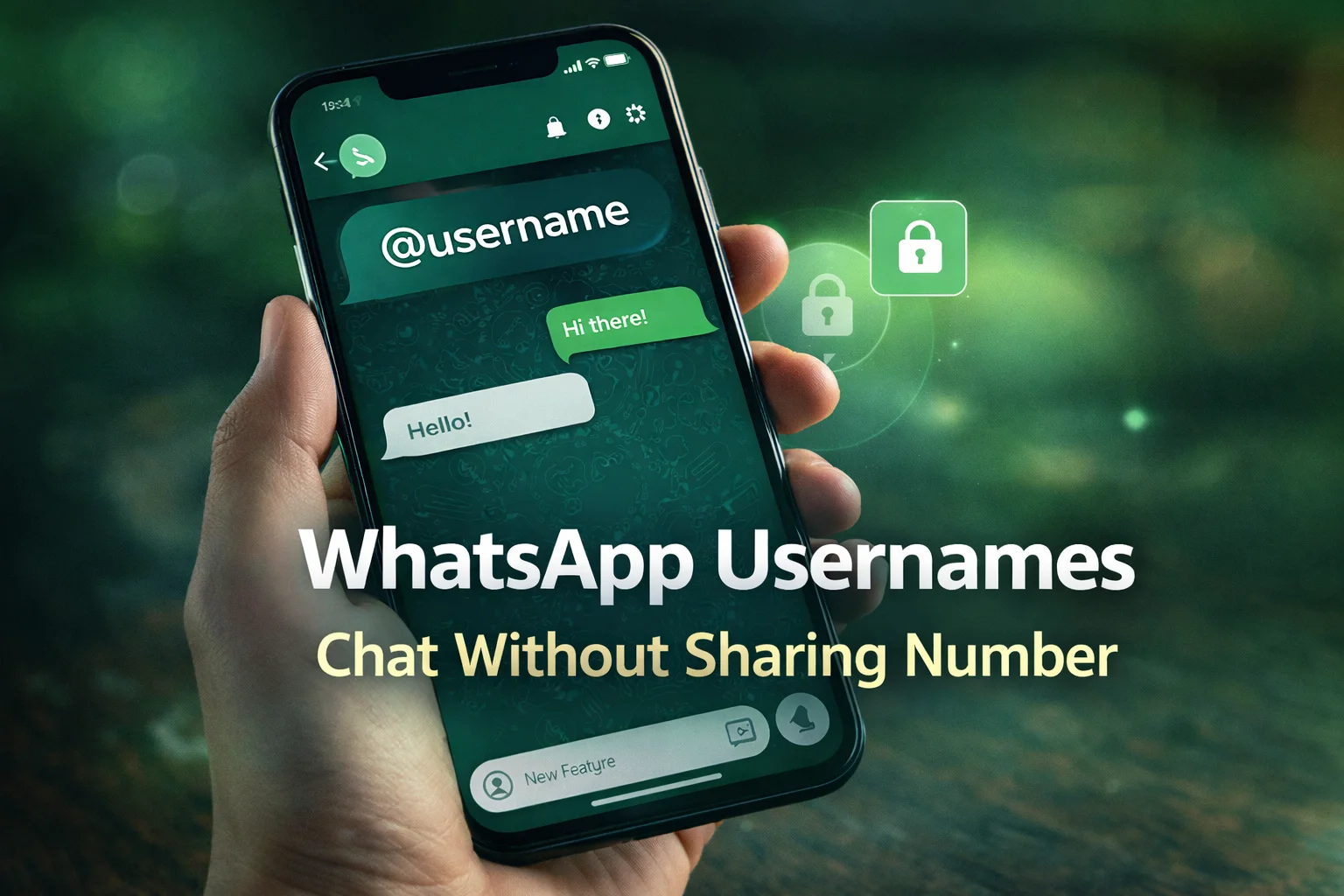
If you’ve ever felt slightly uncomfortable sharing your phone number with someone you barely know just to have a conversation on WhatsApp, that awkward situation is about to become a thing of the past.
WhatsApp is rolling out usernames. Instead of handing over your personal number every time you want to connect with someone, you’ll be able to share a username instead. It’s a change that sounds simple on the surface, but it’s actually one of the biggest shifts to how WhatsApp has worked since it launched.
Here’s the full breakdown.

Why Is WhatsApp Doing This Now?
For over a decade, your phone number has been your WhatsApp identity. Want to message someone? You need their number. Want someone to message you? They need yours. There’s no way around it.
That’s always created a privacy problem that WhatsApp has quietly carried for years. Your number is personal information — it can be used to find you on other platforms, spam you, add you to groups without permission, or, in worst cases, expose you to harassment. A security issue highlighted by Wired showed how the phone number system created vulnerabilities that affected enormous numbers of users.
Meanwhile, apps like Telegram and Instagram have had username systems for years. On those platforms, you can connect with people without them ever knowing your phone number. WhatsApp — despite being the more widely used messaging app globally — has been the laggard on this front.
That’s changing now. A global rollout is expected around mid-2026, likely starting in June, and a limited beta is already live for select users.
How It Actually Works
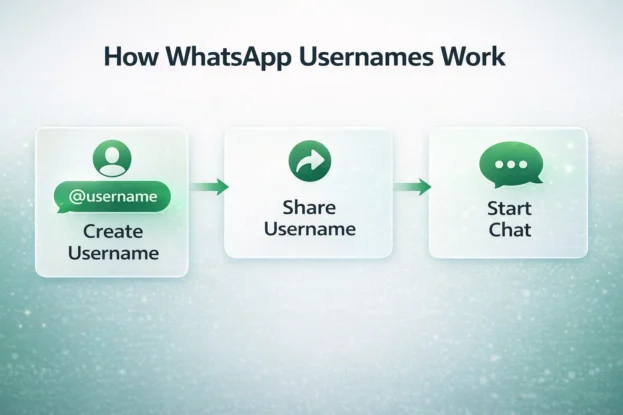
The concept is straightforward. You create a unique username — something like @yourname or @yourname25 — and that becomes a way for people to find and message you on WhatsApp.
Instead of saying “here’s my number,” you can say “find me on WhatsApp — I’m @username.” The person can search for that handle and start a conversation without your phone number ever entering the picture.
Your number is still required to register and maintain your WhatsApp account — that’s not going away. But it becomes a backend piece of information rather than something you have to hand out every time you want to communicate with someone new.
The Rules for Usernames
WhatsApp has set some basic guidelines for how usernames need to be structured. They’re fairly standard across social platforms:
- Between 3 and 35 characters long
- Must contain at least one letter
- Can include numbers, periods, or underscores
- Cannot start with “www” or look like a website domain
Each username has to be unique — no two accounts can share the same one. First come, first served, which means popular or simple names will get taken quickly once the full rollout happens. If you have a particular username in mind, it’s worth moving early.
The Username Key — An Extra Layer of Security
One particularly interesting detail is something WhatsApp is reportedly calling a “username key” — a 4-digit code that works alongside your username.
The idea is that to start a conversation with you, someone would need both your username and this key. It adds a second layer of protection beyond just the handle itself, which helps prevent unwanted contact from people who might stumble across your username or try common variations.
It’s an optional feature, but for anyone who wants tighter control over who can reach them, it’s a useful addition.
What This Actually Changes Day to Day
The most immediate practical change is in situations where you need to give someone contact details but aren’t comfortable sharing your number.
Think about joining a large WhatsApp group for a neighbourhood, a school, or a workplace event. Right now, everyone in that group can see your phone number unless you’ve specifically locked down your privacy settings. With usernames, you’d just share your handle — your actual number stays hidden even in group settings.
Same for business interactions, online communities, or connecting with people you’ve just met. You can engage without handing over a piece of personal data you can’t take back.
For businesses, this is a useful shift too. Brands and creators can establish recognisable usernames that make them easier to find on WhatsApp — similar to how they maintain consistent handles across Instagram and Twitter. It makes WhatsApp a more practical platform for customer-facing communication.

How WhatsApp Compares to the Competition
| Feature | WhatsApp (2026) | Telegram | |
|---|---|---|---|
| Username support | Yes — rolling out now | Yes | Yes |
| Phone number required | Yes — for signup only | Yes | No |
| Privacy control | High | High | Medium |
| Message without sharing number | Yes | Yes | Yes |
WhatsApp is catching up, but its scale means the impact here is potentially much larger than on any other platform. WhatsApp has over two billion users. When a privacy feature like this rolls out across a user base that size, it meaningfully changes how a significant portion of the world’s online communication works.
The Honest Concerns Worth Raising
No feature this significant is without complications, and it’s worth being clear-eyed about a few things.
Username availability is going to be competitive. Simple, clean usernames — first names, common words, brand names — will be claimed fast once this opens up fully. If you want something specific, don’t wait.
Impersonation is a real risk. Usernames without the natural friction of phone number verification make it easier for bad actors to create handles that look like they belong to someone else — a brand, a public figure, even a person someone knows. WhatsApp will need solid verification and reporting systems to stay ahead of this.
Adoption will take time. A lot of WhatsApp’s user base — particularly older users or people in markets where WhatsApp is used primarily for family communication — is deeply accustomed to the phone number model. Getting people to actually use and share usernames rather than numbers is a behavioural shift that won’t happen overnight.
Also Read: Claude Mythos AI: The Powerful Model That Could Hack Any Software
When Can You Get It?
Beta testing is already underway for a select group of users. If you’re on the WhatsApp beta programme, keep an eye on your settings for the username option — it may already be available or arriving soon.
For everyone else, the full global rollout is expected around June 2026. WhatsApp is taking a phased approach — rolling it out gradually rather than switching everything on at once — which makes sense given the scale of the platform and the number of things that need to work smoothly before billions of people start using it.
Why This Update Feels Important and What to Watch Next
This is one of those updates that seems minor until you think about what it actually changes. Your phone number has always been the price of entry for WhatsApp. That felt fine when WhatsApp was just for messaging people you already knew. In 2026, when people use it for business, communities, customer service, online groups, and a dozen other things — the phone number requirement has become a genuine friction point.
Usernames solve that in a clean and intuitive way. You still have the end-to-end encryption, the reliability, and the enormous reach that WhatsApp offers. You just no longer have to give everyone your personal number to use it.
It’s overdue. But it’s coming. And when it does, the way a lot of people use WhatsApp is going to quietly shift in a positive direction.