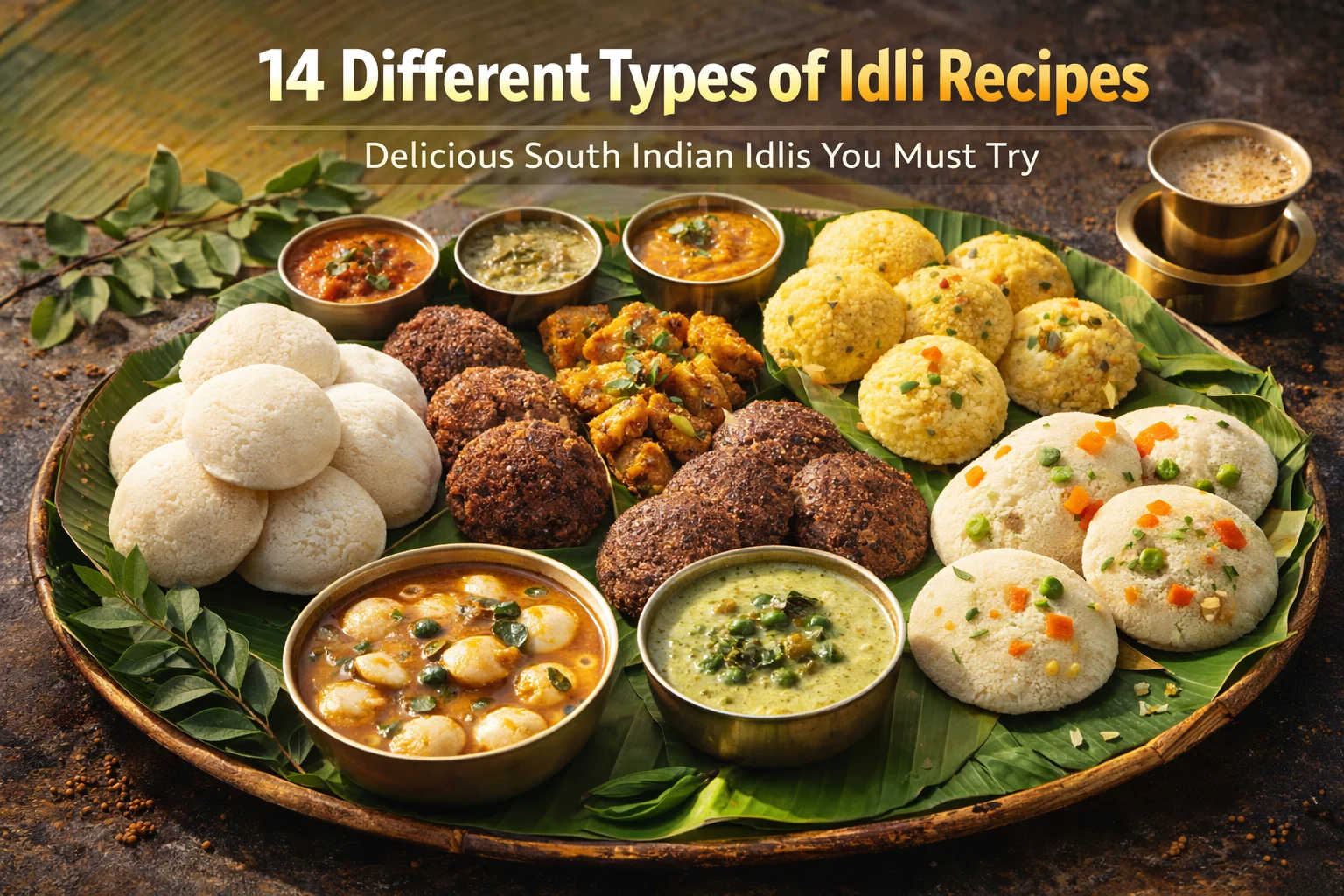
Idli is one of those foods that proves magic can happen with just rice, lentils, and a little patience. This soft, fluffy South Indian dish has been feeding families for centuries and has quietly become one of India’s healthiest comfort foods.
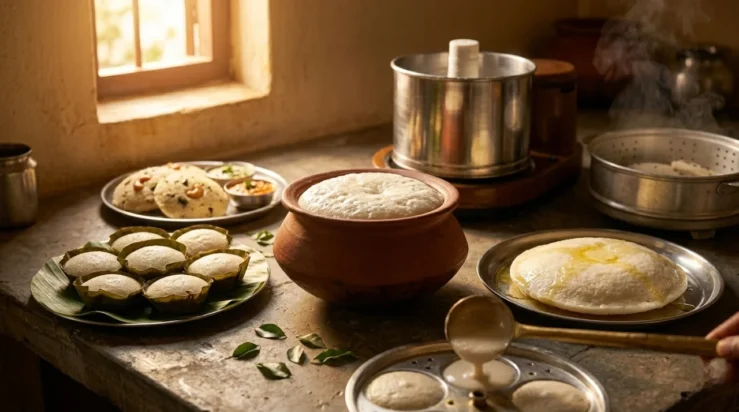
Traditionally made through fermentation, idli batter creates pillowy steamed cakes that are light, nutritious, and surprisingly addictive. Pair them with coconut chutney or hot sambar, and suddenly breakfast feels like a celebration.
The Soft Cloud That Became India’s Favorite Breakfast
Idli is South India’s most iconic breakfast — a soft, round, steamed savory cake with roots going back over a thousand years. Made traditionally from a naturally fermented batter of rice and urad dal (split black lentils), idli is celebrated not just for its taste but also for its remarkable digestibility and nutritional profile. The fermentation process increases B vitamins, enhances protein availability, and creates a light, probiotic-rich food that is as gentle on the stomach as it is satisfying.
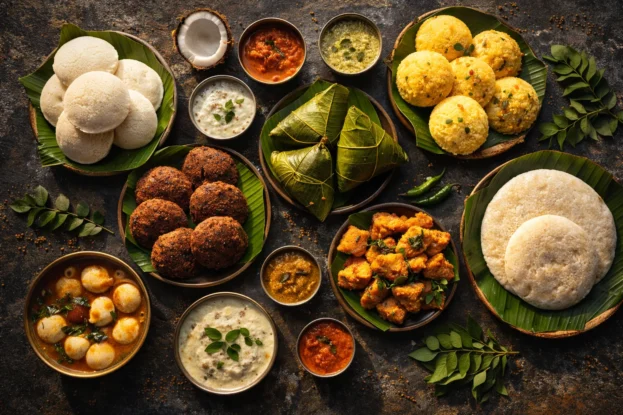
Over centuries, regional creativity and modern nutrition awareness have expanded idlis’ repertoire far beyond the classic version. Today, the 14 varieties presented in this guide span the full spectrum — from heritage recipes tied to specific temples and towns to instant healthy versions using millets, oats, and vegetables that require no fermentation at all. Whether you are a traditionalist or a health-focused home cook, there is an idli here made for you.
What Makes Idli So Special
Idli is not just tasty; it is also healthy. The fermentation process makes it easier to digest while adding natural probiotics to the food.
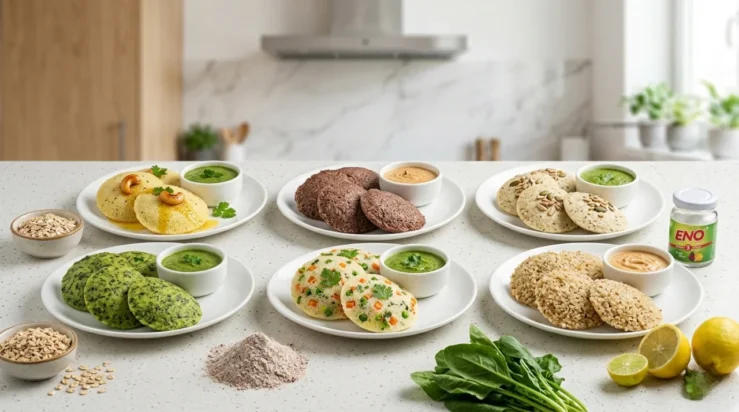
Another reason idli is loved across India is its versatility. From classic rice idlis to modern oats idlis, there are dozens of variations that prove this humble dish is anything but boring.
All 14 Idli Varieties at a Glance
#
Idli Type
Origin
Prep Time
Fermentation
Best For
1
Classic Idli
Pan South India
20 min
8-12 hrs
Everyday breakfast
2
Thatte Idli
Karnataka (Bidadi)
20 min
8-10 hrs
Weekend special
3
Kanchipuram Idli
Tamil Nadu
20 min
8-12 hrs
Spice lovers
4
Ramasseri Idli
Kerala (Palakkad)
20 min
10 hrs
Heritage seekers
5
Bread Idli
Pan India
15 min
None
Busy mornings
6
Kotte Kadubu
Mangalore
30 min
8-12 hrs
Festive occasions
7
Mini Idli
Pan South India
10 min
8-12 hrs
Kids / snacking
8
Rava Idli
Karnataka (MTR)
15 min
None
Hotel-style quick
9
Instant Poha Idli
Pan India
15 min
None
Light breakfast
10
Instant Oats Idli
Health Kitchen
10 min
None
Fitness & health
11
Instant Ragi Idli
Karnataka / TN
10 min
None
Iron & calcium
12
Vegetable Idli
Pan South India
20 min
Optional
Kids’ lunchbox
13
Moong Dal Spinach Idli
Health Kitchen
15 min
None
Protein-rich diet
14
Dalia Vegetable Idli
Fusion
20 min
None
High fiber diet
The Recipes: All 14 Idli Varieties
Each recipe below includes a full description, ingredients list, step-by-step instructions, and a pro tip for perfect results every time.
1. Classic Idli
Prep: 20 min | Cook: 12 min | Ferment: 8-12 hrs Makes: 12-15 idlis
The timeless original — soft, pillowy, and deeply satisfying. Made from a naturally fermented rice and lentil batter, this is the foundation from which all other idli varieties are born. It pairs perfectly with sambar and coconut chutney.
Ingredients 1 cup idli rice1/2 cup urad dal (split black lentil)1/4 tsp fenugreek seedsSalt to tasteWater for soaking and grinding
How to Make Soak rice and urad dal+fenugreek separately for 4-6 hours.Grind urad dal to a fluffy, airy batter; grind rice to a smooth paste.Combine both batters, add salt, mix well.Ferment covered in a warm place for 8-12 hours until batter doubles.Grease idli molds, pour batter, steam for 10-12 minutes.Insert toothpick — if clean, idlis are done. Rest 2 min before unmolding.
Pro Tip: The key to fluffy idlis is well-fermented batter. In cold climates, keep batter in a preheated (then switched off) oven overnight.
2. Thatte Idli
Prep: 20 min | Cook: 20 min | Ferment: 8-10 hrs Makes: 4 large idlis
Thatte Idli is a celebrated Karnataka specialty, particularly famous from the town of Bidadi on the Bengaluru-Mysuru highway. Steamed in wide, flat plates called ‘thatte’ (meaning plate in Kannada), these large idlis are exceptionally spongy and thick, best enjoyed with mutton or vegetable sambar.
Ingredients 2 cups idli rice3/4 cup urad dal1/2 cup poha (flattened rice)Salt to tasteWater as needed
How to Make Soak rice and poha together; soak urad dal separately for 4-6 hours.Grind urad dal to fluffy batter; grind rice+poha to smooth paste.Mix batters together with salt; ferment 8-10 hours.Pour thick batter into wide greased thatte plates or shallow bowls.Steam for 15-20 minutes on medium heat.Cool slightly, scoop out with a flat spatula, serve whole.
Pro Tip: Use wide, shallow steel plates or round cake tins if you don’t have thatte plates. The wider surface gives the signature flat-yet-spongy texture.
3. Kanchipuram Idli
Prep: 20 min | Cook: 12 min | Ferment: 8-12 hrs Makes: 12 idlis
Kanchipuram Idli originates from the famous Varadharaja Perumal temple in Kanchipuram, Tamil Nadu, where it has been served as prasadam (temple offering) for centuries. What sets it apart is the generous tempering of black pepper, cumin, ginger, and cashews stirred into the fermented batter before steaming — creating a boldly spiced, aromatic idli unlike any other.
Ingredients Classic idli batter (1 cup rice + 1/2 cup urad dal, fermented)1 tsp black pepper (coarsely crushed)1 tsp cumin seeds1 tsp fresh ginger (grated)2 tbsp cashews (broken)1 tbsp ghee1 tsp chana dalCurry leaves, a few
How to Make Prepare standard fermented idli batter.Heat ghee, temper cumin, chana dal, pepper, cashews, ginger, curry leaves.Fold tempering thoroughly into the fermented batter.Pour into greased idli molds or banana leaf cups.Steam for 12-14 minutes until firm.Serve with coconut chutney — no sambar needed; the idli is flavored within.
Pro Tip: Traditionally steamed in banana leaves or in a mud pot for an earthy, smoky aroma. If available, line molds with banana leaf pieces for authentic flavor.
4. Ramasseri Idli
Prep: 20 min | Cook: 10 min | Ferment: 10 hrs Makes: 10 thin idlis
One of South India’s rarest and most geographically specific idlis, Ramasseri Idli is found almost exclusively in the small town of Ramasseri in Kerala’s Palakkad district. Made from red rice and broken urad dal ground to a slightly coarse batter, these thin, lacy-edged idlis have a crisp perimeter and a soft, tender center — making them an irresistible cross between a classic idli and a dosa.
Ingredients 2 cups red rice (Kerala red rice preferred)1 cup broken urad dalSalt to tasteWater (less than usual — batter should be slightly coarse)
How to Make Soak red rice and urad dal separately for 5 hours.Grind coarsely — use less water than standard idli batter.Mix with salt; ferment for 10 hours (longer than classic).The batter should be slightly runny and pourable.Pour onto special Ramasseri idli plates or flat cloth-lined steamers.Steam for 8-10 minutes; edges will be thin and slightly crisp.
Pro Tip: This idli is traditionally made on special concave earthen plates. A flat tawa with a cloth (like dhokla style) gives the closest result at home.
5. Bread Idli
Prep: 15 min | Cook: 10 min | Ferment: None Makes: 8 idlis
Bread Idli is the ultimate instant idli — a clever fusion that requires absolutely no soaking, grinding, or fermentation. Crumbled bread slices are combined with curd, rava, and spices, with ENO (fruit salt) acting as the instant leavening agent. The result is surprisingly light, soft, and fluffy idlis ready in under 30 minutes, making this a lifesaver for busy mornings.
Ingredients 4 bread slices (white or brown, crumbled fine)1 cup thick curd (yogurt)1/2 cup fine rava (semolina)1/2 tsp ENO fruit salt1/2 tsp ginger-green chili paste2 tbsp fresh coriander (chopped)Salt to taste
How to Make Crumble bread slices into fine crumbs.Mix bread, curd, rava, ginger-chili paste, coriander, and salt together.Rest the mixture for 10 minutes so rava softens.Just before steaming, add ENO and mix gently — batter will froth up.Immediately pour into greased idli molds.Steam for 10 minutes. Serve hot with chutney.
Pro Tip: Add ENO only at the last moment and steam immediately — the froth from ENO is what creates the fluffy texture. Delay causes flat idlis.
6. Kotte Kadubu
Prep: 30 min (includes leaf folding) | Cook: 15 min | Ferment: 8-12 hrs Makes: 8 idlis
Kotte Kadubu (also called Moode) is a unique Mangalorean and Tulu Nadu specialty where classic idli batter is poured into hand-folded jackfruit leaf cups and steamed. The jackfruit leaves impart a subtle, distinctive herbal and slightly earthy aroma to the idli that no metal mold can replicate. These cone-shaped, leaf-perfumed idlis are a beloved festive and everyday breakfast food along the Karnataka coast.
Ingredients Classic fermented idli batter (2 cups rice + 3/4 cup urad dal)Fresh jackfruit leaves (young, pliable ones)Toothpicks or thin skewers to secure leaf cupsSalt to taste
How to Make Prepare classic fermented idli batter.Fold jackfruit leaves into cone or cup shapes; pin with toothpicks.Lightly grease inside of leaf cups.Pour fermented batter three-quarters full into each cup.Place cups upright in a steamer or idli pot.Steam for 12-15 minutes. Peel leaves away and serve.
Pro Tip: If jackfruit leaves are unavailable, use turmeric leaves or banana leaf cups — each gives a different but equally lovely aroma. Young, fresh leaves work best as older ones may crack.
7. Mini Idli
Prep: 10 min | Cook: 8 min | Ferment: 8-12 hrs (classic batter) Makes: 30 mini idlis
Mini Idlis are exactly what they sound like — adorable, bite-sized versions of the classic idli made in special mini idli molds that produce 30 or more tiny idlis per batch. Their small size makes them perfect for dunking whole into a bowl of piping hot sambar (the beloved ‘sambar idli’ or ‘ghee sambar idli’), tossing into tadka for a crispy fried snack, or serving to children who love the fun, poppable size.
Ingredients Classic fermented idli batter (or rava idli batter for instant)Salt to tasteMini idli mold/plate (essential)For Ghee Sambar Idli: 2 cups sambar, 1 tbsp ghee, small onions, coriander
How to Make Prepare or use ready classic fermented idli batter.Grease mini idli molds well.Pour batter into each tiny cavity (fill 3/4 full).Steam for 7-8 minutes — less time than regular as they are small.For sambar idli: drop hot mini idlis directly into warm sambar, drizzle ghee.For fried: pan-fry or air-fry in ghee with mustard, curry leaves until crisp.
Pro Tip: Mini idlis are best served immediately once in sambar — they absorb the sambar beautifully but can get mushy if left too long. Make them fresh and serve right away.
8. Rava Idli (Sooji Idli)
Prep: 15 min | Cook: 12 min | Ferment: None Makes: 12 idlis
Rava Idli was famously invented by Mavalli Tiffin Room (MTR) in Bengaluru during World War II when rice was rationed. Made with roasted semolina (rava/sooji), curd, and tempered spices, it requires no fermentation and is ready in under 30 minutes. This is the idli you’ll find in almost every South Indian hotel and restaurant — soft, slightly grainy in the best way, often topped with a cashew and ghee garnish.
Ingredients 1 cup fine rava (sooji/semolina), dry roasted1 cup thick curd (sour curd preferred)1/2 tsp mustard seeds1 tsp chana dal2 tbsp carrot (grated)2 tbsp cashews (halved)1/2 tsp baking soda or ENOCurry leaves, green chili, salt1 tbsp oil or ghee for tempering
How to Make Dry roast rava on medium heat until aromatic and lightly golden. Cool.Temper mustard, chana dal, cashews, green chili, curry leaves in oil/ghee.Mix roasted rava with curd, tempering, carrot, salt. Batter should be thick.Rest 15 minutes so rava absorbs the curd fully.Add baking soda or ENO, mix gently — batter will aerate.Pour into greased molds, place a cashew on each, steam 10-12 minutes.
Pro Tip: Roasting the rava is non-negotiable — it prevents the idlis from becoming sticky or gummy. Let the rava cool completely before adding curd.
9. Instant Poha Idli
Prep: 15 min | Cook: 10 min | Ferment: None Makes: 10 idlis
Instant Poha Idli uses powdered flattened rice (poha) combined with rava and curd to create a remarkably soft, light idli without any fermentation. Poha naturally lends a slight chewiness and a mild sweetness to the batter, resulting in idlis that are distinctly tender and melt-in-mouth. This is an excellent quick breakfast option that comes together in about 30 minutes from start to plate.
Ingredients 1 cup poha (flattened rice), powdered in blender1/2 cup fine rava1 cup thick curd1/2 tsp ENO fruit salt1/2 tsp ginger-green chili pasteSalt to tasteFresh coriander (optional)
How to Make Blend dry poha into a fine powder.Mix poha powder, rava, curd, ginger-chili, salt and coriander.Rest for 15 minutes — rava and poha will absorb the curd.Check consistency; add a splash of water if too thick.Add ENO just before steaming; mix gently until frothy.Pour into greased molds; steam 8-10 minutes until set.
Pro Tip: Use slightly sour curd for better flavor and rise. Thick poha (not thin variety) gives a better texture when powdered.
10. Instant Oats Idli
Prep: 10 min | Cook: 12 min | Ferment: None Makes: 12 idlis
Instant Oats Idli is a nutritionist-approved spin on the classic, replacing rice entirely with rolled oats for a high-fiber, low-glycemic breakfast. Powdered oats combine with curd and optional vegetables to create a batter that steams into soft, nourishing idlis in minutes. This is an excellent option for those managing blood sugar, weight, or simply seeking a wholesome start to the day without compromising on the comfort of idli.
Ingredients 1 cup rolled oats, dry roasted and powdered1/2 cup thick curd1/4 cup water (adjust as needed)1/2 tsp ENO fruit salt1/2 tsp mustard seeds (optional tadka)Grated carrot or finely chopped veggies (optional)Salt to taste, green chili
How to Make Dry roast rolled oats briefly; cool and blend to a fine powder.Mix oat powder, curd, water, salt, green chili into a smooth batter.Fold in grated vegetables if using.Rest 5 minutes; batter will thicken slightly.Add ENO, mix gently until frothy.Pour into greased molds; steam 10-12 minutes until a skewer comes out clean.
Pro Tip: Quick oats work well but rolled oats give better texture. For extra flavor, add 1/4 tsp cumin and a pinch of turmeric to the batter.
11. Instant Ragi Idli
Prep: 10 min | Cook: 12 min | Ferment: None Makes: 10 idlis
Ragi (finger millet) is one of the most nutritionally dense cereals available, packed with calcium, iron, and dietary fiber — making Instant Ragi Idli a powerhouse breakfast. Ragi flour is combined with urad dal flour and curd, then activated with ENO for a quick steam. The idlis have a distinctive earthy, nutty flavor with a slightly denser texture than rice idlis, and a beautiful reddish-brown color that makes them as visually striking as they are nutritious.
Ingredients 3/4 cup ragi (finger millet) flour1/4 cup urad dal flour (or fine rava as substitute)1 cup thick curd1/2 tsp ENO fruit salt1/2 tsp cumin seedsSalt to tasteWater to adjust consistency
How to Make Mix ragi flour, urad dal flour, cumin, and salt in a bowl.Add curd gradually, mixing to form a smooth, lump-free batter.Add water if needed — batter should be thick but pourable.Rest for 10 minutes to allow flours to hydrate.Add ENO, mix gently until it activates.Pour into greased molds; steam 12 minutes until firm.
Pro Tip: Ragi idlis firm up more on cooling. Steam exactly 12 minutes — oversteaming makes them dense and rubbery. They taste excellent the next day at room temperature too.
12. Vegetable Idli
Prep: 20 min | Cook: 12 min | Ferment: 8-12 hrs (if using classic batter) Makes: 12 idlis
Vegetable Idli is a smart, colorful upgrade to the classic recipe, folding finely grated or chopped vegetables directly into either classic fermented batter or instant rava batter before steaming. Carrots, beans, peas, and corn are popular additions that add nutrition, natural sweetness, and a speckled, vibrant appearance that children find especially appealing. This is one of the most popular lunchbox idli varieties for kids across South India.
Ingredients 2 cups classic fermented idli batter (or rava idli batter for instant)1/4 cup grated carrot1/4 cup finely chopped French beans2 tbsp green peas (fresh or frozen)1 tbsp corn kernels (optional)1/2 tsp ginger pasteSalt to taste
How to Make Prepare classic fermented batter or instant rava batter.Chop all vegetables very finely or grate — they should be small enough to blend into the batter.Fold vegetables and ginger paste into the batter gently.Do not overmix — fold just until evenly distributed.Pour into greased molds; steam 10-12 minutes.The vegetables inside will keep idlis moist — serve with coconut chutney.
Pro Tip: Blanch harder vegetables like beans and carrots briefly before adding to ensure even cooking inside the idli. Avoid vegetables with high water content like tomatoes.
13. Moong Dal Spinach Idli
Prep: 15 min + 2 hr soak | Cook: 12 min | Ferment: None Makes: 10 idlis
Moong Dal Spinach Idli is a nutritional tour de force — a no-rice idli that uses soaked and ground yellow moong dal as its base, enriched with vibrant spinach puree. The result is a striking green idli that is exceptionally high in plant protein, iron, and folate. With curd for lightness and ENO for instant rise, this no-ferment recipe is perfect for health-conscious eaters who don’t want to compromise on flavor or texture.
Ingredients 1 cup yellow moong dal, soaked 2 hours and ground smooth1/2 cup fresh spinach, blanched and pureed1/2 cup thick curd1/2 tsp ENO fruit salt1/2 tsp cumin seeds1/4 tsp asafoetida (hing)Green chili, ginger to tasteSalt to taste
How to Make Soak moong dal for 2 hours; drain and grind to a smooth paste with minimal water.Blanch spinach briefly, blend to a smooth puree, cool completely.Mix moong dal paste, spinach puree, curd, cumin, hing, chili, and salt.Adjust consistency — batter should be thick but pourable.Add ENO just before steaming; gently fold until frothy.Pour into greased molds; steam 10-12 minutes until springy to touch.
Pro Tip: Cool the spinach puree before mixing — hot puree can cause the curd to curdle and the batter to become too thin. The bright green color fades slightly on steaming, which is normal.
14. Dalia Vegetable Idli
Prep: 20 min | Cook: 12 min | Ferment: None Makes: 12 idlis
Dalia (broken wheat/cracked wheat) Idli beautifully bridges North and South Indian culinary traditions. Dry-roasted dalia is mixed with curd, finely chopped vegetables, and ginger to create a hearty, fiber-rich batter that steams into dense, satisfying idlis with a pleasantly coarse, nutty texture. This is one of the most filling idli varieties — making it an excellent breakfast choice that provides sustained energy through the morning.
Ingredients 1 cup dalia (broken wheat/lapsi), dry roasted1/2 cup thick curd1/2 cup mixed vegetables (carrot, beans, peas — finely chopped)1/2 tsp ENO fruit salt1/2 tsp ginger (grated)1/2 tsp cumin seedsGreen chili, coriander to tasteSalt to taste
How to Make Dry roast dalia in a pan on medium heat until fragrant and lightly golden. Cool.Mix roasted dalia with curd thoroughly; rest 10 minutes to soften.Add finely chopped vegetables, ginger, cumin, chili, coriander, and salt.Mix well; add a splash of water if batter seems too thick.Add ENO and fold gently until the batter aerates.Spoon into greased molds; steam 12-14 minutes until a skewer comes out clean.
Pro Tip: Roasting the dalia thoroughly is essential — it removes the raw wheat smell and creates a nutty, pleasant flavor. Fine-grade broken wheat (fine dalia) gives a smoother idli; coarse dalia gives more bite.
Batter consistency: Classic idli batter should be thick but flow slowly — not runny like dosa batter. Tilt the bowl; it should move but not pour freely.
Fermentation temperature: Ideal fermentation temp is 25-30 C. In winter, place batter in an oven with just the light on, or wrap in a warm blanket.
Do not overfill molds: Fill idli cavities only 3/4 full — idlis puff and expand during steaming. Overfilling causes them to stick together.
Water level: Keep enough water in the steamer and check periodically. Running out of water mid-steam creates hard, rubbery idlis.
Resting before unmolding: Let idlis rest 2-3 minutes after steaming before scooping. They firm up slightly and release cleanly from molds.
ENO vs baking soda: ENO gives a faster, bigger rise than baking soda and is preferred for instant idlis. Use baking soda only if ENO is unavailable.
Greasing molds: Use oil or ghee. Ghee adds subtle flavor; refined oil is neutral. Always grease even non-stick molds for clean release.
Storing leftover idlis: Wrap in a damp cloth or store in an airtight container. Reheat by re-steaming for 3-4 minutes — never microwave uncovered (they dry out).
Classic Serving Combinations: Best Chutney and Sambar Pairings
Idli Type
Best Served With
Classic / Thatte Idli
Sambar + coconut chutney + tomato chutney + ghee — the full South Indian spread
Kanchipuram Idli
Coconut chutney only — the spiced idli is flavorful enough; sambar optional
Ramasseri Idli
Thin coconut milk chutney or coconut-green chili chutney from Kerala tradition
Mini Idli
Dunked in sambar (sambar idli) with a drizzle of ghee and small onions
Rava / Bread / Poha Idli
Coconut chutney + tomato chutney; sambar optional for instant varieties
Oats / Ragi Idli
Peanut chutney or coriander-mint chutney for a healthy pairing
Vegetable / Moong Dal Idli
Coconut chutney + light sambar; the idli provides most nutrition
Dalia Idli
Curd (plain yogurt) + pickle; also excellent with peanut chutney
Why Idli Will Always Stay Popular
Idli has survived centuries of culinary trends, and there is a reason for that. It is simple, healthy, and incredibly versatile.
Whether you enjoy classic rice idlis or adventurous chocolate idlis, this dish continues to evolve while staying true to its roots. And honestly, any breakfast that lets you eat ten pieces without guilt deserves a standing ovation.
With over 2000 articles and blogs to his name for Flickonclick, Mohan Nasre is a versatile content writer skilled in multiple niches, including entertainment, technology, finance, news, lifestyle, fitness, and more. His dynamic writing style and ability to adapt to diverse topics have made him a go-to writer for high-quality, engaging content that resonates with readers across various industries.