


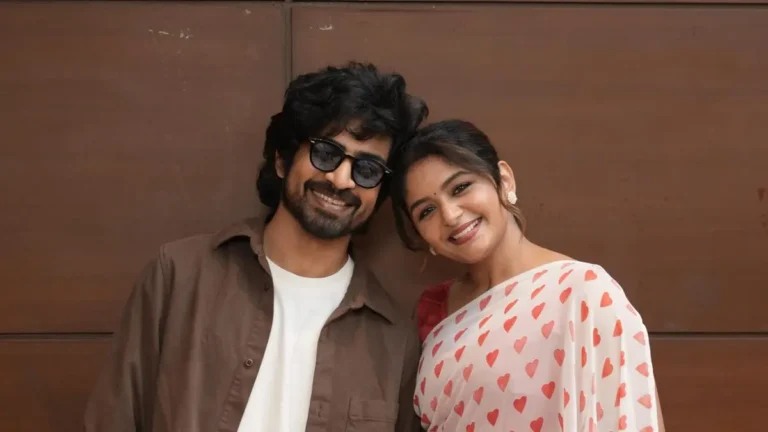
Once More Review: ★★★☆☆ (3/5)
Once More is a warm, sensitively handled romantic drama with strong performances from Arjun Das and Aditi Shankar, but it stumbles in fully developing one of its central relationships, keeping it from reaching its full potential.
Rating: ★★★☆☆ (3/5)
Language: Tamil
Genre: Romantic Drama
Director: Vignesh Srikanth
Cast: Arjun Das, Aditi Shankar, Sona Olickal
Once More builds its story around a simple but universal idea: that life often gives people a second chance at happiness, even when they feel like they no longer deserve one.
At the center of this romantic drama is Raghuvaran, a man who has been stuck in a deeply withdrawn, joyless state for years, until a woman named Anjali walks into his life with enough warmth and energy to slowly pull him out of his shell.
Played by Arjun Das, Raghuvaran has spent eight years struggling after a devastating incident completely changed how he views love and life.
Anjali, played by Aditi Shankar, is his college junior who suddenly reenters his world carrying an infectious, almost unstoppable energy that clashes directly with his closed-off personality.
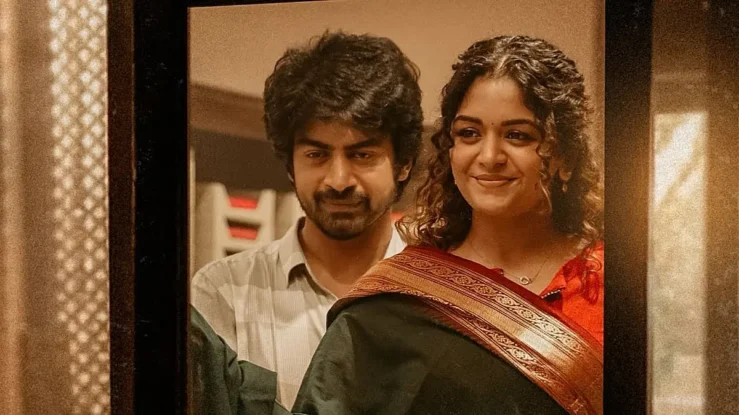
He tries repeatedly to push her away, but her persistence and genuine affection slowly begin breaking through his defenses. What exactly happened to Raghuvaran, and whether Anjali can truly help him heal, forms the emotional core of the film.
One of the film’s biggest strengths is how naturally and sensitively it handles heavier subjects like suicide, same-sex relationships, and intimacy. None of these themes are treated as dramatic talking points meant to shock or teach a lesson.
Instead, they simply exist as part of the characters’ everyday lives, discussed with a casualness that feels genuinely refreshing. The film allows its characters to acknowledge difficult emotions, talk openly about seeking help, and make mistakes without turning any of it into a moral lecture.
As the story unfolds, Raghuvaran experiences love in two very different ways with two very different women, and each relationship pulls him in an opposite emotional direction. His connection with Anjali takes some time to warm up to, mostly because her approach can feel a little overwhelming at first.
She practically forces her way into his life, brushing past his repeated attempts to keep her at a distance, driven simply by her desire to bring a smile back to his face. The intention is sweet, even if the execution occasionally feels like a lot. Interestingly, the film itself seems aware of this, letting Raghuvaran’s hesitant reactions mirror what the audience is likely feeling too.
That said, as Raghuvaran gradually softens toward Anjali, so does the audience, largely thanks to Aditi Shankar’s effortlessly charming performance. Her natural energy makes Anjali hard to resist, even in her pushier moments.
Arjun Das, meanwhile, gets a genuine opportunity to step outside his usual brooding on-screen persona, convincingly playing both a man closed off from the world and someone slowly rediscovering what it feels like to be young and in love again.
Where the film stumbles is in how it handles Raghuvaran’s relationship with Indra, played by Sona Olickal. Though their connection is framed as love at first sight, its abrupt ending makes it genuinely hard to stay emotionally invested in them as a couple.
Similar Article: Hi Movie Review
When Indra later returns seeking closure, the sequence drags, largely because her reasoning does not entirely hold up under scrutiny. Thankfully, the film recovers with a genuinely well-written final conversation between Raghuvaran and Indra, one that finally gives his character the emotional maturity the story has been quietly building toward all along.
The supporting cast, including Devadarshini, Dravid Selvam, and Anusha Prabhu, adds warmth and humor throughout. The film’s music by Hesham Abdul Wahab, particularly the songs Vaa Kannamma and Idhayam, along with a strong background score, genuinely lingers even after the credits roll.
Once More marks a promising directorial debut for Vignesh Srikanth, filled with sensitivity, warmth, and strong central performances. But every time the film has a chance to push past familiar romantic drama territory, it pulls back into safer, more predictable beats. There is a genuinely lovely film somewhere inside Once More; it just does not quite manage to fully get there.