


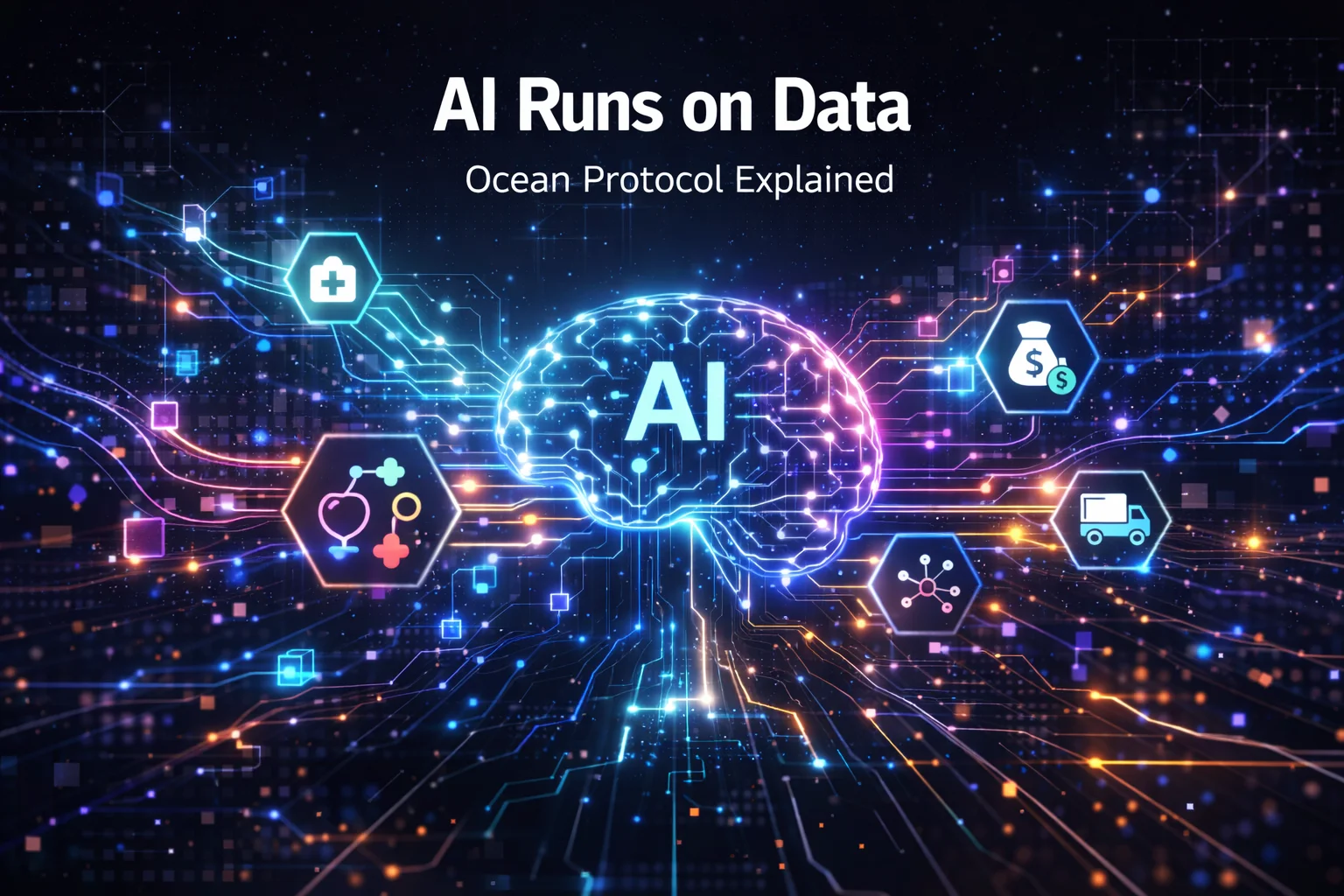
There’s a quiet crisis happening right now — and most people haven’t noticed it yet.
Artificial intelligence is advancing at a pace that genuinely defies comprehension. New models, new capabilities, new applications launching every few weeks. The headlines are relentless. But underneath all of that noise, something important is being glossed over. AI doesn’t run on brilliance. It doesn’t run on compute power alone. It doesn’t even run on the algorithms that researchers spend years perfecting.
AI runs on data. Enormous, diverse, high-quality data. And we have a serious problem with how that data is owned, accessed, and shared.

That problem is where Ocean Protocol enters the picture. And if you understand the connection between those two things — AI’s insatiable data appetite and Ocean Protocol’s decentralised data marketplace — you start to see one of the most compelling opportunities in the entire crypto space right now.
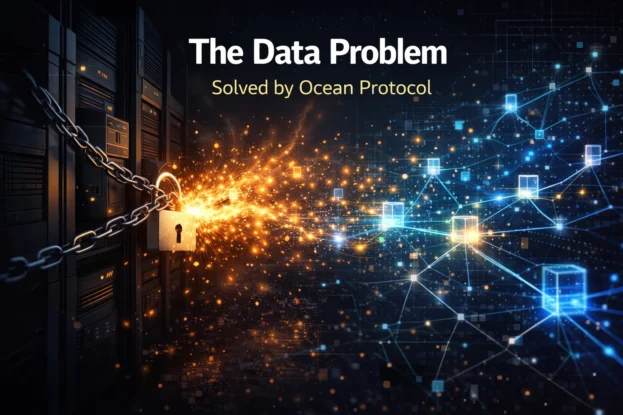
The Data Problem Nobody Is Talking About Loudly Enough
Here’s the situation as it stands today. The world generates more data than at any point in human history. Every search, every transaction, every sensor reading, every medical record, every satellite image — it all accumulates into datasets of staggering scale and potential value.
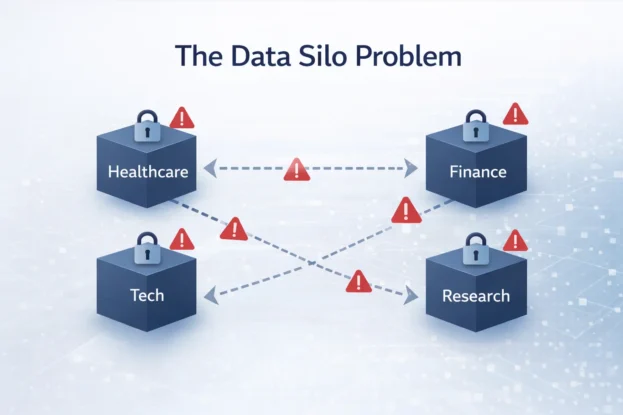
But here’s the catch: the vast majority of that data sits locked inside the servers of a handful of companies. Google. Meta. Amazon. Microsoft. A few others. These organisations didn’t just collect data — they built fortresses around it. Because data, in the AI era, is the single most valuable competitive asset in existence. Why would they share it?
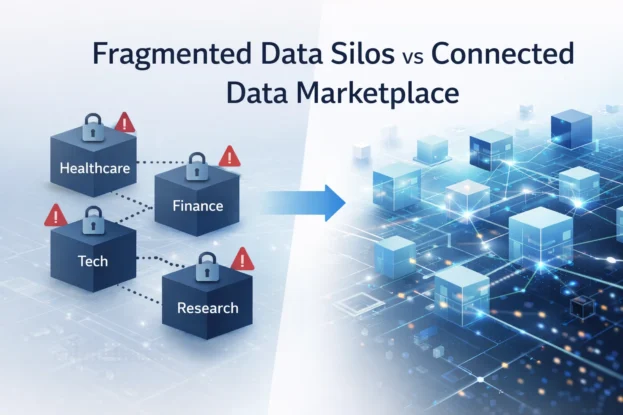
The result is what researchers call data siloing — valuable information trapped in isolated pools, inaccessible to the researchers, companies, and AI developers who could use it to build genuinely useful things. A pharmaceutical company sitting on decades of patient outcome data that could train a better cancer detection model. A logistics firm with years of supply chain data that could optimise global shipping. A climate research institute with sensor readings that could improve weather prediction models.
All of that value — locked away. Unused. Or used only by whoever owns it, for their own purposes.
For AI development, this creates a critical bottleneck. The models that will define the next decade of technology need data variety and data volume that no single company — not even the biggest ones — can provide on its own. The AI data crisis is real, it’s growing, and it doesn’t have an obvious solution within the current system.
Enter Ocean Protocol: A Data Economy Built on Blockchain
Ocean Protocol was built with a specific thesis: data should be treated as an asset that can be owned, priced, and exchanged — without the owner ever losing control of it.
That last part is the critical distinction. The traditional model of data sharing requires you to hand your data to someone else and trust them not to misuse it. That’s a model most data owners — especially those holding sensitive or commercially valuable datasets — will never accept. Which is why most valuable data never gets shared at all.
Ocean Protocol solves this through two core innovations.
First, Data NFTs and Datatokens. On Ocean Protocol, datasets are represented as NFTs — non-fungible tokens that establish clear, verifiable ownership on the blockchain. Datatokens then control access to that data. Want to use a dataset? You need the corresponding datatoken. The data owner retains full control over who gets access and at what price. No centralised intermediary. No trust required.
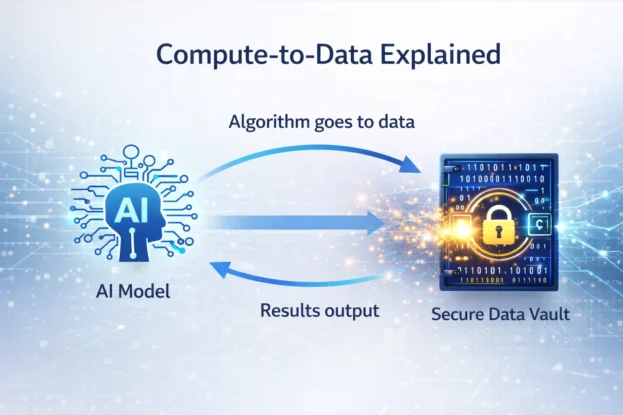
Second, Compute-to-Data. This is where Ocean Protocol gets genuinely clever. Instead of sending your data to whoever wants to use it, Compute-to-Data sends the algorithm to the data. An AI developer can train a model on your dataset without ever directly accessing or downloading the raw data itself. The insights come out. Your data stays where it is. Privacy preserved. Value unlocked.
For AI developers, this is transformative. It opens access to datasets that were previously completely off-limits — medical records, financial data, proprietary corporate datasets — because the owners can now monetise them without surrendering control.
Why This Intersection Matters Right Now
The timing of Ocean Protocol’s technology relative to AI’s current trajectory is not accidental — and it’s not irrelevant.
The AI industry is at an inflection point. The easy data has already been used. The publicly available internet data that trained the first generation of large language models has largely been scraped, processed, and incorporated. The next generation of AI advancement requires higher quality, more specialised, more diverse data — exactly the kind that currently sits in private silos.
McKinsey estimates the global data economy could be worth over $3 trillion in the coming years. The question is who captures that value — the same handful of tech giants who dominate today, or a more distributed ecosystem where data creators and data owners participate in the upside.
Ocean Protocol is building the infrastructure for the second scenario. A decentralised marketplace where anyone — a hospital, a research institution, a startup, an individual — can publish data, set their own terms, and earn directly from its use. The OCEAN token powers this economy: used for transactions, staking, and governance across the protocol.
Also Read: What Is Hivemapper? How to Earn HONEY Tokens Just by Driving
The veOCEAN Model: Aligning Incentives for the Long Term
One of the more sophisticated elements of Ocean Protocol’s design is veOCEAN — a vote-escrowed version of the OCEAN token that rewards long-term holders with data farming yields. By locking OCEAN tokens for a defined period, holders receive veOCEAN, which can be used to curate datasets and earn passive rewards.
This creates a genuinely aligned incentive structure. The people most invested in the protocol’s long-term success — those willing to lock tokens for extended periods — are the same people directing attention and liquidity toward the highest-quality datasets. Quality rises. Noise falls. The marketplace gets better the more people participate in it seriously.
It’s a tokenomics model designed not for short-term speculation but for ecosystem health. In a space full of projects that reward paper hands, that’s a notable design choice.
What This Means for Crypto Investors
Here’s the honest framing for anyone thinking about this from an investment perspective.
Ocean Protocol is not a speculative bet on a concept. It’s a functioning protocol with a live marketplace, real datasets listed for sale, and a technology stack — Compute-to-Data, Data NFTs, veOCEAN — that has been built and iterated over several years. The infrastructure exists.
What the project is waiting for is the moment when the AI industry’s data hunger becomes acute enough that the traditional model — locked silos controlled by tech giants — becomes an obvious bottleneck to progress. That moment is getting closer with every new AI model release, every compute breakthrough, every instance of an AI developer hitting a wall because the data they need simply isn’t accessible.
When that inflection point arrives, the projects that built the rails for a decentralised data economy won’t be scrambling to catch up. They’ll already be there.
The world’s data problem is real. The AI industry’s need for a solution is growing. Ocean Protocol is one of the most credible answers that exists.
That’s not hype. That’s just the logic of the situation, followed to its conclusion.