


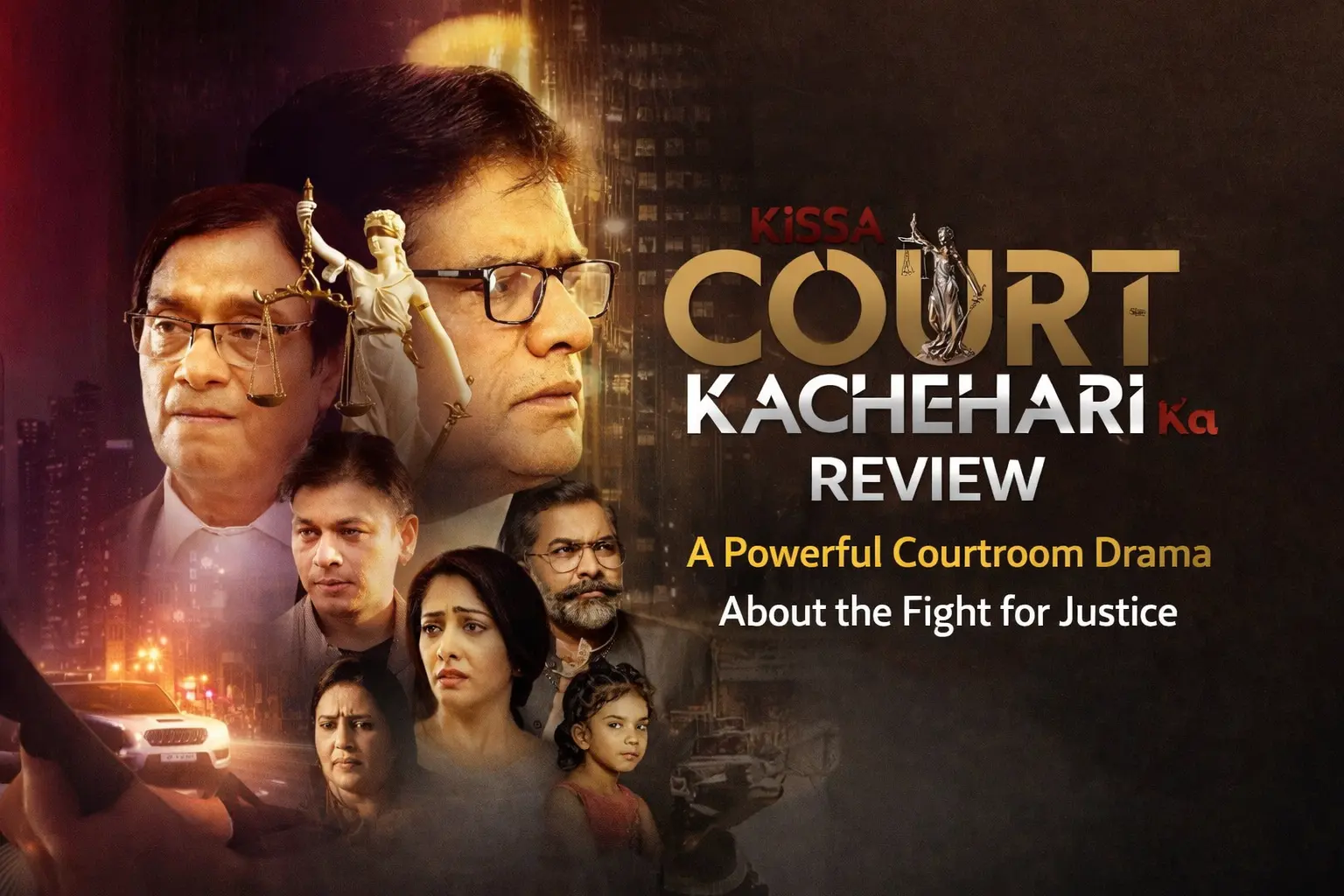
Kissa Court Kachahari Ka Review: ⭐⭐⭐☆☆ (3/5)
Kissa Court Kachahari Ka stands out for its honest portrayal of the Indian legal system and strong performances by Rajesh Sharma and Brijendra Kala. While the film’s realistic approach and social message are impactful, the slow pacing and lengthy courtroom dialogues may test the patience of viewers looking for a more engaging cinematic experience.
Kissa Court Kachahari Ka arrives as a serious courtroom drama that focuses on the struggles of ordinary people trapped in India’s slow legal system. Directed by Rajnish Jaiswal, the film brings together seasoned actors Rajesh Sharma and Brijendra Kala to tell a story rooted in real-life experiences.

Released on March 13, 2026, the film attempts to show the harsh truth behind courtroom files and endless hearings. Instead of relying on dramatic courtroom theatrics, it focuses on the emotional toll that long legal battles take on individuals and families.
A Story That Reflects Real-Life Legal Struggles
The film’s narrative revolves around the painful reality of people who spend years waiting for justice. Rather than telling the story of a single case, the screenplay represents countless individuals whose lives are shaped by long court proceedings.
The story highlights how legal delays, financial pressure, and emotional exhaustion become a part of daily life for those seeking justice. Through its characters, the film portrays how the courtroom can feel less like a place of resolution and more like a maze that ordinary citizens struggle to escape.
The screenplay attempts to balance personal stories with broader commentary about the system itself. By focusing on human emotions rather than legal jargon alone, the film aims to make its message more relatable.
Rajesh Sharma’s Powerful Performance
One of the biggest strengths of Kissa Court Kachahari Ka is Rajesh Sharma’s performance. His portrayal of a weary litigant feels authentic and deeply emotional, capturing the frustration and helplessness that many people experience in long legal battles.
Sharma’s expressions and body language communicate a quiet intensity that drives many of the film’s emotional moments. His performance becomes the emotional backbone of the story, helping audiences connect with the film’s central theme.
The actor brings a sense of maturity and realism to the role, making his character feel like someone viewers might encounter in real life. This grounded performance adds credibility to the film’s message.

Brijendra Kala Adds Balance to the Narrative
Alongside Rajesh Sharma, Brijendra Kala delivers a restrained and thoughtful performance. Known for his subtle acting style, Kala brings calmness and emotional depth to his character.
His performance works as a strong counterbalance to the film’s heavier dramatic moments. Without relying on exaggerated expressions or dramatic speeches, Kala manages to leave a lasting impact through simple yet powerful scenes.
The chemistry between the cast members also strengthens the narrative. Together, the actors make the characters feel real rather than purely cinematic creations.
Direction and Realistic Storytelling
Director Rajnish Jaiswal takes a bold approach by focusing on realism instead of typical Bollywood courtroom drama. The film avoids loud confrontations and dramatic speeches, choosing instead to highlight the slow and often frustrating nature of legal proceedings.
Jaiswal presents the courtroom as more than just a setting. The dusty files, long corridors, and crowded waiting areas become symbols of a system that moves slowly while people’s lives remain on hold.
The director’s commitment to realism sometimes makes the film feel closer to a documentary than a commercial drama. While this approach strengthens the authenticity of the story, it may feel unusual for viewers expecting fast-paced entertainment.
Cinematography and Technical Craft
The film’s cinematography plays a key role in shaping its mood. The visuals capture the quiet tension of courtrooms, the weight of old files, and the emotional exhaustion of people waiting for their cases to be heard.
Camera angles and lighting emphasize the seriousness of the environment. The visuals make the audience feel as though they are sitting inside the courtroom alongside the characters.
Music by Pravesh Malik complements the story’s emotional tone. Instead of dominating scenes, the background score quietly enhances the emotional weight of the narrative.
Similar Article: Ramyaa Movie Review: Janmmejaya Singh Anchors a Dark and Intense Crime Story
Themes of Justice, Patience, and Systemic Flaws
At its heart, Kissa Court Kachahari Ka is a film about patience and endurance. It asks a difficult question: how long should someone wait for justice before hope begins to fade?
The story explores the idea that truth alone does not guarantee justice in a complicated legal system. Often, persistence, resources, and time play a larger role in determining the outcome.
Through its characters, the film highlights the emotional cost of legal battles. Families grow older, relationships change, and lives are reshaped while the search for justice continues.
Strengths and Limitations
The film’s strongest aspect is its honesty. By focusing on realistic situations and powerful performances, it manages to deliver a meaningful social message.
However, the film’s pacing may challenge some viewers. The first half builds slowly, and the lengthy courtroom discussions may feel heavy for audiences expecting a more conventional drama.
The script also leaves certain supporting characters less explored. Expanding these roles could have added more layers to the story.
A Film That Raises Important Questions
Kissa Court Kachahari Ka is not designed to entertain in the traditional sense. Instead, it aims to provoke thought and reflection about the realities of the legal system.
The film reminds viewers that every case file represents a real human story. Behind every date of hearing lies a person waiting for closure, justice, or simply a chance to move forward.
As the narrative unfolds, the film gradually shifts focus from the courtroom itself to the lives affected by its decisions. The emotional weight of these stories becomes the true center of the film, leaving audiences thinking about the long journey toward justice long after the courtroom doors close.