


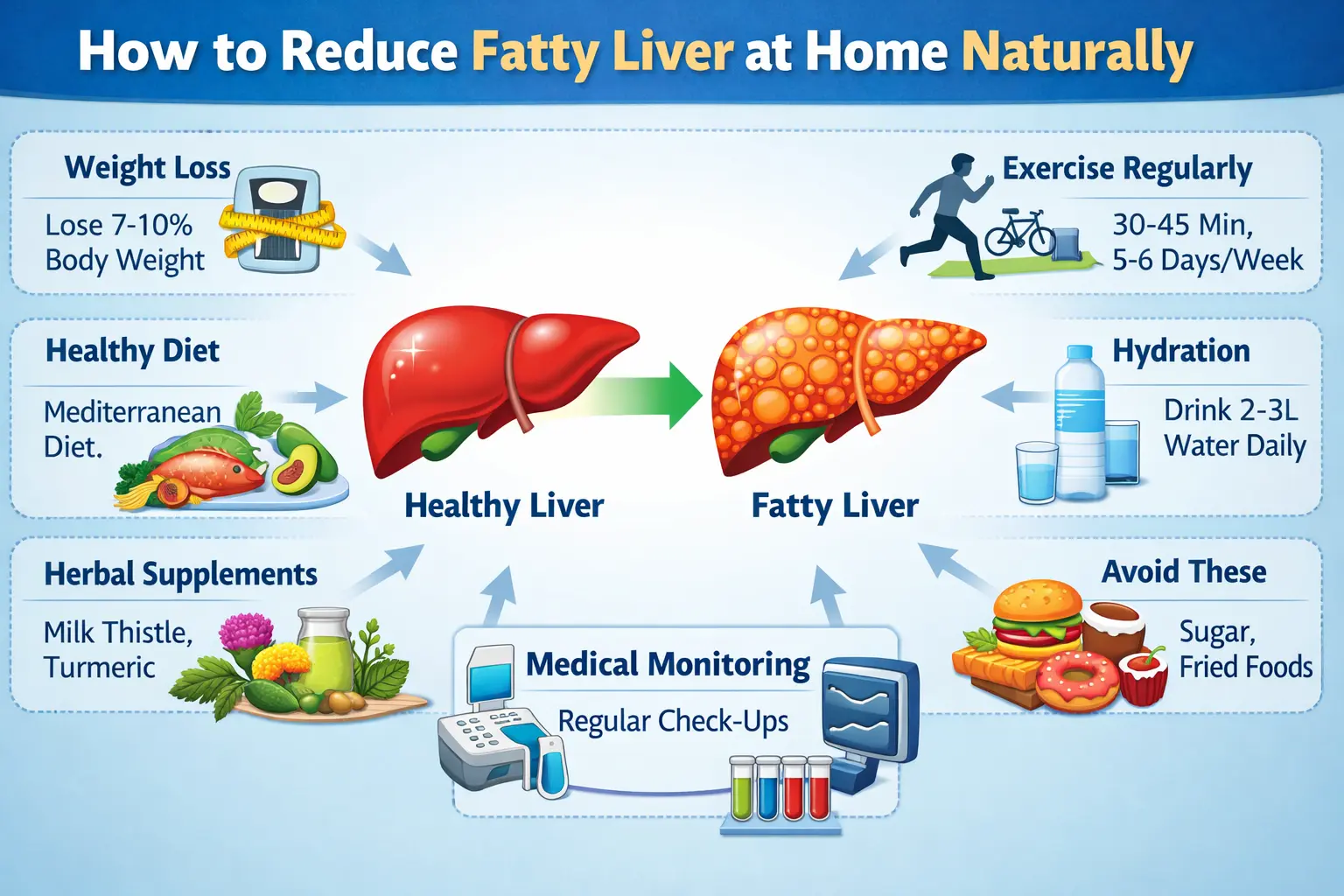
How to reduce fatty liver at home is a common question for people diagnosed with early-stage fatty liver disease. With the right diet, regular exercise, weight control, and healthy lifestyle habits, fatty liver can often be reversed naturally without medication.
The reduction of fatty liver at home starts with small but consistent lifestyle changes that improve liver function over time. By focusing on balanced nutrition, daily activity, and stress management, the liver can slowly repair itself and reduce excess fat naturally.
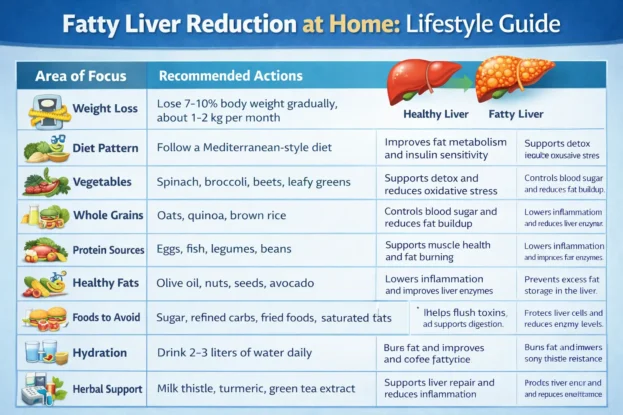
Fatty Liver Reduction at Home: Lifestyle Guide
| Area of Focus | Recommended Actions | Key Benefits for Liver |
|---|---|---|
| Weight Management | Lose 7–10% body weight gradually, about 1–2 kg per month | Reduces liver fat and inflammation safely |
| Diet Pattern | Follow a Mediterranean-style diet | Improves fat metabolism and insulin sensitivity |
| Vegetables | Spinach, broccoli, beets, leafy greens | Supports detox and reduces oxidative stress |
| Whole Grains | Oats, quinoa, brown rice | Controls blood sugar and reduces fat buildup |
| Protein Sources | Eggs, fish, legumes, beans | Supports muscle health and fat burning |
| Healthy Fats | Olive oil, nuts, seeds, avocado | Lowers inflammation and improves liver enzymes |
| Foods to Avoid | Sugar, refined carbs, fried foods, saturated fats | Prevents excess fat storage in the liver |
| Hydration | Drink 2–3 liters of water daily | Helps flush toxins and supports digestion |
| Beverages | Green tea and moderate coffee intake | Protects liver cells and reduces enzyme levels |
| Exercise Duration | 30–45 minutes, 5–6 days a week | Burns fat and improves insulin resistance |
| Exercise Types | Brisk walking, cycling, yoga, strength training | Reduces abdominal fat linked to fatty liver |
| Herbal Support | Milk thistle, turmeric, green tea extract | Supports liver repair and reduces inflammation |
| Medical Monitoring | Regular blood tests and ultrasounds | Tracks improvement and prevents complications |
Introduction to Fatty Liver Disease
Fatty liver disease happens when extra fat builds up in liver cells, affecting normal liver function. The most common type today is non-alcoholic fatty liver disease, often linked to lifestyle habits and metabolic health issues.

Can Fatty Liver Be Reversed at Home
Yes, early-stage fatty liver, especially Grade 1, can often be reversed at home with consistent lifestyle changes. Research shows that proper diet, regular exercise, and weight control can improve liver health within 60 days.
Why Lifestyle Changes Matter Most
There is no single medicine that cures fatty liver completely. Doctors strongly recommend lifestyle changes because they target the root cause, such as excess fat, insulin resistance, and inflammation, helping the liver heal naturally over time.
Understanding the Role of Weight Management
Maintaining a healthy body weight is the most important step in reducing fatty liver. Excess body fat, especially around the belly, increases fat storage in the liver and worsens inflammation and insulin resistance.
How Much Weight Loss Is Safe
Gradual weight loss of about 7 to 10 percent of body weight is considered safe and effective. Losing one to two kilograms per month helps reduce liver fat without stressing the liver or causing nutritional deficiencies.
Avoid Crash Diets and Fasting Extremes
Rapid weight loss through crash diets or extreme fasting can actually worsen fatty liver. Such methods increase fat flow to the liver, leading to more inflammation and potential liver damage instead of recovery.
Importance of Portion Control
Portion control helps manage calorie intake without feeling deprived. Eating smaller, balanced meals prevents overeating, stabilizes blood sugar levels, and reduces excess fat storage in the liver over time.
Best Diet for Reducing Fatty Liver
A Mediterranean-style diet is widely recommended for fatty liver. It focuses on whole, unprocessed foods that are rich in fiber, antioxidants, and healthy fats, all of which support liver repair and metabolism.
Vegetables That Support Liver Health
Green vegetables like spinach and broccoli, along with beets, are excellent for liver health. They are rich in fiber and antioxidants, which help reduce fat accumulation and protect liver cells from oxidative stress.
Choosing the Right Whole Grains
Whole grains such as oats, quinoa, and brown rice provide steady energy and improve insulin sensitivity. They prevent sudden sugar spikes, which helps reduce fat buildup in the liver and supports overall metabolic balance.
Lean Protein Sources to Include
Lean proteins like eggs, fish, legumes, and beans support muscle maintenance and fat metabolism. Fish rich in omega-3 fatty acids also helps reduce liver inflammation and improve fat processing efficiency.
Healthy Fats That Heal the Liver
Healthy fats from avocado, nuts, seeds, and olive oil are beneficial for fatty liver. These fats reduce inflammation and improve cholesterol levels, helping the liver process fat more efficiently and safely.
Foods and Ingredients to Avoid
Refined carbohydrates, sugary drinks, fried foods, and saturated fats should be limited. These foods overload the liver with excess calories and sugars, increasing fat storage and slowing down liver recovery.
Role of Hydration in Liver Detox
Drinking enough water supports liver detoxification and digestion. Aim for two to three liters daily, as proper hydration helps flush toxins, improve metabolism, and support healthy liver enzyme function.
Green Tea and Coffee Benefits
Green tea contains catechins that may reduce liver fat and inflammation. Moderate coffee intake has also shown protective effects on the liver by lowering enzyme levels and reducing the risk of liver scarring.
Exercise and Fatty Liver Recovery
Regular physical activity is essential for reducing fatty liver. Exercise burns stored fat, improves insulin sensitivity, and lowers inflammation, all of which help the liver heal and function better over time.
Recommended Exercise Duration and Frequency
Aim for 30 to 45 minutes of moderate exercise at least five to six days a week. Consistency matters more than intensity when it comes to reducing liver fat safely and effectively.
Best Types of Exercises for Fatty Liver
Brisk walking, cycling, swimming, yoga, and light strength training are excellent choices. These activities are easy to sustain long-term and help reduce abdominal fat linked to fatty liver disease.
Importance of Muscle Strength Training
Strength training improves muscle mass, which boosts metabolism and glucose control. Better glucose control reduces insulin resistance, one of the main contributors to fat buildup in the liver.
Also Read: Dark Circles, Acne, and Redness: Could Your Liver Be the Reason?
Natural and Herbal Supports for Liver Health
Certain herbs can support liver function when used responsibly. They are not cures but may help reduce inflammation, support detox processes, and improve fat metabolism when combined with lifestyle changes.
Milk Thistle and Turmeric Benefits
Milk thistle contains silymarin, which protects liver cells from damage. Turmeric’s curcumin has anti-inflammatory properties that may help reduce liver swelling and oxidative stress when taken with medical guidance.
Other Helpful Herbal Options
Dandelion root, licorice root, and green tea extract are traditionally used to support liver health. These herbs may aid digestion and detoxification but should only be used after consulting a healthcare provider.
Importance of Medical Monitoring
Even when managing fatty liver at home, regular medical checkups are important. Ultrasounds and blood tests help track progress, ensure safety, and detect any worsening condition early.
Consistency and Patience in Recovery
Fatty liver reversal takes time and consistency. Small daily habits, when followed regularly, can significantly improve liver health within a few months and prevent long-term complications.
Final Thoughts on Reducing Fatty Liver at Home
Reducing fatty liver at home is achievable with mindful eating, steady weight loss, regular exercise, and healthy routines. With discipline and professional guidance, many people can restore liver health naturally and safely.