


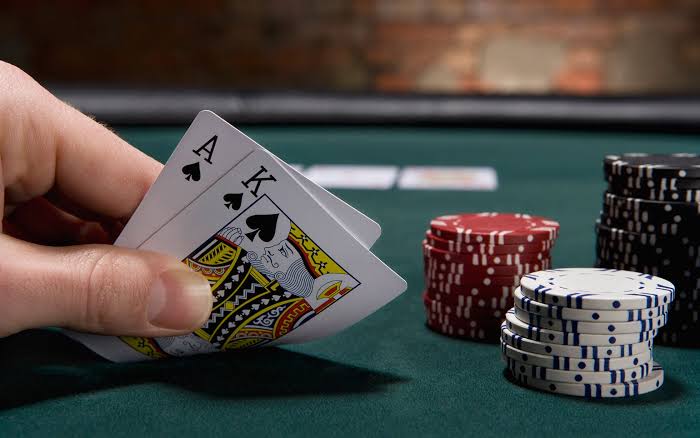
Poker is a fascinating and widely popular card game with a rich history and many variations. The most well-known and frequently played form of poker is Texas Hold’em, but there are numerous other versions, including Omaha, Seven Card Stud, and more. In this comprehensive guide to poker, we’ll explore the fundamentals of the game, various hand rankings, strategies, and the cultural aspects of poker.
The Basics of Poker:
Poker is a game of skill, psychology, and strategy. Its primary objective is to win chips or money from other players by forming the best possible hand or by convincing opponents to fold their hands. At the heart of poker lies the ranking of hands. Let’s start by understanding the standard hand rankings in poker, listed from the highest to lowest:

- Royal Flush: This is the ultimate hand in poker, consisting of the Ace, King, Queen, Jack, and Ten, all of the same suit. It’s an unbeatable hand that rarely occurs.
- Straight Flush: A straight flush is five consecutive cards of the same suit. For example, 9, 8, 7, 6, and 5, all in hearts, make a straight flush.
- Four of a Kind: This hand consists of four cards of the same rank, like four sevens. It’s a powerful hand but not as rare as the top two.
- Full House: A full house is made up of three cards of one rank and two cards of another rank. For instance, three nines and two fives form a full house.
- Flush: A flush contains five cards of the same suit, but they don’t need to be in any particular order.
- Straight: A straight is formed by five consecutive cards of different suits. For example, 10 of clubs, Jack of hearts, Queen of spades, King of diamonds, and Ace of hearts make a straight.
- Three of a Kind: Three cards of the same rank, such as three Jacks, form a three of a kind.
- Two Pair: Two pairs of cards, each pair having the same rank, make a two pair hand. An example would be two eights and two Kings.
- One Pair: This hand consists of two cards of the same rank. A pair of tens, for instance.
- High Card: When no other hand is made, the highest card in the hand is considered for ranking purposes. The Ace is typically the highest card, followed by the King, Queen, and so on.
Gameplay:
The poker game begins with players placing an initial bet, often referred to as the “ante” or “blind.” Each player is then dealt a certain number of private cards, known as “hole cards.” The number of hole cards and how they are dealt varies depending on the poker variant being played. In Texas Hold’em, for example, players are dealt two hole cards.
The dealer also places a set of community cards face-up in the center of the table. In Texas Hold’em, these community cards consist of the flop (three cards), the turn (one card), and the river (one card).
The heart of poker lies in the betting and decision-making process:
- Players take turns to make decisions based on the strength of their hands and their assessment of the community cards.
- The available actions include “check” (pass the action to the next player), “bet” (place chips in the pot), “raise” (increase the previous bet), or “fold” (discard your hand and forfeit the round).
- Betting rounds continue until all active players have contributed an equal amount to the pot.
The objective is to create the best possible hand using a combination of hole cards and community cards. At the end of the final betting round, if more than one player remains, there is a showdown. Players reveal their hands, and the best hand wins the pot.
Also read: What is Blackjack? How to Play? What are the Rules of Blackjack?
Blinds and Betting:
In Texas Hold’em and some other variants, the game often starts with two players posting forced bets called the small blind and the big blind. These blinds are placed to initiate the action and build the pot. The player to the left of the dealer posts the small blind, while the player to their left posts the big blind, which is typically double the amount of the small blind.
After the blinds are posted, each player is dealt their hole cards, and the first round of betting begins. Players can call (match the big blind), raise (increase the bet), or fold (discard their hand).
The betting rounds that follow can have specific betting limits or be played with no limits. The specific rules regarding blinds and betting can vary depending on the variant of poker being played and the house rules.
Poker Variations:
Poker boasts a diverse range of variants, each with its own unique rules and strategies. Here are some of the most popular poker variants:
- Texas Hold’em: As mentioned, Texas Hold’em is the most widely played poker variant, known for its community cards and hole cards. It’s a game of skill, psychology, and strategy, with multiple betting rounds.
- Omaha: Omaha is similar to Texas Hold’em, but players receive four hole cards and must use exactly two of them in combination with three of the five community cards to make their hand.
- Seven Card Stud: In Seven Card Stud, players receive seven cards, with three face-down and four face-up. Players must make the best hand possible from their seven cards.
- Five Card Draw: Five Card Draw is a classic form of poker in which each player is dealt five private cards, and they have the opportunity to exchange some or all of their cards for new ones in an attempt to make the best hand.
- Razz: Razz is a lowball version of Seven Card Stud, where the objective is to make the lowest possible hand. Straights and flushes do not count against the hand, and the best possible hand is A-2-3-4-5.
- Pineapple and Crazy Pineapple: These variants are similar to Texas Hold’em but with a twist. In Pineapple, players receive three hole cards, and they must discard one after the flop. In Crazy Pineapple, players discard one before the flop.
Poker Strategy:
Mastering poker involves a combination of understanding the rules, reading your opponents, and making strategic decisions based on the cards and the situation. Here are some essential poker strategies to keep in mind:
- Starting Hand Selection: Knowing which hands to play and which to fold is crucial. In Texas Hold’em, for example, strong starting hands include high pairs (e.g., Aces, Kings), face cards of the same suit, and consecutive cards of the same suit.
- Position: Your position at the table (early, middle, or late) affects your strategy. Players in later positions have more information about their opponents’ actions and can make more informed decisions.
- Bluffing: Bluffing is a vital element of poker. It involves making your opponents believe you have a stronger hand than you actually do. Successful bluffing can lead to big wins, but it should be used sparingly and strategically.
- Reading Opponents: Pay attention to your opponents’ behavior, betting patterns, and reactions. This can provide valuable information about