


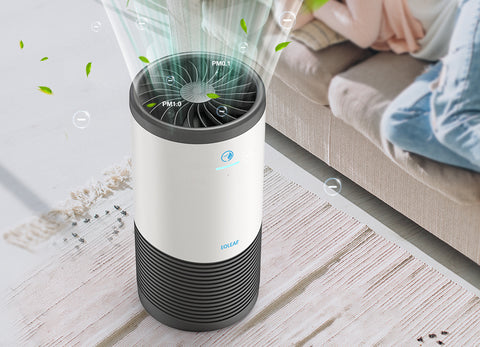
Air purifiers have become common in many homes these days. They are often claimed to keep the air clean and protect people from viruses, bacteria, and harmful particles. However, a new study by the University of Colorado in the United States has raised serious questions about their use. This research reviewed nearly 700 studies. Surprisingly, it found that most of the research was not done on humans, but on empty rooms or animals. This means there is very little strong evidence about how air purifiers actually affect people in real-life conditions.
Limited testing on humans raises concern
Researchers found that only about 8% of the studies tested air purifiers on humans. Most of the remaining research was based on laboratory settings, mice, guinea pigs, or only air samples. Because of this, it is still unclear what long-term impact these devices may have on human health.
The study also revealed that some air purifiers can produce harmful gases such as ozone and formaldehyde. Ozone can damage the lungs, worsen asthma, and increase the risk of heart-related diseases. Formaldehyde can cause irritation in the eyes, nose, and throat, and in high amounts, it may even lead to cancer.

Also Read: Dyson introduces new tech in their headphones with Air purifier feature capabilities
Some machines, especially those using ozone or ionisers, can react with chemicals already present indoors and create even more toxic particles. These particles are extremely small and can directly enter the lungs and even reach the bloodstream.
Lack of real-world testing
After analysing 672 studies published between 1920 and 2023, researchers found that many modern air-cleaning technologies have not been properly tested on humans at all. For example, there are dozens of studies on certain bacteria-killing technologies, but only a handful examine their effects on people.
According to researchers, companies often make big claims without having solid evidence to support them. Before installing these devices in places such as schools, hospitals, and offices, it is essential to prove that they are both safe and truly effective for human health.