


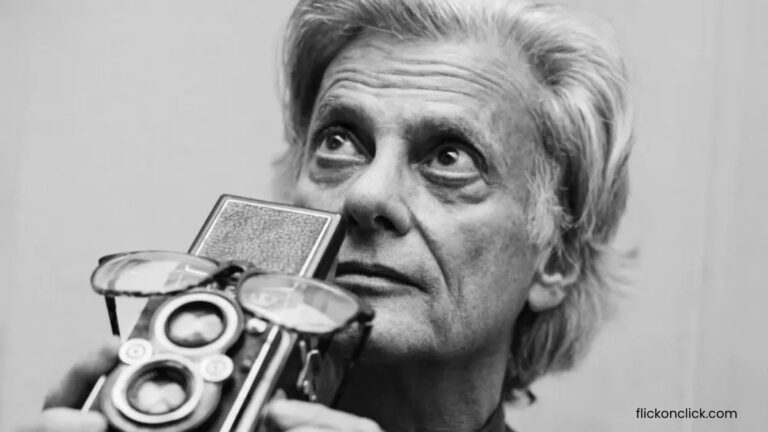
Avedon Review: ★★★★½ (4.5/5)
Avedon is a smart, moving, and lovely documentary with great editing and unforgettable photographs. It explains how a fashion legend became a humanist artist, and it is Ron Howard’s best documentary yet.
Rating: ★★★★½ (4.5/5)
Genre: Documentary
Language: English
Director: Ron Howard
Editor: Andrew Morreale
Featuring: Richard Avedon, Tina Brown, Twiggy, Isabella Rossellini, Calvin Klein, John Avedon
Platform: Netflix
Some documentaries tell you about a person. Avedon makes you see the world the way that person did. Ron Howard’s new film on the great photographer Richard Avedon is now on Netflix, and it is a real treat for anyone who loves images, stories or great filmmaking.
Avedon was a king of high fashion, a world of glamour and impossible beauty. Yet his work was also deeply human and democratic. That is the big puzzle at the heart of this film, and Howard explains it well. He uses old clips and interviews to put Avedon in the middle of the story.
He also talks to models, critics and art world names, including Tina Brown, Twiggy, Adam Gopnik, Calvin Klein and Avedon’s own son, John. James Martin from the Richard Avedon Foundation takes us into the archives, where we see the work from around 16,000 sittings across 60 years.
The film opens with a clip of Avedon saying he follows no rules, no laws, and no advice. Then comes a quick montage of his portraits, with John Lennon, Orson Welles, Michael Jordan, Elizabeth Taylor, Groucho Marx and Marilyn Monroe, among others. Every face looks timeless.
Each person looks like the way you imagine them, and yet also different from anything you have seen before. More direct. More themselves. The strange part is that you cannot see how he did it.
The film shows that his real skill was not technical. Avedon did not care about f-stops. His skill was in how he ran a session.
Isabella Rossellini says that other photographers shoot and shoot, but Avedon took a picture now and then, asked you to think of something, and ended up with maybe ten shots in total.
He says he would waste half an hour over coffee, and then, with only minutes left, he and the subject would step up to the white paper background. That is where the magic happened.
The white background has a great origin story. As a teen, Avedon joined the Merchant Marines at 19 and was placed in the photo department, where he took around 100,000 ID portraits of workers and soldiers against a white wall. It was a dull job.
But he noticed how those plain pictures showed each person so clearly. With nothing else in the frame, every face stood out on its own. He took a thankless job and turned it into a whole new way of seeing.
The film is full of such stories. We learn how Charlie Chaplin held up devil horns at the end of a session in 1953, and how that became one of Avedon’s most famous images. We hear about his long shoot with Marilyn Monroe in 1957.
All day she gave the camera her famous glow, but the best picture came at the end, when she let her guard down for ten seconds and drooped a little. In that photo, you see the real woman behind the star. The film also shows him photographing oil workers in Oklahoma,
American generals in Vietnam and people from the Warhol Factory. It touches on the sad story of his mentally ill sister, his troubled marriages, and how he used a portrait of his aging father to make peace with him.
Best of all is the editing. Andrew Morreale cuts the hundreds of photographs together in a way that feels almost like music. The pictures build in your mind slowly, and the whole film becomes a kind of lesson in how to tell a story with images.
If you want more to watch, our Possible Love review covers a slow Korean drama about class and who gets used. For a big fantasy series, read our Rings of Power Season 3 review, and for a quick thriller, try our Blind Game review.
Avedon is smart, warm, and gorgeous to look at. Every photograph he took was trying to open your eyes, and this film does the same.
Avedon is now streaming on Netflix.