


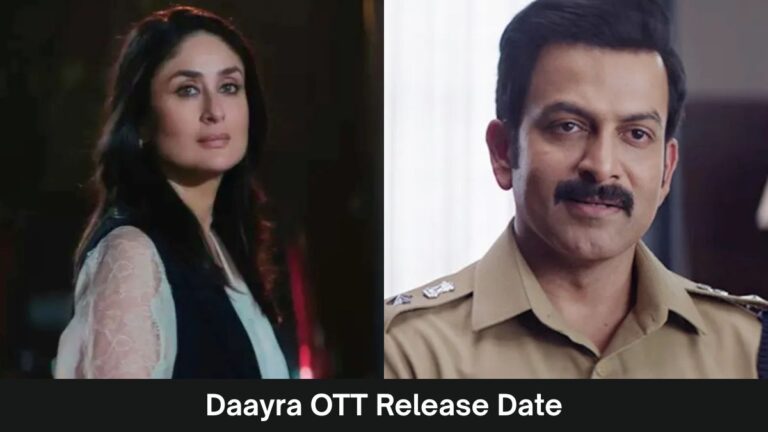
Kareena Kapoor Khan and Prithviraj Sukumaran’s crime thriller Daayra is finally making its way to OTT after its theatrical release. Directed by Meghna Gulzar, the film explores a controversial police encounter and the difficult questions surrounding justice, law, and police accountability.
The movie was released in cinemas on September 18, 2026. Now, viewers who missed it on the big screen will get an opportunity to watch it from home. Daayra is scheduled to premiere on Netflix on November 13, 2026.
Daayra OTT Release Date: When and Where to Watch?
Daayra will start streaming on Netflix on November 13, 2026. The platform has listed the film on its official website, confirming its digital release date.
The film was originally released in Hindi and Malayalam theatres. However, Netflix’s confirmed listing identifies it as a Hindi thriller. The OTT release comes less than two months after its theatrical debut.
The November 9-15 period is bringing several interesting titles to streaming platforms. Viewers can also check the new OTT releases arriving between November 9 and 15 on Netflix, Prime Video, JioHotstar and other platforms. Another upcoming title worth following is Alicia’s Law Part 1, starring Fernanda Castillo in a gripping legal drama.
What Is the Story of Daayra?
Daayra focuses on the thin line between justice and revenge. The story begins with a disturbing rape and murder case that creates public outrage. The investigation takes a controversial turn when four suspects are killed in a police encounter led by DCP Raman Kumar, played by Prithviraj Sukumaran.
Following the encounter, Raman becomes a public figure, with many people supporting his actions. However, questions soon emerge about whether the operation was lawful or whether the police crossed their limits.
Kareena Kapoor Khan plays DCP Ajooni Kohli, an officer who believes that justice must be delivered within the boundaries of the law. She is assigned to investigate the encounter and examine Raman’s actions.
As Ajooni looks deeper into the case, she finds inconsistencies that make the situation more complicated. Her approach clashes with Raman’s views, creating the central conflict of the film.
The story explores an important question: should police officers act according to public demand for immediate punishment, or must they always follow legal procedures, even under pressure?
Daayra Cast: Who Stars in the Film?
Kareena Kapoor Khan and Prithviraj Sukumaran lead the film. Kareena plays DCP Ajooni Kohli, while Prithviraj portrays DCP Raman Kumar.
The supporting cast includes:
- Kanwaljit Singh
- Achint Kaur
- Jitendra Joshi
- Anuja Sathe
- Seema Azmi
- Biswapati Sarkar
- Upendra Chauhan
The performances of Kareena and Prithviraj are among the key attractions of the film. Their characters represent two different approaches to policing and justice, giving the story its emotional and dramatic weight.
Viewers interested in the film’s production details can also read about the Daayra cast salaries and reported movie budget.
Who Directed Daayra?
Meghna Gulzar has directed and co-written Daayra. She is known for films such as Talvar and Raazi, which also explored serious subjects through crime and drama.
The film marks another collaboration between Gulzar and Junglee Pictures, the production company behind her earlier projects. Its story is inspired by real-life events and examines the challenges of maintaining justice when public anger and institutional power come into conflict.
Is Daayra Worth Watching on Netflix?
Daayra brings together a strong lead cast and a subject that remains relevant. Instead of presenting a straightforward police investigation, it raises questions about encounters, accountability and the difference between public opinion and legal justice.
The film’s OTT release gives audiences another chance to explore Meghna Gulzar’s take on these issues. Viewers who enjoy investigative dramas and crime thrillers may want to add it to their Netflix watchlist ahead of its November 13 premiere.
Editorial note: The November 13, 2026 Netflix release date is confirmed in the supplied reporting. The article describes the film’s central conflict without presenting the fictional events as a factual account of a specific real-life case.