


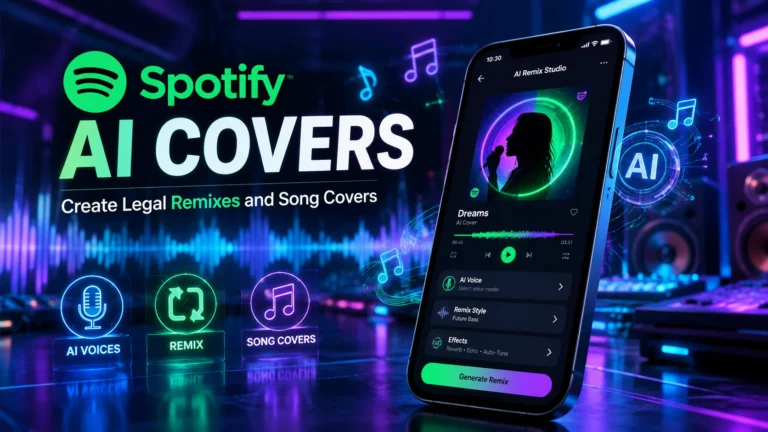
Spotify is taking another big step into the future of music with a new AI-powered feature that allows users to create AI-generated song covers and remixes legally. The update is designed to give music fans more creative freedom while still keeping artists and copyright rules protected.
The feature has already created huge buzz online because AI-generated covers have become extremely popular across social media and streaming platforms. Until now, many of these unofficial AI songs existed in a legal grey area.
Spotify Is Bringing AI Music Creation Into the Mainstream
Spotify’s new AI music tools are expected to let users experiment with tracks in a controlled and licensed environment. Instead of using third-party apps or unofficial websites, users can now generate covers and remix songs directly through Spotify’s supported ecosystem.
This move could completely change how listeners interact with music. Fans are no longer just passive listeners because they can now creatively reimagine tracks in different styles and voices.
What the New Spotify AI Feature Can Do
The platform reportedly allows users to create AI-generated covers using approved voice models and remix existing songs in new ways. Users may be able to change musical styles, add creative effects, or generate alternate vocal versions.
Spotify is focusing heavily on making these creations legal and properly licensed. That is one of the biggest differences between Spotify’s system and many viral AI music tools currently available online.
The company appears to be working closely with rights holders, labels, and artists to ensure copyright protection remains intact.
There Is a Catch Users Should Know About
While the feature sounds exciting, there are some important limitations. Users may not have unlimited access to every artist voice or every song in Spotify’s catalog.
Reports suggest Spotify will likely restrict AI-generated content to licensed voice models and approved music libraries. This means users cannot freely clone any singer’s voice without permission.
Some advanced features could also remain locked behind premium subscriptions or creator-focused plans.
Why Spotify’s AI Strategy Matters
AI-generated music has become one of the hottest topics in the entertainment industry. Viral songs using AI versions of famous singers have gained millions of views over the past two years.
However, these trends also created major legal and ethical concerns. Artists and record labels raised questions about consent, copyright ownership, and misuse of voices.
Spotify’s new approach could become a middle ground between creativity and copyright safety. Instead of fighting AI completely, the platform is trying to build rules around it.
AI Covers Could Become a Huge Social Trend
Short-form content platforms like TikTok, Instagram Reels, and YouTube Shorts have already shown how popular remix culture has become. AI-generated songs often spread quickly because they feel fresh, funny, or unexpected.
Spotify’s legal AI remix tools could make this trend even bigger. Fans may soon create alternate versions of trending songs and share them directly through social platforms.
This could also help smaller creators experiment with music production without needing expensive studio software.
Artists May Get New Creative Opportunities
The feature is not only for fans. Musicians and independent creators could also use these AI tools to experiment with new sounds, remix styles, and alternate vocal approaches.
For example, artists could quickly create acoustic versions, electronic remixes, or multilingual adaptations of their tracks. AI-assisted music production may also reduce the time needed for early creative experiments.
Spotify appears to be positioning itself as more than just a streaming app. The company increasingly wants to become a full music-creation ecosystem.
Also Read: Why Walkie Talkie Devices Are Useful for Family Safety and Coordination
Legal AI Music Could Change the Industry
One major reason this launch matters is because it introduces a more structured approach to AI-generated content. Music companies have been searching for ways to balance innovation with artist rights.
Spotify’s system may provide a safer alternative to unofficial AI apps that use voices without permission. If successful, other music platforms could follow the same direction in the coming years.
The move also reflects how AI is becoming deeply connected with entertainment, creativity, and digital experiences.
Spotify’s Future Looks More Interactive Than Ever
Spotify has spent the last few years expanding beyond basic music streaming. The platform already offers podcasts, audiobooks, AI DJs, personalized playlists, and smart recommendations.
Adding AI-generated covers and remixes makes the listening experience feel far more interactive. Users are no longer limited to consuming music exactly as it was originally released.
As AI tools become more advanced, music streaming platforms could eventually evolve into collaborative entertainment spaces where fans actively participate in shaping the content they listen to every day.