


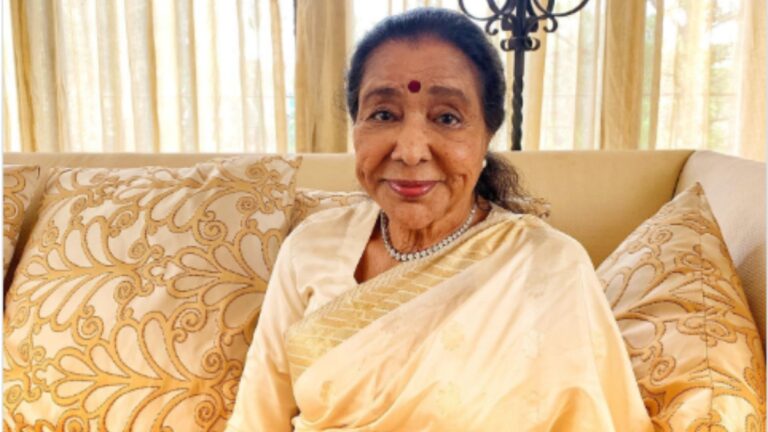
There are singers. And then some voices become part of the fabric of a culture — woven into weddings and road trips, into late-night radio and childhood memories, into moments of joy and grief that span generations. Asha Bhosle was one of those voices.
She passed away at the age of 92 at Breach Candy Hospital in Mumbai, leaving behind a silence that millions of people across India and the world are feeling very deeply right now.
Health Struggles Before Her Passing
Asha Bhosle had been admitted to the hospital recently after experiencing extreme exhaustion and a chest infection. Her family had asked for privacy during her treatment, and initial reports had mentioned a possible cardiac concern. Doctors later confirmed that she passed away due to multi-organ failure.
Her son Anand Bhosle confirmed the news. The family has shared that her last rites will be held in Mumbai with state honours, and tributes have already been pouring in from across the country — from musicians and filmmakers, from politicians and fans, and from everyone who ever felt something when her voice came through a speaker.
Seventy Years of Singing
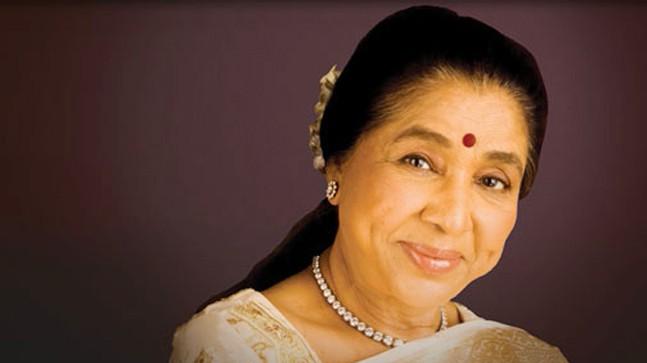
Asha Bhosle started singing when she was barely a teenager. She kept going for more than seventy years.
That alone would be remarkable. But what makes her story genuinely extraordinary is what those seventy years contained. Over 12,000 songs, by most estimates. Multiple languages. Every genre imaginable — classical, ghazals, cabaret numbers, folk songs, peppy dance tracks, deeply emotional ballads. If a style existed in Indian music, she sang it, and she sang it well.
She had the rare ability to make every kind of song feel like it was written specifically for her voice. A qawwali, a disco number, a melancholy romantic song from an art film — she moved between them without effort, without any sense that she was stretching or compromising.
The Songs That Stayed With Everyone
Certain songs are inseparable from her. Piya Tu Ab To Aaja. Dum Maro Dum. In Aankhon Ki Masti. Chura Liya Hai Tumne. Dil Cheez Kya Hai. The list goes on longer than most careers last.
Her work in Umrao Jaan showed one side — the delicate, aching quality she could bring to a lyric about longing and loss. Her collaborations with R.D. Burman showed another — the playful, free, utterly alive quality that made his compositions feel like they existed in a dimension of their own. Her songs in Teesri Manzil and Rangeela showcased yet another aspect of her talent.
She didn’t have one voice. She had a hundred voices, and she knew exactly which one each song needed.
Life in the Shadow — and Then Beyond It
For a long time, the story told about Asha Bhosle included the shadow of her elder sister Lata Mangeshkar. Both were daughters of the singer Dinanath Mangeshkar. Both went into playback singing. And for years, it was widely understood in the industry that Lata was the star and Asha was the other one.
There are accounts of Asha herself saying, bluntly, that she knew she would never get work as long as her sister was in the business.
What happened instead is one of the more interesting stories in Indian cultural history. Instead of remaining in that shadow, Asha carved out her own path. She sang the songs the more “respectable” assignments wouldn’t take — the cabaret numbers, the provocative tracks, the experimental work with composers like O.P. Nayyar who were willing to push into different territory. And in doing so, she built an identity that was entirely her own.
By the time both sisters were being discussed in the same breath as legends, it wasn’t as one towering figure and one runner-up. It was as two different kinds of greatness.
The Recognition That Came
The awards and honours accumulated over the decades — Dadasaheb Phalke Award, Padma Vibhushan, Filmfare awards across multiple eras, recognition from institutions well beyond India’s borders. She even found a different kind of fame internationally, with the British band Cornershop releasing a song in her honour — Brimful of Asha — that became a global hit and introduced her name to audiences who’d never seen a Bollywood film.
She received a Grammy nomination later in her career. She collaborated with musicians from diverse backgrounds and excelled in every context.
Also Read: Rakaa Cast Salary and Movie Budget: Allu Arjun Charges ₹175 Crore for Atlee’s Magnum Opus
Still Singing, Still Showing Up
What struck people who knew her or watched her in her later years was that she never stopped. She kept performing into her eighties, kept engaging with her fans, and kept surprising people with the warmth and energy she brought to everything she did.
There was nothing exhausted about her. She’d been doing this for seventy years, and she still seemed to genuinely enjoy it — the performance, the music, the connection with an audience. That kind of sustained love for what you do is rare in any field.
What Her Loss Feels Like
For millions of people, Asha Bhosle’s songs aren’t just entertainment. They’re attached to specific memories — a song that played at a relative’s wedding decades ago, a track that got someone through a difficult time, a melody that’s so deeply embedded in childhood that hearing it now brings back something almost physical.
That’s the particular kind of loss that comes with a voice like hers. It’s not abstract grief over a cultural figure. It’s personal, even for people who never met her. This is because her songs were deeply ingrained in their lives, not merely observed from the outside, but intricately woven into the fabric of their days, years, and meaningful moments.
India has lost voices before. But there is only one Asha Bhosle. There will not be another.
Her last rites will be held at Shivaji Park in Mumbai. The family has requested that fans who wish to pay their respects do so respectfully and follow the arrangements made by the family.