


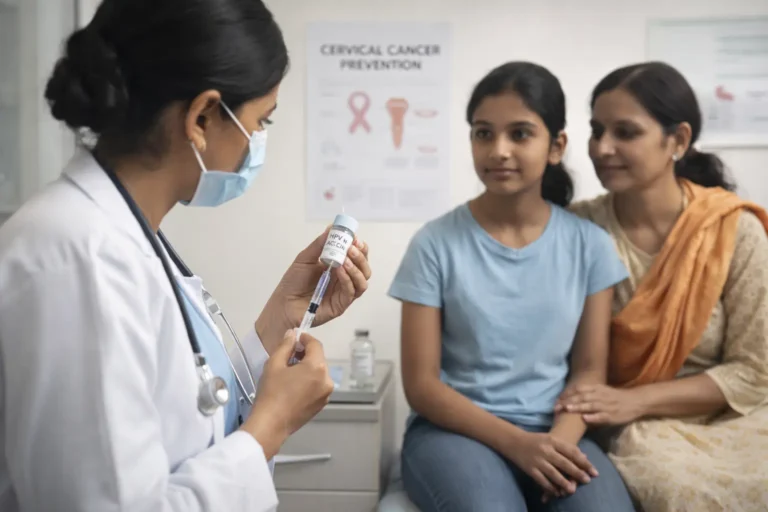
India is preparing to launch a nationwide HPV vaccination campaign to prevent cervical cancer among adolescent girls. The rollout is expected to begin in late February or early March 2026 across several states.
The programme mainly targets girls aged 9 to 14 years, as vaccination at this age provides stronger protection. Health officials say early vaccination can significantly reduce future cervical cancer cases.
Why HPV Vaccination Is Important
Human Papillomavirus, or HPV, is a common virus that spreads mainly through skin-to-skin contact. Some types of HPV can cause cervical cancer and other cancers later in life.
Doctors say vaccination helps the body build immunity before exposure to the virus. This makes it one of the most effective preventive measures against cervical cancer.
| Topic | Details |
|---|---|
| Vaccination Programme | Nationwide HPV vaccination drive starting late Feb or early March 2026 |
| Target Group | Adolescent girls aged 9–14 years |
| Main Goal | Prevent cervical cancer caused by Human Papillomavirus (HPV) |
| Vaccine Used Initially | Quadrivalent Gardasil vaccine |
| HPV Types Covered | HPV 6, 11, 16, 18 (linked to cancer and genital warts) |
| Doses Procured (Example) | Telangana procured about 4.6 lakh doses |
| Global Support | Vaccine supply supported by global health alliances |
| WHO Recommendation | Single-dose HPV vaccination supported for ages 9–20 |
| Effectiveness | Around 80–97% protection against key HPV strains |
| Additional Protection | Some cross-protection against HPV types 31, 33, 45 |
| Common Side Effects | Injection-site pain, mild fever, headache, dizziness |
| Serious Side Effects | No major safety concerns confirmed by health agencies |
| India’s Target | Vaccinate over 1 crore girls annually |
| Global Aim | WHO target to eliminate cervical cancer by 2030 |
Telangana Begins Early Rollout
Telangana has already procured around 4.6 lakh doses of the quadrivalent Gardasil vaccine. This vaccine protects against HPV types 6, 11, 16, and 18, which are linked to cancers and genital warts.
The state’s initiative is part of a broader national effort supported by global health partnerships. Nationwide supply includes crores of doses supported through international vaccine alliances.
Global Push to Eliminate Cervical Cancer
The vaccination campaign aligns with the World Health Organization’s goal to eliminate cervical cancer as a public health problem by 2030. Countries worldwide are expanding HPV vaccination programmes to meet this target.
India aims to vaccinate more than one crore adolescent girls every year. Public health experts say this could significantly lower the cancer burden in the coming decades.
Single-Dose Vaccination Strategy
Recent research shows that a single HPV vaccine dose offers strong protection. Studies report effectiveness above 90 percent against major cancer-causing HPV strains.
Because of this evidence, health authorities are considering single-dose schedules for adolescents. This approach makes vaccination easier, faster, and more cost-effective.
International Health Guidelines
The World Health Organization now supports single-dose HPV vaccination for individuals aged 9 to 20 years. This recommendation helps countries expand coverage, especially where healthcare access is limited.
Health agencies in several countries have also updated their guidelines. The shift reflects growing confidence in long-term protection from fewer doses.
Scientific Evidence on Effectiveness
Long-term studies show HPV vaccines maintain strong antibody levels even after a single dose. Research over 10 to 11 years indicates continued protection against infection.
Trials such as the Costa Rica HPV Vaccine Study suggest similar protection between single-dose and multi-dose schedules. Experts consider this encouraging for large public health campaigns.
Protection Against Multiple HPV Types
The vaccine mainly targets HPV types 16 and 18, which cause most cervical cancer cases. Some studies also show cross-protection against other strains like 31, 33, and 45.
Although protection against these additional strains may vary slightly, overall cancer prevention benefits remain significant. This makes vaccination a powerful preventive tool.
Safety Profile of HPV Vaccines
Health authorities confirm HPV vaccines are generally safe. Most side effects are mild and temporary.
Common reactions include pain or swelling at the injection site, mild fever, headache, or dizziness. These effects usually resolve quickly without treatment.
Monitoring Vaccine Safety
Public health agencies closely monitor vaccine safety through surveillance systems. No serious side effects have been consistently linked directly to HPV vaccination.
Doctors note that fainting episodes seen in adolescents are not unique to this vaccine. Similar reactions occur with other routine vaccinations.
Government Strategy and Planning
India’s vaccination drive has been planned with guidance from national technical advisory groups. Free vaccination programmes are expected to improve accessibility for families.
Officials aim to conduct awareness campaigns alongside vaccination. These efforts focus on reducing misinformation and encouraging participation.
Importance of Early Vaccination
Experts recommend vaccination before exposure to HPV. Adolescence is considered the ideal time because the immune response is stronger.
Early vaccination also ensures long-term protection before adulthood. This reduces future cancer risk significantly.
Public Awareness Challenges
Despite strong scientific evidence, awareness about HPV vaccination remains limited in some regions. Cultural concerns and lack of information sometimes delay acceptance.
Health campaigns are focusing on education through schools, healthcare workers, and community outreach. Clear information helps parents make informed decisions.
Role of Healthcare Providers
Doctors and public health workers play a key role in explaining vaccine benefits. Their guidance often influences family decisions about vaccination.
Training programmes are being expanded to ensure healthcare professionals provide accurate advice. This supports safe and effective implementation.
Also Read: Kerala To Keralam: Union Cabinet Approves State Name Change Before Assembly Polls
Economic and Public Health Impact
Preventing cervical cancer through vaccination reduces long-term healthcare costs. Treatment for advanced cancer can be expensive and emotionally challenging.
Vaccination offers a cost-effective preventive solution. Experts believe widespread coverage will reduce disease burden and improve women’s health outcomes.
Future Plans for HPV Vaccination in India
Authorities plan to gradually expand vaccination coverage nationwide. More states are expected to adopt structured programmes in the coming months.
Researchers and policymakers continue monitoring vaccine effectiveness and safety. Ongoing studies will help refine strategies for future public health initiatives.