


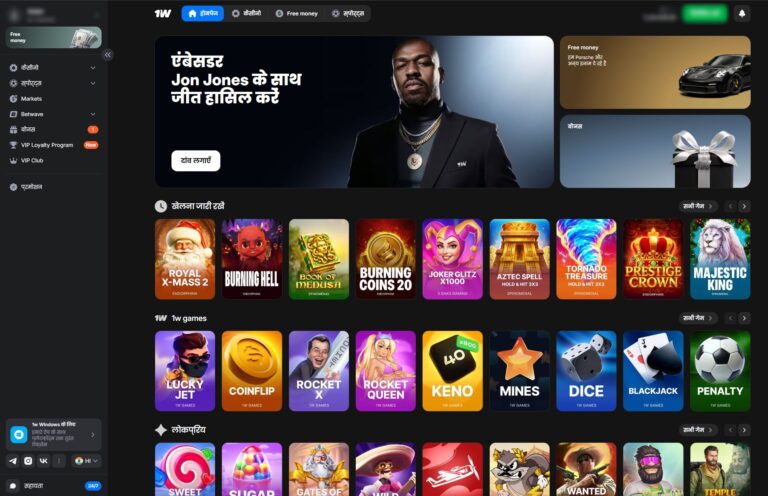
My October 2026 test for India gave me a clearer picture of the registration process, payment options, identity checks and bonus conditions. I found a usable interface, but also procedures that can slow things down, especially when someone is withdrawing for the first time.
I wouldn’t treat one successful transaction as proof that every future payment will go smoothly. Equally, a pending withdrawal isn’t enough on its own to establish wrongdoing. The useful question is what happened to the money, which stage caused the delay and whether the issue was resolved.
This was a supervised test involving a close friend who registered his own account, rather than a second account in my name.
Why I Decided to Test 1win Myself
I’ve been familiar with the platform for more than two years. That’s long enough to know where things are, how the cashier works and which account settings tend to cause confusion.
It’s also long enough for my knowledge to become outdated.
A review based on what I saw in 2024 wouldn’t necessarily tell someone what to expect in October 2026. Payment methods change. Interfaces get updated. Verification requirements may look different to someone registering today.
So, from 1 to 30 October, I decided to examine the current experience rather than write another account of what I remembered.
There was one complication. I already had an account, and creating another one would conflict with the platform’s rules on multiple accounts.
Instead, I asked a close friend who had never used the site to participate. He registered with his own details, used his own money and payment methods, and remained the account’s sole owner throughout. He consented to the checks and shared his observations with me.
I guided him through parts of the process, but I didn’t treat his account as mine. Where I describe something he did, that’s his experience, not an action I’m claiming to have performed personally.
That distinction matters. A newcomer notices things an experienced user has stopped noticing.
What I Read Online Before Signing Up
Before the test, I revisited discussions that appeared in searches for “1win scam”, particularly complaints about delayed withdrawals, document requests, disputed bonus conditions and suspicious links circulating outside official channels.
The search phrase 1win scam or legit brings together several different questions.
Some people want to know whether the site processes payments. Others are worried about verification. Some have encountered an unfamiliar website address or someone offering to arrange deposits on their behalf.
Those situations shouldn’t be treated as interchangeable.
A bank taking additional time to process a transfer isn’t the same as a platform refusing a withdrawal. A bonus disappearing after a user breaks its conditions isn’t necessarily evidence of a payment problem. And a stranger claiming to represent customer support isn’t automatically connected to the company.
I wanted to examine these situations separately, using the current interface wherever possible.
My Test Rules: Budget, Dates and Payment Methods
We set a budget ceiling of ₹20,000 for the month.
That was money allocated for the test, not an amount we expected to recover. We weren’t trying to turn the exercise into a profit-making challenge or chase losses to produce a favourable result.
We also agreed on several boundaries:
- The account, documents and payment methods would belong exclusively to my friend.
- We would compare bank card, e-wallet and cryptocurrency payments without relying on a particular provider as representative of every provider.
- We would examine the sportsbook and casino interface, but avoid increasing stakes just to make the review more interesting.
- We would distinguish published processing estimates from actual transaction times.
- We would record unexpected checks instead of attempting to bypass them.
For payment comparisons, we used an illustrative allocation of ₹6,000 for the bank card, ₹6,000 for the e-wallet and ₹8,000 for cryptocurrency.
The purpose was to compare the process, not to declare one method universally superior.
Week 1: 1win Registration and KYC
My friend handled the registration himself. It took approximately ten minutes.
After that, I suggested he verify his email address and phone number before doing anything else.
He initially assumed this was the same as identity verification. It isn’t.
Email confirmation helps establish a working contact channel, including for withdrawal confirmation codes. A verified phone number can also make account recovery easier if access becomes a problem.
He completed both steps and received the associated promotional credits in his bonus balance. The whole process, including checking the messages and account balance, took roughly half an hour.
No identity documents were requested during this initial stage.
That’s worth spelling out because people often use the word verification to describe several different procedures.
Documents I Was Asked For
Strictly speaking, I wasn’t asked to submit documents during my friend’s registration. It was his account, and the request came later, when he initiated his first withdrawal.
At that point, he contacted support to clarify which identity documents were acceptable for his account in India and how they should be submitted.
The answer was practical: use an accepted identity document and make sure the required information is clearly visible.
I’m deliberately not publishing a supposedly permanent list of documents. Requirements can depend on the account and the type of check, and the list may change.
For anyone facing the same situation, the safer approach is to follow the instructions shown in the account or confirmed by official support.
Documents should be submitted only through the designated secure process. They shouldn’t be sent to someone who contacts you unexpectedly on Telegram.
How Long 1win Verification Took
The initial email and phone checks were completed within the first half-hour after registration.
Identity verification was a separate event, completed later in the test. Once the requested documents were submitted, that review took approximately one day.
We also encountered an additional confirmation when the account currency and payment method were changed. That didn’t require another full set of identity documents.
These are different procedures, and treating them as one long KYC process would make the timeline misleading.
The published guidance indicates that identity checks are often completed within 24 hours, although manual review or missing information can extend the process.
Our experience fell within that general range, but I wouldn’t promise the same turnaround to another user.
Week 2: 1win Deposits and First Bets on Cricket
Once the account was ready, we moved on to payments and the parts of the site my friend actually wanted to explore.
He tried some reel games and looked at live-dealer titles. Neither became the main focus.
The sportsbook did.
He’s a cricket fan, so finding cricket alongside football and esports immediately caught his attention. He was particularly interested in comparing pre-match markets with live betting.
For me, this was also an opportunity to see whether the sportsbook controls I remembered were still available.
Payment Methods I Used
My friend tested three deposit categories: a bank card, an electronic wallet and cryptocurrency.
We initially wanted to include UPI, given how familiar it is to users in India. But it wasn’t displayed among the available options for this account at the time.
That doesn’t prove UPI is unavailable to everyone. Payment methods can vary according to account settings, region, currency and provider availability. The cashier is a more reliable reference than an old review listing every method the platform has ever supported.
The process was similar across the methods: open Profile, choose Deposit, select an available option, enter the amount and follow the payment instructions.
The differences appeared in the processing stage.
| Method | Deposit amount | Platform’s estimated processing time | Our test result |
| Bank card | ₹6,000 | Usually instant; up to 15 minutes if additional processing is required | 12 minutes |
| E-wallet | ₹6,000 | Usually instant; up to 15 minutes if additional processing is required | 4 minutes |
| Cryptocurrency (USDT, TRC-20) | ₹8,000 | Approximately 1–3 minutes on TRON | 2 minutes |
What our test showed
Cryptocurrency was the fastest method in our example. The USDT deposit appeared in the account after just two minutes, followed by the e-wallet deposit at four minutes. The bank card took the longest, with the balance updating after 12 minutes.
All three results fell within the platform’s stated processing ranges. The card payment was noticeably slower than the other two, but it still arrived within the additional 15-minute processing window.
The difference matters because a payment that doesn’t appear instantly isn’t necessarily delayed. With a bank card or e-wallet, the payment provider may need extra time to complete the transaction. With cryptocurrency, the blockchain network and its confirmation requirements also affect the result.
I wouldn’t use these three transactions to declare crypto the fastest option for everyone. They show how the methods compared in this particular example. Another user’s results may differ depending on the provider, network traffic and account settings.
Markets and Odds: My Honest 1win Impression
My friend spent most of his time in the cricket section.
We looked at both pre-match and live markets. The distinction is familiar to experienced bettors, but it was useful to see how the interface handled it for a newcomer.
A pre-match selection gives you time to examine the available market before the event begins. Live odds can change while you’re considering a selection, especially when the match situation changes quickly.
The sportsbook still offered the settings I remembered from my earlier use. In particular, users could choose how to handle odds changes and adjust their display preferences.
I explained why the automatic acceptance setting deserved attention. If odds move before a bet is confirmed, a user should understand whether the interface will accept the new value or ask for confirmation.
We also assembled an accumulator with five selections, each intended to meet the promotion’s minimum odds requirement.
Four outcomes went our way. One didn’t.
That meant the accumulator lost.
It was disappointing, but it also gave us a straightforward example of how a promotional calculation can look attractive before the result and amount to nothing afterwards.
Week 3: My First 1win Withdrawal — Is 1win Legit or Scam When It Comes to Payouts?
By the third week, we had reached the part of the test I considered most important: understanding what happens between requesting a withdrawal and actually receiving the money.
The first thing to remember is that the cashier isn’t the only system involved.
A withdrawal can pass through account checks, a payment provider, a bank or a blockchain network. A transaction shown as processed by the platform may still be travelling through another part of that chain.
We examined the withdrawal options available in my friend’s account and compared them with the methods used for deposits.
A withdrawal method doesn’t necessarily have to be identical to the deposit method, provided the option is available and the account meets the applicable requirements. For this comparison, we focused on the same payment categories to avoid introducing unnecessary variables.
Withdrawal Timeline (Screenshots)
The standard withdrawal process was straightforward to locate:
- Sign in and open Profile.
- Select Withdraw.
- Choose an available payment method.
- Enter the amount.
- Confirm the request using the verification code sent by email.
The first request also triggered the identity check described earlier.
For context, these are the processing ranges provided in the payment guidance:
| Withdrawal method | Published estimate | What may affect the final arrival |
| Cryptocurrency | Often within 15 minutes; Bitcoin may take around 30 minutes | Network confirmations, provider processing, security review |
| Bank card | Up to 24 hours | Bank and payment-system processing |
| E-wallet | Often 5–30 minutes, occasionally up to 24 hours | Provider availability and additional checks |
| Bank transfer | Additional processing may take up to 3 business days | Banking procedures and intermediary processing |
I have personally experienced a SOL withdrawal that completed in about 15 minutes and a bank transfer that took more than 24 hours after the funds had already left the platform.
Those were earlier transactions on my own account, not results from my friend’s October account. I mention them because they explain why I wanted the comparison in the first place.
A 15-minute crypto withdrawal is one result, not a promise. Another transaction may take longer without anything being wrong.
What Caused the Delay (If Any)
There were two separate sources of friction during the October test.
The first was identity verification at the initial withdrawal. My friend had confirmed his email and phone during registration, but that didn’t replace the later KYC requirement.
The second was an additional account confirmation after changing the currency and payment method.
Neither situation should automatically be described as a refused payment. A pending check and a rejected transaction are different outcomes.
When something takes longer than expected, I look at the transaction status first. If the platform has processed the request, the next delay may be outside its direct control. If the request is still awaiting verification, the useful question is which requirement remains incomplete.
We didn’t need to guess about the document requirements because we asked support directly.
Fees and Limits I Noticed
The cashier is the place to check the currently available methods, minimum and maximum amounts and any charges displayed before confirming a transaction.
We didn’t identify a separate platform withdrawal commission in the information supplied for this test. That doesn’t mean every possible transaction is free.
Banks, payment services and blockchain networks can impose their own costs. The amount received can also differ when currency conversion is involved.
I wouldn’t quote a universal minimum or maximum withdrawal amount either. Those values may depend on the account currency and payment method.
For a meaningful comparison, record the amount requested, any displayed fee, the amount received and the time at which the funds became available.
Week 4: 1win Customer Support and Bonus Terms
I wanted the final week to cover two subjects that often create unnecessary confusion: support and promotions.
My friend contacted support twice during the test. Both conversations were conducted in Hindi.
The first concerned bonus conditions and withdrawing money. The second concerned the identity documents required for his first withdrawal.
Both questions were resolved within the day.
That was useful to see because I’ve contacted support in English and Hindi on my own account before. I’ve generally received replies, although my earlier conversations sometimes took longer than necessary.
Over time, I learnt to describe the issue precisely and provide the relevant account and transaction information upfront. It reduced the amount of back-and-forth.
Testing Support With a Real Question
The first question came from a warning in the account interface.
My friend noticed that proceeding with a withdrawal could affect an active bonus. Rather than dismissing the warning or clicking through without understanding it, he asked support what would happen.
The explanation helped us separate the money available for withdrawal from promotional funds subject to additional conditions.
The second conversation happened when the first withdrawal prompted a KYC request.
We asked which identity documents were suitable for his account in India and how the files should be submitted. Support explained the requirements, and the verification was completed within a day.
The important result wasn’t that support replied in a particular number of minutes. We didn’t run a controlled response-time benchmark.
It was that both conversations produced usable instructions and the questions were resolved.
Bonus Wagering: What I Missed at First
My friend received bonuses for verifying his email address and phone number, along with a welcome bonus for new users.
At first, he assumed that once a bonus appeared in his account, he could use it or withdraw it like regular money. But promotional funds come with their own conditions, and receiving a bonus doesn’t mean those conditions have already been met.
We noticed this when preparing a withdrawal. The account displayed a warning that proceeding could result in losing the active bonus. Rather than guessing what it meant, we contacted support.
They explained that withdrawing before completing the wagering requirements could mean giving up the remaining bonus. My friend decided not to treat the promotional balance as money he could freely withdraw.
That was probably the most useful lesson from the promotions we tried. The bonus itself was easy to receive, but understanding when it could be used, what counted towards wagering and what happened if we withdrew early required more attention.
I’d recommend reading those conditions before accepting an offer, not when you’re already trying to withdraw.
Moments That Made Me Think “1win Scam”
Some situations during the test reminded me why people search for “1win scam” in the first place. But not all of them originated with the betting platform itself.
I wanted to examine three in particular: an unsolicited Telegram message, confusing website addresses and an additional account check.
Each required a different response.
Messages From Telegram “Agents”
We ran a small experiment in a public Telegram discussion.
My friend asked about getting help with vouchers. Soon afterwards, someone contacted him privately and claimed to represent customer support.
The person requested account login information and suggested making deposits in several amounts.
We didn’t follow those instructions or share credentials.
Nothing in that conversation established that the person was genuinely connected to the platform. It was an unsolicited claim of affiliation.
That’s why I wouldn’t use an unfamiliar Telegram contact to handle account access, deposits or withdrawals.
If someone claims to represent support, verify the claim through the support channel accessible from your account or a separately confirmed official contact address. Never provide passwords or one-time verification codes to a stranger.
Different Website Addresses
I also asked my friend to find the site independently before registering, but not to create an account until we’d checked the address.
He found several pages that looked similar enough to make the choice less obvious than I expected.
We couldn’t establish the authenticity of every page just by looking at it.
We eventually used a link associated with a verified Instagram profile and checked the destination before proceeding. A verification badge is a useful clue, but not sufficient proof by itself. The destination address still needs scrutiny.
Afterwards, we installed the site’s web application on the computer so that my friend wouldn’t have to repeat the search every time he wanted to open it.
That reduced one source of confusion, although a saved shortcut isn’t a substitute for checking that the destination remains trustworthy.
Extra Account Checks
The additional account confirmation appeared when the currency and payment method were changed.
I understand why that can feel irritating. From the user’s perspective, it may seem as though another obstacle has appeared just when they’re trying to access their money.
I’ve encountered additional reviews on my own account too. I wasn’t always told exactly what triggered them.
In this case, the extra confirmation was completed without a second full document submission.
What Each One Turned Out to Be
The three situations had different explanations.
The Telegram message was an unverified third party claiming to offer assistance. We had no reason to trust the request.
The confusing website addresses were a navigation and authenticity problem. We avoided registering until we had checked the source and destination.
The account review was an additional security procedure associated with a change in payment settings.
It’s reasonable to dislike repeated checks. I certainly don’t enjoy them. But I wouldn’t describe a completed verification process as proof that the platform intended to retain the money.
At the same time, users should be able to obtain clear information about what is required and how to resolve a pending request.
1win Legit or Scam: What I Would Tell a Friend in India
If a friend asked me, “Is 1win legit or scam?”, I wouldn’t give a one-word answer. I’d explain what we actually tested and where the limits of our experience begin.
I’d explain what the test covered, what worked, what required additional steps and what remains dependent on the payment provider or account circumstances.
The interface was familiar to me and approachable to my friend. He particularly appreciated the cricket markets, and both Hindi and Hinglish localisation made the site easier to navigate.
The ability to work with different account currencies was useful, although changing payment settings also brought additional checks.
I would also point out that a month of testing cannot establish how every account will be treated.
A review can document specific transactions and procedures. It can’t guarantee future outcomes or resolve the legal status of online real-money betting in every jurisdiction.
For readers in India, the applicable legal restrictions require particular attention and should be checked against current official guidance.
Who 1win Suits
From a usability perspective, the interface may be understandable to adults already familiar with sportsbook markets, odds and the risks of gambling.
Someone who follows cricket will recognise the distinction between pre-match and live markets. Someone who has used betting platforms before will probably understand why odds can change before a wager is accepted.
The Hindi-language interface and support were practical advantages during our test.
But usability isn’t a recommendation to participate. Legal eligibility, payment availability and personal financial circumstances matter more than whether an interface is convenient.
Who Should Avoid Online Betting Altogether
Anyone under 18 should avoid gambling.
So should people who need the money for rent, bills, debt repayments or other essential expenses.
I’d also advise against betting if you’re trying to recover previous losses, feeling compelled to increase your stakes or finding it difficult to stop.
If an activity is making you anxious about money or encouraging you to hide spending from people close to you, that’s a reason to step away rather than look for another promotion.
No bonus or convenient payment method changes the underlying financial risk.
Pros and Cons After 30 Days
| Pros | Cons |
| Registration was straightforward for a new user | Contact verification and identity verification are separate steps |
| Hindi and Hinglish localisation made navigation easier | Additional account checks can interrupt the process |
| Cricket markets included pre-match and live options | Odds changes require attention to the selected settings |
| Multiple payment categories were available | UPI wasn’t displayed for this account during the test |
| Support provided useful answers in Hindi | Bonus conditions required careful reading |
| Account currency options offered flexibility | Changing payment settings could trigger another confirmation |
The main lesson wasn’t that every feature worked perfectly.
It was that several frustrations became easier to understand once we separated the platform’s rules, account verification and external payment processing.
I also came away with a stronger view about reviews based entirely on memory. A familiar interface can make an experienced user overlook the exact steps a newcomer finds confusing.
Having my friend participate was more informative than pretending I was registering for the first time.
FAQ
Is 1win scam or legit in India?
1win holds a licence issued by the Curaçao Gaming Authority, and the website was accessible during our test in India. However, an international gaming licence and access to a website don’t automatically mean that online betting is legal in India. If you’re unsure, check the current Indian legislation and applicable restrictions before using the platform.
Is 1win betting site legit or scam for new users?
New users should pay particular attention to account ownership, verification requirements, payment availability and promotional terms.
In our test, the new account was registered in approximately ten minutes, with email and phone confirmation completed shortly afterwards. Identity verification was requested later, at the first withdrawal.
Those are separate steps, and another account may encounter different requirements.
Is 1win online betting legit or scam for cricket fans?
Cricket markets were available in the sportsbook we examined, including pre-match and live events.
That says something about the available features, not about the likelihood of making money or the legal permissibility of betting. Cricket knowledge doesn’t eliminate the risk of losing a wager.
What should I do if my 1win withdrawal is delayed?
Start by checking the withdrawal status in your account’s payment history.
Confirm that any requested identity checks are complete and that the payment details are correct. Then compare the elapsed time with the estimate for the selected method.
Crypto transactions may depend on network confirmations. Bank cards and e-wallets can involve provider processing, while bank transfers may take additional business days.
If the expected time has passed, contact official support with the transaction date, amount, method and reference number, where available.
Don’t send your password, verification codes or identity documents to someone who approaches you through an unofficial messaging account.
Responsible Gambling (18+): The Budget I Set and Why
We established a ₹20,000 ceiling before beginning the test.
That figure was a spending limit, not a target to win back. The purpose of the limit was to prevent the review from turning into a series of increasingly expensive attempts to produce a particular outcome.
Betting is paid entertainment, not a way to earn money or clear debt. Decide on a budget and a time limit before you start, and stop when either one runs out. Chasing losses almost always makes them bigger.
Some signs deserve attention: betting more than you planned, hiding it from people close to you, borrowing to deposit, or feeling restless when you can’t play.
If any of that sounds familiar, talk to someone you trust. The free Tele-MANAS helpline (14416) and services such as Gambling Therapy offer support, including resources relevant to Hindi-speaking users.
Deposit limits and self-exclusion tools are worth considering before gambling becomes a problem, rather than in the middle of a losing run.
Disclosure: This article discusses a betting platform and may contain a sponsored link. Any commercial relationship must be disclosed explicitly before publication. Editorial conclusions should reflect the evidence, including unfavourable findings.