


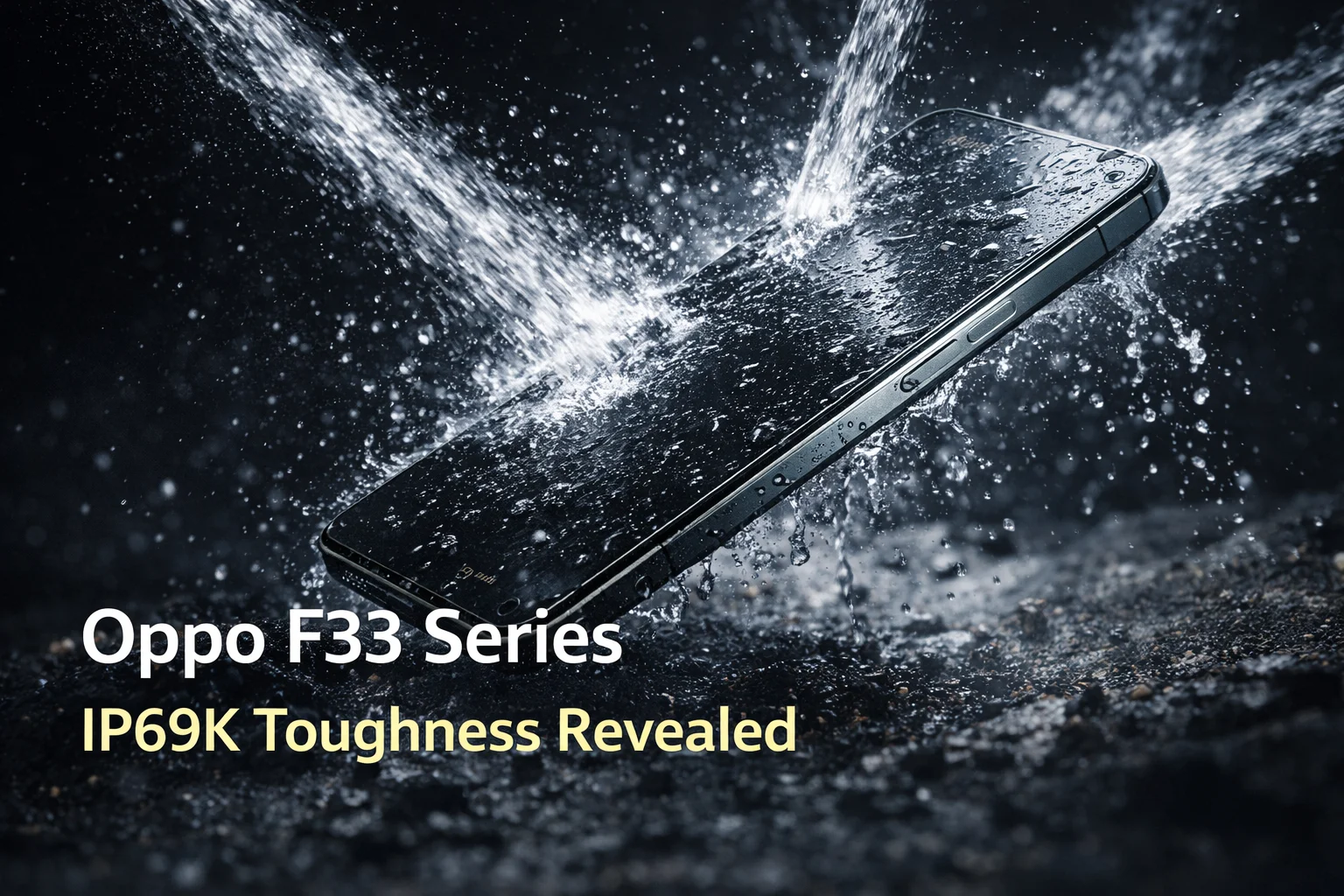
Most smartphone launches in 2026 follow a predictable pattern. Thinner design, slightly better camera, new chip, repeat. The Oppo F33 series is doing something noticeably different — it’s leading with durability in a way that mid-range phones rarely do.
Launching around April 15, the F33 series comes with an IP69K rating and a military-grade build. Those aren’t just marketing buzzwords. They represent a genuine shift in what Oppo is prioritising with this lineup, and it’s worth understanding what they actually mean before the phone hits shelves.
What Is an IP69K Rating — And Why Does It Matter?
You’ve probably seen IP67 or IP68 on phone spec sheets before. Most flagship smartphones carry one of those ratings. They mean the phone can survive being submerged in water up to a certain depth for a limited time — useful if you accidentally drop it in a sink or get caught in the rain. IP69K is a different category altogether.

This rating — more commonly associated with industrial equipment than consumer electronics — means the device can withstand high-pressure, high-temperature water jets. We’re talking about the kind of water resistance that gets tested with a pressure washer, not a gentle dip in a swimming pool.
To put it plainly: while IP68 means your phone survives water, IP69K means your phone survives water being aggressively sprayed at it from close range at high pressure. That’s a meaningfully higher standard.
For the everyday user, this translates to genuine peace of mind in situations that would make most phones nervous — heavy rain, a beach holiday, working outdoors, washing your hands while still holding the phone, or any of the dozen minor water-related mishaps that seem to find their way to phone screens.
Military-Grade Build — What That Actually Means
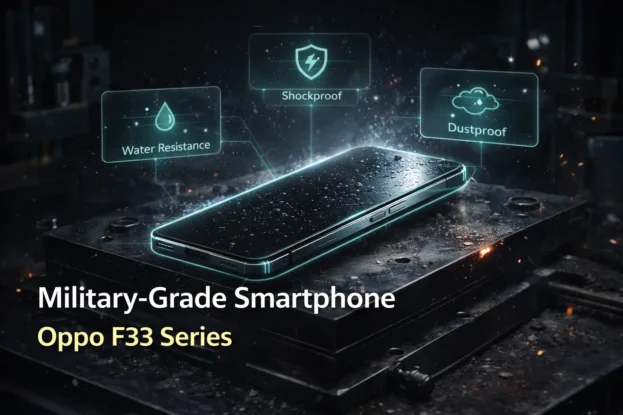
The phrase “military-grade” gets thrown around a lot, so it’s fair to be a little sceptical. In the case of the Oppo F33, it refers to devices tested against MIL-STD-810 standards — a set of rigorous durability tests originally developed for military equipment.
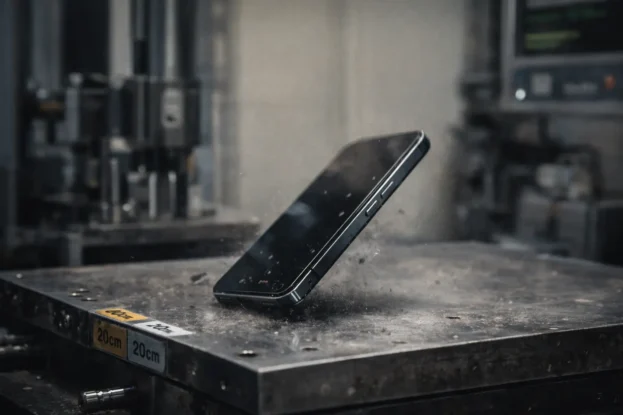
These tests cover a wide range of punishment: drops from various heights onto different surfaces, exposure to extreme temperature changes, vibration testing, and resistance to dust and humidity. A phone that passes these tests has been through significantly more stress than the standard drop test most phones face during development.
What it means practically is that the F33 is built to handle rough treatment — whether that’s an accidental slip from a table, a bag that gets thrown around, or use in conditions where temperature and humidity vary significantly.
| Feature | Details |
|---|---|
| IP Rating | IP69K — high-pressure water and dust resistance |
| Build Standard | Military-grade durability |
| Protection | Drop, dust, water, and temperature resistant |
| Best Suited For | Outdoor use, active lifestyles, heavy daily use |
Who Is This Phone Actually For?
Oppo is clearly thinking about users who live beyond air-conditioned offices and careful phone handling.
Construction workers, delivery riders, hikers, travellers, photographers who shoot outdoors, and anyone who simply has an active daily life — these are people who’ve historically had to choose between a decent mid-range phone and a proper rugged device. The rugged phone category tends to be either very expensive or very ugly, often both.
The F33 series appears to be offering a third option — a phone that looks like a normal mid-range smartphone but can actually handle being treated like one.
There’s also a more casual audience here. Plenty of people aren’t particularly rough on their phones — they’re just tired of wrapping them in thick protective cases to compensate for how fragile glass-and-aluminium slabs tend to be. A phone with genuine durability credentials means you can actually use it without a case, or at least with a minimal one.
How Does It Compare to Standard Mid-Range Phones?
| Feature | Oppo F33 Series | Typical Mid-Range Phone |
|---|---|---|
| Water resistance | IP69K | Usually IP67 or IP68 |
| Build standard | Military-grade tested | Standard manufacturing tolerances |
| Best use case | Rugged use plus daily driving | Primarily daily use |
| Protection level | Very high | Moderate |
The gap between IP68 and IP69K is larger than it looks on paper. Most mid-range phones with IP68 ratings will survive rain and accidental submersion. The F33 goes considerably further than that — which is why this positioning makes sense as a genuine differentiator rather than just a marketing angle.
What Else to Expect From the F33 Series
Oppo hasn’t revealed the full specification sheet yet, and the official details are expected closer to or on the April 15 launch date.
What we know from Oppo’s F-series track record is that the lineup typically delivers solid cameras, smooth displays, and dependable battery life alongside whatever headline feature the series is being built around. The F33’s headline feature is clearly durability — but that doesn’t mean the rest of the phone is being ignored.
A rugged phone that takes mediocre photos or runs out of battery by mid-afternoon isn’t genuinely useful to most people. Oppo seems to understand that the durability credentials need to be supported by a well-rounded overall experience, and the expectation is that the F33 series will deliver on both fronts.
Pricing details will also be announced at launch, and given the F-series positioning in the competitive mid-range segment, it would need to come in at a price point that makes the durability upgrade feel like value rather than a premium.
Also Read: iPhone 18 Series: Launch Date Details, Price, and Foldable iPhone Leaks
Why This Approach Makes Sense Right Now
There’s a broader trend here that the Oppo F33 is tapping into.
People are holding onto phones longer. The upgrade cycle has stretched — partly because phones are expensive, partly because the year-on-year improvements have become less dramatic, and partly because sustainability concerns are making people think twice about replacing devices frequently.
When you’re keeping a phone for three or four years, durability suddenly matters a lot more. A phone that can genuinely take some punishment, resist the daily accumulation of minor damage, and not require a repair after a single unlucky drop has real practical value over a multi-year ownership period.
The Oppo F33 series seems to be betting on that reality — and it’s a sensible bet.
Why Should You Consider It?
The Oppo F33 series isn’t just another mid-range phone launch. It’s a clear statement about a different kind of value — one built around how long a phone can last and what it can actually handle in the real world.
IP69K water resistance and military-grade durability in the mid-range segment is genuinely rare. If Oppo delivers a complete package — solid cameras, good performance, reasonable battery life — alongside these durability credentials at a competitive price, the F33 series could end up being one of the more interesting smartphone launches of 2026.
April 15 will tell us whether the full picture matches the promise. Keep an eye on the launch.