


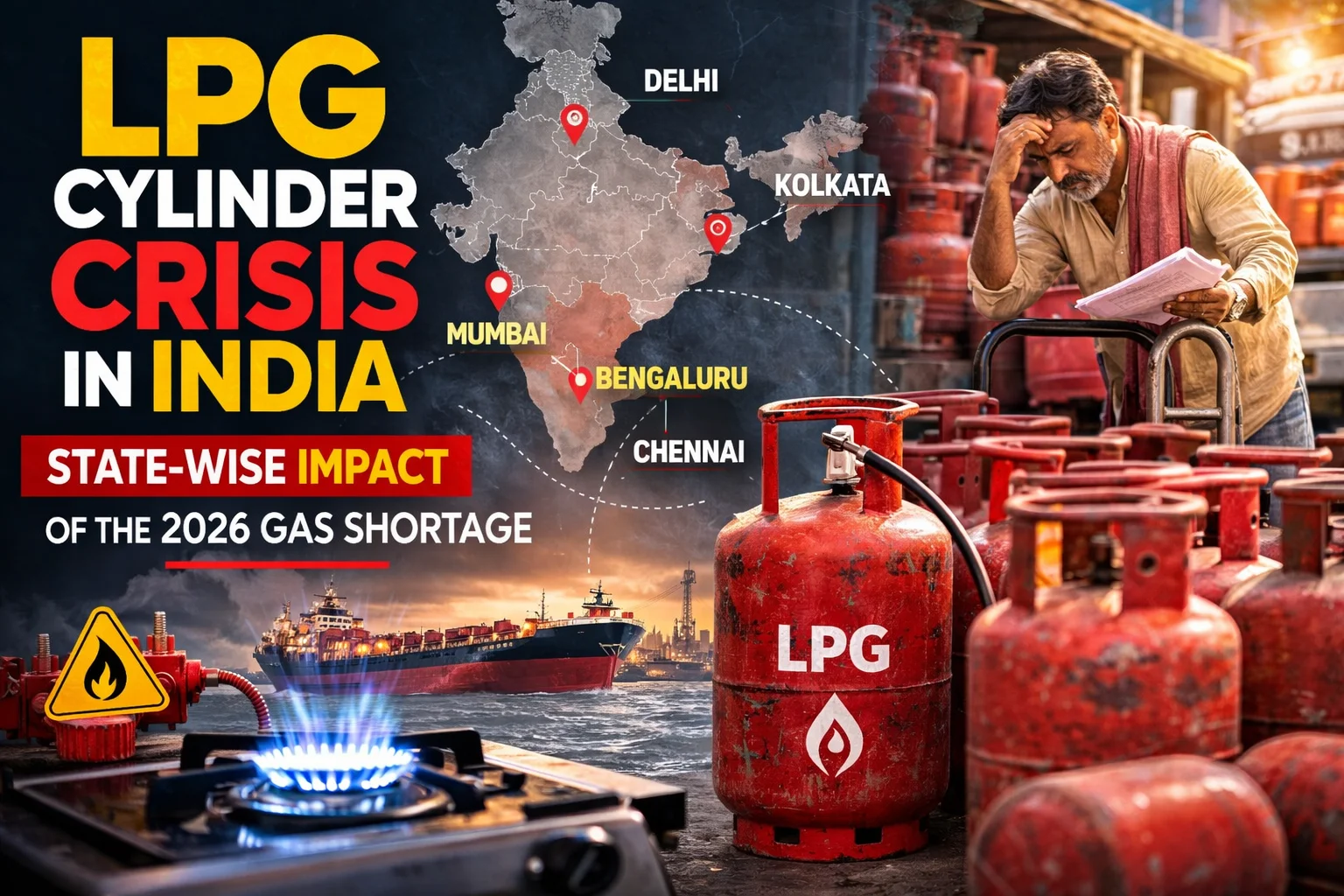
India is currently facing a significant LPG gas cylinder shortage that began in early March 2026. The disruption is linked to geopolitical tensions in the Middle East, particularly the conflict involving the United States, Israel, and Iran.
The crisis has affected global energy supply routes, especially the Strait of Hormuz, which handles a large share of India’s LPG imports. Nearly 87 percent of India’s annual LPG imports pass through this route, making the country highly vulnerable to disruptions in the region.
Table of Contents
Why LPG Supply Has Been Disrupted
India imports around 31.3 million tonnes of LPG annually to meet domestic demand. When tensions escalated in the Gulf region, shipping routes and supply chains were disrupted, slowing the movement of LPG shipments.

This disruption has created temporary shortages in several Indian cities. While domestic refineries have increased production by up to 25 percent, imported supplies remain an important part of India’s energy mix.
Commercial LPG Cylinders Face the Worst Impact
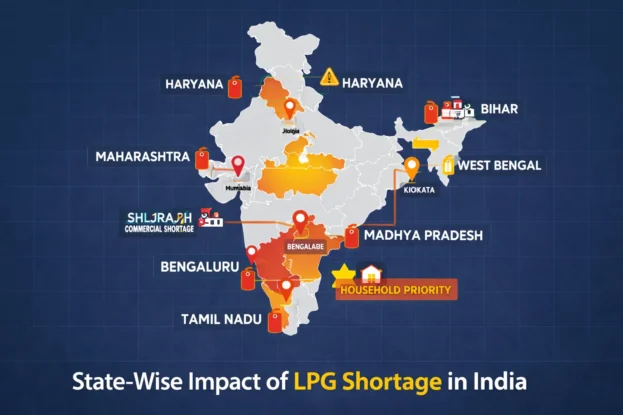
The shortage has hit commercial LPG cylinders harder than domestic household cylinders. Restaurants, hostels, canteens, and small food businesses are among the most affected sectors.
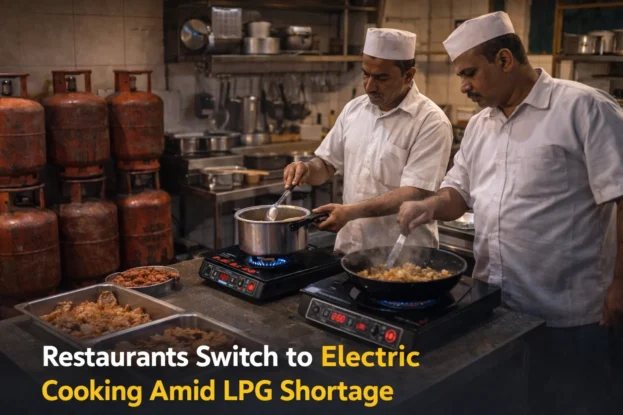
Many hospitality establishments have reported difficulty securing regular cylinder deliveries. Some restaurants have begun shifting to induction stoves or electric cooking equipment to continue operations.
Karnataka: Bengaluru Hospitality Sector Under Pressure
Karnataka, especially Bengaluru, is facing a severe shortage of commercial LPG cylinders. Several hotels and restaurants have raised concerns about supply disruptions affecting their daily operations.
Industry groups have appealed to the state government to divert more cylinders to commercial establishments. Authorities have also warned that continued shortages could create broader ripple effects across the hospitality sector.
Maharashtra: Restaurant Closures and Black Marketing Concerns
Cities like Mumbai and Pune in Maharashtra are also experiencing significant disruptions in LPG supply. Reports indicate that nearly 20 percent of hotels and restaurants in some areas have temporarily closed due to cylinder shortages.
Black marketing of LPG cylinders has also emerged as a concern. In some cases, commercial cylinders have reportedly been sold for as high as ₹4,500 in the informal market.
Madhya Pradesh: Restaurants Turn to Electric Cooking
In Madhya Pradesh, especially in Bhopal, many restaurants have started using induction cooktops to manage cooking operations. The shortage has affected commercial gas supply chains more severely than household deliveries.
Restaurant operators say the sudden switch to electric cooking is increasing operational costs. Some businesses have also reported financial losses due to the supply disruptions.
Tamil Nadu: Hospitality Sector Feels Supply Pressure
Chennai and other parts of Tamil Nadu are also witnessing LPG shortages affecting the hospitality industry. Restaurants and small food outlets have reported delays in cylinder deliveries.
The situation in Tamil Nadu is similar to other major metro cities, where commercial supply has been disrupted. Many businesses are exploring alternative cooking methods to manage operations.
West Bengal: Priority Given to Essential Services
West Bengal authorities have taken steps to prioritize LPG supply for households and essential services. These include hospitals, child development centers, and midday meal programs in schools.
The state government has also started monitoring potential hoarding and black marketing of cylinders. Partial commercial supply is being maintained to prevent major disruptions in the hospitality sector.
Bihar: Monitoring Situation Without Major Panic
In Bihar, government officials have stated that supply conditions remain under control for now. Authorities are closely monitoring LPG availability across the state.
Officials have assured residents that both state and central governments are coordinating to maintain steady supply levels. No large-scale panic buying has been reported so far.
Haryana: Daily Monitoring of LPG Availability
The Haryana government has begun monitoring LPG supply on a daily basis. Officials are collecting data from distributors to track cylinder availability across districts.
Advisories have also been issued encouraging consumers to maintain a 21-to-25-day gap between bookings to prevent hoarding and ensure fair distribution.
Delhi-NCR: Rising Demand and Panic Buying Fears
Delhi and the surrounding NCR regions have seen a sharp increase in LPG bookings. In some areas, daily booking requests have doubled compared to normal levels.
Authorities have warned against panic buying and assured residents that deliveries will continue within two to five days of booking. The government has also emphasized that household supplies remain stable.
LPG Cylinder Prices Increase Across Major Cities
Along with supply disruptions, LPG prices have also increased in India. Domestic LPG cylinders have become costlier by ₹60, while commercial cylinders have increased by ₹115 across major cities.
This price hike marks the first increase in domestic LPG prices since 2024. The rise reflects growing pressure on global energy markets due to geopolitical tensions.
Domestic LPG Cylinder Prices (14.2 kg)
| City | Old Price (₹) | New Price (₹) |
|---|---|---|
| Delhi | 853 | 913 |
| Mumbai | 852.50 | 912.50 |
| Kolkata | 879 | 939 |
| Chennai | 868.50 | 928.50 |
Commercial LPG Cylinder Prices (19 kg)
| City | Old Price (₹) | New Price (₹) |
|---|---|---|
| Delhi | 1,768.50 | 1,883 |
| Mumbai | 1,720.50 | 1,835 |
| Kolkata | 1,875.50 | 1,990 |
| Chennai | 1,929 | 2,043.50 |
Government Measures to Stabilize LPG Supply
The government has introduced several measures to stabilize LPG supply during the crisis. Domestic refineries have increased production output by 10 to 25 percent to compensate for import disruptions.
Authorities have also introduced rationing measures by increasing the minimum booking gap from 21 days to 25 days. This move is aimed at preventing hoarding and ensuring fair distribution of cylinders.
Crackdown on Hoarding and Black Marketing
The Ministry of Home Affairs has instructed states to monitor LPG storage facilities and distribution networks closely. Authorities are cracking down on hoarding and illegal resale of cylinders.
Regular monitoring meetings are being conducted between central and state officials to assess the supply situation. Daily reports are also being collected to track availability across the country.
Import Diversification and Strategic Reserves
India has started exploring alternative LPG supply sources to reduce dependence on the Gulf region. Imports are being sourced from countries like the United States and Australia to stabilize supply chains.
Strategic reserves and stockpiles are also being used to maintain domestic supply. Experts estimate that India currently has between 40 and 74 days of LPG reserves.
Supply Outlook for the Coming Weeks
Government officials have stated that supply conditions are expected to normalize gradually. Increased domestic production and alternative import routes are helping stabilize the situation.
However, the timeline for complete recovery depends largely on how long the geopolitical tensions in the Middle East continue. The duration of the conflict remains the biggest factor affecting global LPG supply.
Also Read: Raghav Chadha Questions 28-Day Mobile Recharge System and Incoming Call Restrictions in Rajya Sabha
How Households Are Managing the LPG Shortage
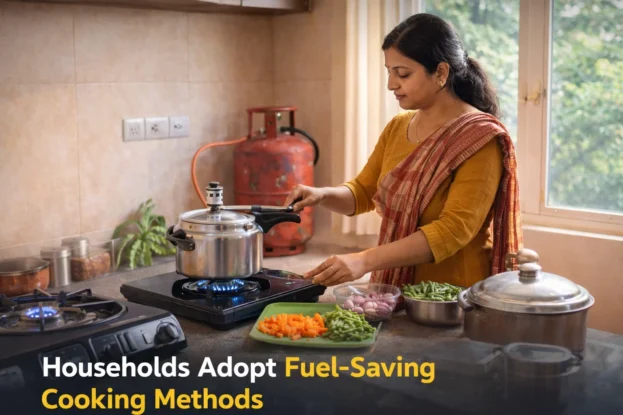
Despite the shortage, most households across India are continuing to receive LPG cylinders with minor delays. Authorities have prioritized domestic supply to avoid disruption to everyday cooking needs.
Many families are also adopting fuel-saving cooking methods. These include using pressure cookers, soaking grains before cooking, and using lids on utensils to reduce gas consumption.
Growing Demand for Electric Cooking Alternatives
The shortage has also increased demand for induction cooktops and electric stoves across several cities. Retailers report rising sales of electric cooking appliances priced between ₹2,000 and ₹5,000.
For many households, electric alternatives are being used for tasks such as boiling water or preparing tea. This shift is helping reduce dependence on LPG during the ongoing supply disruption.