


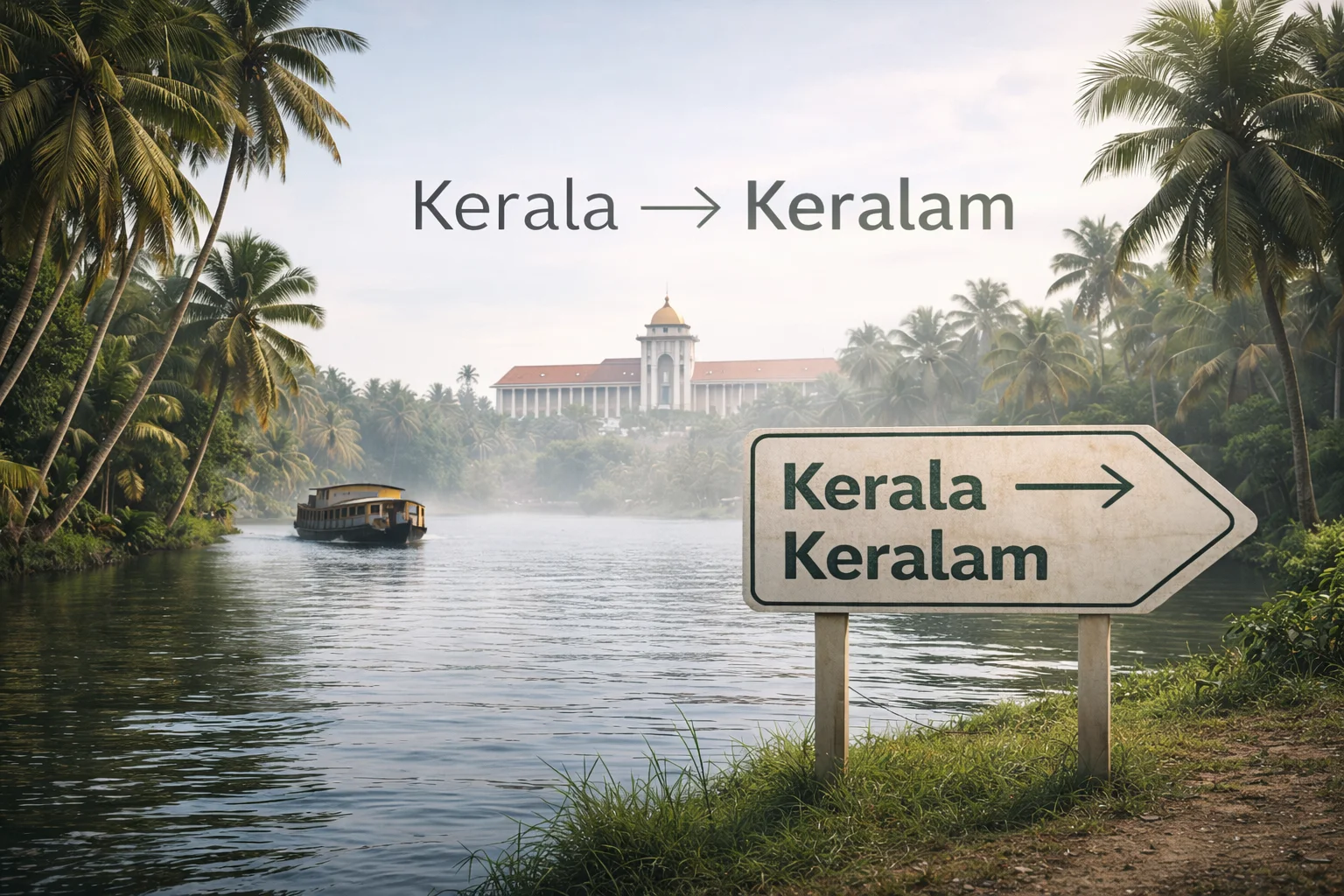
The Union Cabinet approved the proposal to rename Kerala as “Keralam” on February 24, 2026. The decision was taken at a Cabinet meeting chaired by Prime Minister Narendra Modi.
This approval begins the constitutional process required to officially change the state’s name. The move comes ahead of the upcoming state assembly elections and has attracted nationwide attention.
Constitutional Process Begins
The Kerala (Alteration of Name) Bill, 2026, will now move forward under Article 3 of the Constitution. The President will refer the proposal to the Kerala Legislative Assembly to gather its views.

After receiving the state assembly’s opinion, the central government can introduce the bill in Parliament. The change will require an amendment to the First Schedule of the Constitution.
Background of the Proposal
The Kerala Legislative Assembly had already passed resolutions in August 2023 and June 2024 supporting the name change. These resolutions requested that the state be officially called “Keralam” in all Eighth Schedule languages.
The proposal was reviewed by the Union Home Ministry and legal authorities before Cabinet approval. Officials said the process included legal checks to ensure constitutional compliance.
Why Kerala Wants to Be Called Keralam
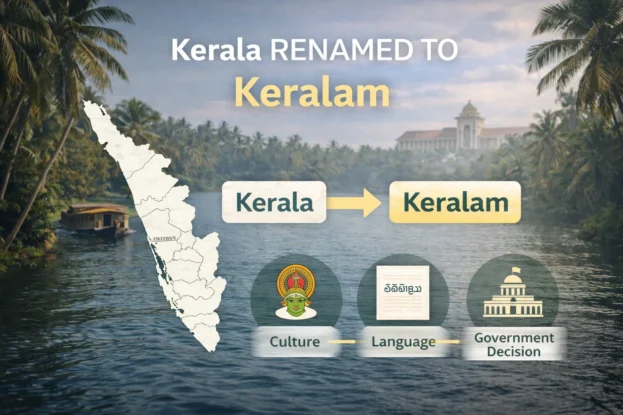
The main reason behind the change is linguistic identity. “Keralam” is the original Malayalam pronunciation used by people in the state for centuries.
The current English name “Kerala” is considered an anglicised form. Many leaders believe adopting “Keralam” reflects cultural authenticity and regional pride.
Historical Roots of the Name
The name “Keralam” has deep historical connections. Ancient records, including Ashoka’s Rock Edicts from around 257 BCE, mention “Keralaputra,” linked to the Chera dynasty.
Experts say the word may come from “cher,” meaning to join, and “alam,” meaning land. This interpretation reflects Kerala’s geography and cultural unity.
Link to Linguistic Identity Movement
The demand to use “Keralam” is also tied to the historic Aikya Kerala movement. This movement aimed to unite Malayalam-speaking regions into one state.
When Kerala was formed in 1956 after state reorganisation, linguistic identity played a major role. The current proposal is seen as a continuation of that cultural assertion.
Political Context and Timing
The Cabinet’s approval has come before the 2026 state assembly elections. Some political observers see the decision as culturally significant, while others connect it to political timing.
Interestingly, there has been no strong political opposition to the move so far. Several parties and leaders across the spectrum have supported the proposal.
Support from Different Political Groups
Reports suggest leaders from multiple parties, including regional and national groups, have expressed support. Some see it as recognition of Kerala’s cultural heritage.
State BJP leaders also backed the move recently. Their support helped clear earlier procedural hurdles related to technical wording in previous resolutions.
Public and Media Reaction
The announcement quickly gained media attention across India. Many regional outlets described the decision as historic and culturally meaningful.
In Kerala, public reaction has largely been positive, with many residents already using “Keralam” in everyday speech. Social media discussions show curiosity about the next steps.
Administrative Changes Expected
If Parliament approves the change, official documents will gradually reflect the new name. This includes government records, legal references, and educational materials.
Such transitions usually happen over time to avoid administrative confusion. Authorities typically issue guidelines to ensure smooth implementation.
Impact on Identity and Branding
A name change can influence how a state presents itself nationally and globally. Kerala is already known for tourism, literacy, and social development indicators.
Using “Keralam” could strengthen its cultural branding while maintaining the same administrative structure. Officials say there will be no change to state boundaries or governance systems.
Also Read: Manipur BJP MLA Vungzagin Valte Dies at 62; PM Modi Leads Condolences
What Happens Next
The President’s reference to the Kerala Assembly is the immediate next step. The Assembly is expected to reiterate its earlier support for the proposal.
After that, Parliament must pass the amendment for the change to become official. The timeline is not fixed, but it is linked to ongoing political developments.
Broader Significance
State name changes in India often reflect cultural, linguistic, or historical reasons. Similar changes have happened before, such as Bombay becoming Mumbai and Madras becoming Chennai.
Experts note that such decisions usually involve both symbolic identity and administrative adjustments. The Kerala to Keralam proposal fits within this broader national trend.