


India has reassured that its crude oil supply remains stable despite ongoing global tensions. The government has clearly stated that there are no disruptions expected in the coming months.
This announcement comes at a time when global energy markets are facing uncertainty due to geopolitical developments. The reassurance aims to calm concerns about fuel availability and rising prices.
No Payment Issues in Iranian Oil Imports
The Petroleum Ministry has confirmed that there are no payment hurdles in importing crude oil from Iran. This clarification directly addresses speculation about possible financial or logistical challenges.

Recent reports had raised doubts about payment delays or shipment diversions. However, the government has dismissed these claims and reaffirmed smooth transactions with suppliers.
India Resumes Iranian Oil Imports After Years
India has resumed buying oil from Iran after a long gap, marking a significant shift in its sourcing strategy. This move comes after the temporary easing of sanctions allowed global buyers to access Iranian crude again.
The return to Iranian oil is also linked to supply disruptions in the Middle East. With key routes affected, India is exploring all available options to maintain energy security.
Why India Needed Alternative Oil Sources
India is one of the world’s largest oil importers and depends heavily on global supply chains. Any disruption in major oil routes can directly impact domestic fuel availability.
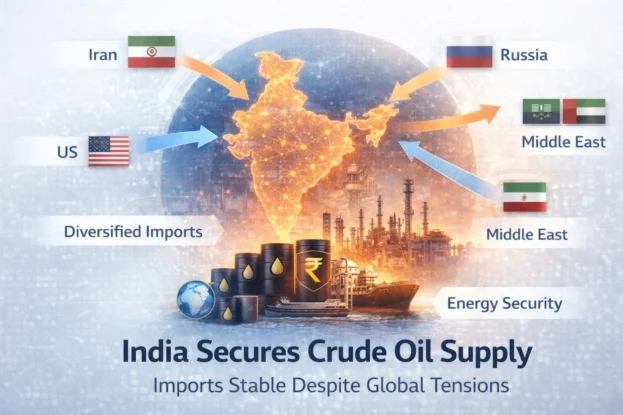
The ongoing conflict in the Middle East, especially around critical shipping routes, has forced countries like India to diversify their sources. This includes increased reliance on Russia and now renewed imports from Iran.
Government Dismisses Supply Disruption Concerns
Authorities have clearly stated that India’s crude oil supply is fully secured. This includes both crude oil and LPG, which are essential for domestic consumption.
Officials also rejected reports suggesting shortages or disruptions. According to the ministry, supply chains are functioning normally and remain stable for the foreseeable future.
How India Is Managing Its Oil Supply
India has adopted a multi-source strategy to avoid overdependence on any single region. This approach helps reduce risks during global crises.
The country is currently sourcing oil from more than 40 nations. This diversification ensures that even if one route is affected, alternative supplies can fill the gap.
India’s Oil Supply Strategy at a Glance
| Factor | Details |
|---|---|
| Import Dependency | Around 90% of crude oil imported |
| Key Regions | Middle East, Russia, US, Africa |
| Current Status | Supply fully secured |
| Iran Imports | Resumed with no payment issues |
| Strategy | Diversification across 40+ countries |
Impact of Global Tensions on Oil Markets
Global oil markets have been under pressure due to geopolitical conflicts. Disruptions in major shipping routes have caused concerns about supply shortages and rising prices.
India, being highly dependent on imports, is particularly sensitive to such changes. However, proactive planning and diversified sourcing have helped maintain stability.
Why the Strait of Hormuz Matters
The Strait of Hormuz is one of the most critical oil transit routes in the world. A large portion of global oil supply passes through this narrow channel.
Any disruption in this region can impact oil availability worldwide. India has taken steps to reduce its reliance on this route by exploring alternative suppliers and transport options.
Also Read: 10 World’s Most Dangerous Borders You Should Never Try to Cross
India’s Strong Response to Energy Challenges
The government has been actively monitoring global developments and adjusting its strategy accordingly. It has also ensured that domestic demand is prioritized over exports if needed.
By securing multiple supply sources and maintaining reserves, India has positioned itself to handle short-term disruptions effectively.
What This Means for Fuel Prices and Consumers
For consumers, the biggest concern is fuel prices and availability. The government’s assurance indicates that there will be no immediate shortages.
However, global oil prices may still fluctuate due to external factors. India’s stable supply chain helps reduce the risk of sudden spikes or supply shocks in the domestic market.
A Closer Look at India’s Energy Readiness
India’s ability to manage such a complex situation reflects strong planning and coordination. The country continues to adapt quickly to global changes in the energy sector.
With multiple supply channels, renewed imports, and stable payment systems, India’s oil ecosystem is currently well-positioned to navigate uncertainty.