



The 2026 Hyundai Verna facelift has launched in India, bringing several design tweaks, upgraded safety features, and revised variants. The sedan starts at ₹10.98 lakh (ex-showroom) and continues to compete in the popular C-segment against rivals like Honda City, Volkswagen Virtus, and Skoda Slavia.
Hyundai has introduced cosmetic updates, improved safety equipment, and a refreshed interior layout to keep the Verna competitive in the market. While the engine options remain unchanged, the facelift focuses on technology, premium comfort, and advanced driver assistance systems.
Hyundai Verna Facelift 2026 Price and Variants
Hyundai has restructured the Verna lineup using a new HX naming format. The facelift model is available in six variants, ranging from the entry-level HX2 to the top-spec HX10.

| Variant | Price (Ex-Showroom) |
|---|---|
| HX2 | ₹10.98 lakh |
| HX4 | ₹12–13 lakh (approx.) |
| HX6 | ₹14 lakh (approx.) |
| HX6 Plus | ₹15 lakh (approx.) |
| HX8 | ₹16.5 lakh (approx.) |
| HX10 | ₹18.25 lakh |
The updated pricing places the Verna as a strong value proposition in the sedan segment. Hyundai aims to attract buyers looking for premium features, advanced safety systems, and a refined driving experience.
Bookings for the new Verna facelift have already started across India. Deliveries are expected to begin by the end of March 2026.
Exterior Design Updates
The Hyundai Verna facelift retains the bold styling of the current-generation model but introduces several subtle design improvements. These changes enhance the sedan’s road presence without altering its overall silhouette.
Front Design Changes
The most noticeable updates appear at the front of the vehicle. Hyundai has redesigned the bumper and slightly modified the grille to give the car a sharper appearance.
Key exterior highlights include:
- Larger dual LED projector headlamps
- Full-width LED light bar retained
- Wider dark chrome grille
- Revised front bumper with sporty accents
- Satin chrome lower lip for a premium finish
The updated front design adds a more aggressive and modern look, aligning with Hyundai’s evolving design language.
Side Profile
From the side, the Verna facelift looks largely similar to the outgoing model. Hyundai has retained the coupe-like roofline and fastback-inspired rear profile.
However, a few updates help freshen up the appearance:
- New diamond-cut alloy wheels
- Blacked-out wheels on turbo variants
- Silver accents on the lower bumpers
These subtle changes ensure the sedan continues to look stylish and contemporary.
Rear Styling
At the rear, Hyundai has made minor adjustments to the bumper design while keeping the signature connected LED tail lamps.
Notable recent updates include:
- Diffuser-style rear bumper
- Silver trim insert for a sportier look
- Retained connected LED tail lamp design
- Integrated boot spoiler
The rear design remains sharp and futuristic, which was one of the most praised elements of the previous model.
New Color Options
Hyundai has also introduced new color choices for the facelifted Verna. These include premium shades that highlight the car’s updated styling.
New color options include
- Classy Blue
- Titan Grey Matte
Existing shades such as Abyss Black and Titan Grey continue to be available as well.
Engine and Performance Specifications
The Hyundai Verna facelift continues with the same two petrol engine options as the previous model. Hyundai has chosen not to introduce any mechanical changes with this update.
| Engine | 1.5L MPi Petrol | 1.5L Turbo GDi Petrol |
|---|---|---|
| Displacement | 1497 cc | 1482 cc |
| Power | 115 PS @ 6300 rpm | 160 PS @ 5500 rpm |
| Torque | 144 Nm @ 4500 rpm | 253 Nm @ 1500–3500 rpm |
| Transmission | 6MT, IVT | 6MT, 7DCT |
| Fuel Efficiency | 18.6–20 kmpl | 19.6–20 kmpl |
The naturally aspirated 1.5-litre engine offers a smooth driving experience suitable for daily commuting and relaxed highway drives. Buyers can choose between a 6-speed manual gearbox or Hyundai’s IVT automatic transmission.
The 1.5-litre turbo petrol engine remains the performance highlight of the lineup. Producing 160 PS and 253 Nm of torque, it delivers strong acceleration and quick overtaking ability.
The turbo-powered Verna can reach 0–100 kmph in around 8.5 seconds and has an estimated top speed of about 210 kmph. This performance puts it on par with turbo variants of the Volkswagen Virtus and Skoda Slavia.
Drive modes such as Eco, Normal, and Sport allow drivers to adjust the car’s performance characteristics. Paddle shifters are also available on automatic variants for a more engaging driving experience.
Interior Design and Cabin Layout
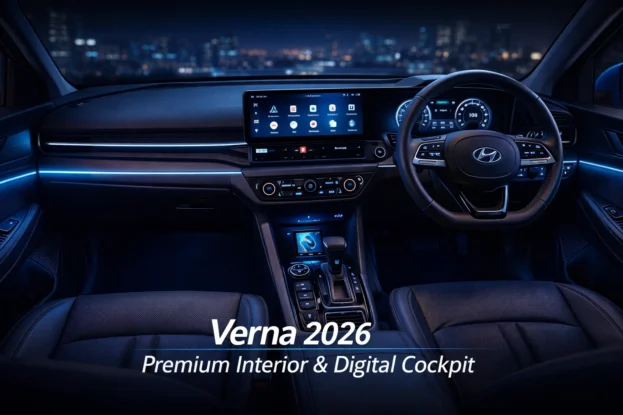
Inside the cabin, Hyundai has made several refinements to enhance comfort and premium appeal. The overall layout remains similar, but a few elements have been redesigned.
The Verna continues to offer a dual-tone interior theme. Naturally aspirated variants feature a beige and black combination, while turbo models get a sportier black and red theme.
Interior highlights include:
- Leatherette upholstery
- Venue-inspired three-spoke steering wheel
- Ambient lighting across the dashboard and doors
- Sliding front armrest with storage
- Rear AC vents and cooled glovebox
The updated interior focuses on improving driver comfort and passenger convenience.
Infotainment and Technology
Hyundai has equipped the Verna facelift with several advanced tech features. The sedan now offers a modern digital cockpit experience.
Key technology features include:
- Dual 10.25-inch screens (infotainment and digital cluster)
- Updated digital instrument graphics
- Wireless Android Auto and Apple CarPlay (via adapter)
- Hyundai Bluelink connected car technology
- Voice command functionality
The infotainment system offers a seamless interface and supports various connected features such as remote vehicle control, location tracking, and smart alerts.
Top variants also include a premium Bose 8-speaker sound system that delivers a richer audio experience.

Comfort and Convenience Features
Hyundai continues to focus heavily on comfort features in the Verna facelift. The sedan offers several segment-leading amenities.
Important comfort features include:
- 8-way powered driver seat with memory function
- Powered front passenger seat
- Ventilated front seats
- Wireless smartphone charging
- Single-pane electric sunroof
- Boss mode for rear passengers
These features make the Verna a strong choice for buyers looking for a comfortable and feature-rich sedan.
Also Read: 2026 Tata Punch EV Facelift Launched: Is This India’s Best Affordable EV?
Safety Features and ADAS Technology
Safety has been significantly improved in the 2026 Verna facelift. Hyundai now offers seven airbags as standard across all variants.
Key safety features include:
- 7 airbags, including a driver knee airbag
- Electronic stability control
- Highline tyre pressure monitoring system
- 360-degree camera (higher variants)
- Built-in dashcam on top variants
One of the biggest highlights is the inclusion of Level 2 ADAS technology. This system provides advanced driver assistance functions designed to improve safety and convenience.
ADAS features include:
- Adaptive cruise control
- Lane keep assist
- Lane follow assist
- Autonomous emergency braking
- Blind view monitoring
These advanced safety technologies give the Verna an advantage in the segment, where buyers increasingly prioritize safety and driver assistance features.
Latest News and Launch Details
The Hyundai Verna facelift was first spotted testing in India in mid-2025. Early spy shots suggested minor exterior updates and a refreshed interior layout.
In February 2026, interior leaks revealed a redesigned dashboard inspired by the Hyundai Venue. The official launch event took place in Gurugram, where Hyundai highlighted over 25 improvements in the updated sedan.
With updated features, improved safety, and competitive pricing, the Hyundai Verna facelift aims to strengthen Hyundai’s presence in the mid-size sedan market.