


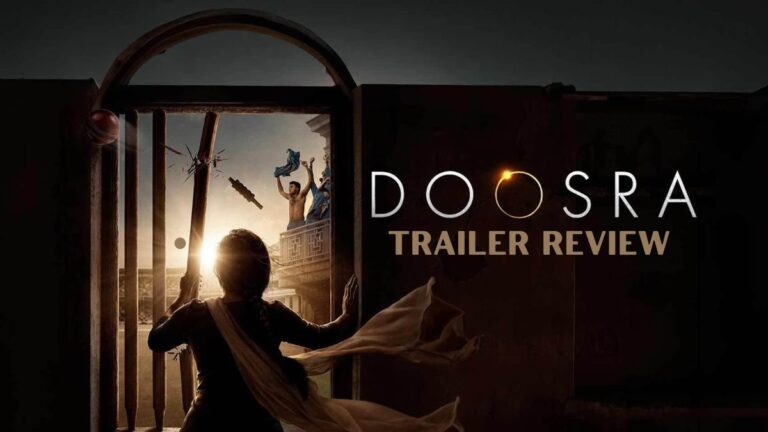
Some cricket moments stay with a whole generation, and India’s win in the 2002 NatWest final is one of them. Abhinay Deo’s film Doosra: India’s Other Freedom Struggle is built around that day. Its trailer was released in June 2019, and it still makes a good starting point for anyone curious about how the film looks at the match.
The Match Behind the Film
On July 13, 2002, Sourav Ganguly’s young team beat England in the final of the three-nation NatWest tournament at Lord’s in London.
After the win, Ganguly waved his shirt from the Lord’s balcony. The image is still fresh in the minds of Indian cricket fans. It was also seen as a reply to Andrew Flintoff taking his shirt off at the Wankhede Stadium earlier that year, so the win felt like victory, pride, and revenge all at once.
What the Trailer Shows
The trailer opens in a cricket stadium filled with loud cheers. It spends its first 30 seconds on the final moments of the match and the tension before the win. Right away, it makes one thing clear. This is not only a film about a game.
The idea is that the win travelled beyond the boundary and into everyday life. The film treats it as a “we can do it” moment for a whole generation.
Real voices add weight to that idea. The trailer includes cricket journalists, politician Shashi Tharoor, and former England captain Nasser Hussain, who led the losing side that day.
It also has a clip of Ganguly talking with Virat Kohli, who was India’s captain at the time. In that clip, they hope the moment can be repeated when India chases the World Cup later that year.
A Different Kind of Sports Story
What makes Doosra stand out is its point of view. Instead of following the players, the film is told through the eyes of a young girl. She lives in a patriarchal family and feels the pressure of society and its expectations. She chooses a different route to freedom, and the cricket win becomes a spark for her.
That choice gives the title a double meaning. A doosra is a bowling delivery that surprises the batter, and the film suggests there is also another way to look at freedom.
The trailer ends with a short narration that sums up the idea. It describes 1947 as political freedom, 1991 as economic freedom, and 2002 as emotional freedom: the freedom to fly.
Why the Film Still Stands Out
Sports films often follow the same path, with a team, a struggle, and a trophy. Doosra tries something less common by mixing real archive moments, interviews, and a personal story of a girl finding her own space. The 2002 final is the emotional anchor, and the girl’s journey is the heart of the story.
The trailer also shows how much that win still matters to people who watched it live. When a former opposing captain and a politician both speak about the same match, it says a lot about its reach.
Should You Watch It?
If you love cricket nostalgia, the trailer alone is a nice trip back to that Lord’s balcony. If you prefer stories where sport is a doorway into something personal, Doosra looks well suited to you.
Before you press play, check where the film is available to stream in your region, since the source does not give that detail.
If sports stories are your thing, the Sumo Didi trailer shows Shriyam Bhagnani turning every pound into power in the story of India’s first female sumo wrestler. And for a very different kind of night, the Gajab Raat trailer follows Manoj Bajpayee as a cop torn between money and morals.