


Credit cards are useful financial tools when used responsibly. However, common credit card mistakes can quickly lead to debt, high-interest payments, and a damaged credit score. Understanding these mistakes and adopting smart habits helps you enjoy rewards while staying financially secure.
Many people fall into debt because they treat credit cards like extra income. In reality, a credit card is a short-term loan that must be repaid on time. With the right strategy, you can use credit cards conveniently without falling into financial trouble.
Common Credit Card Mistakes and How to Avoid Them
| Always pay the full balance | Consequence | Smart Fix |
|---|---|---|
| Paying only minimum due | Rising interest and debt trap | Always pay full balance |
| High credit utilization | Lower credit score | Keep usage under 30% |
| Ignoring statements | Fraud or billing errors | Check monthly statements |
| Cash withdrawals | High fees and instant interest | Paying only the minimum due |
| Too many card applications | Credit score impact | Apply selectively |
| Unplanned spending | Financial stress | Set monthly budget |
This table highlights frequent mistakes and simple solutions. Following these steps helps maintain financial discipline and protects your credit health.

Paying Only the Minimum Due
Paying only the minimum due may seem convenient, but it leads to high interest charges. Credit card interest can accumulate quickly, turning small balances into large debts over time.
Always aim to pay the full outstanding amount before the due date. This keeps your interest cost at zero and protects your credit score.
High Credit Utilization
Using a large portion of your credit limit signals higher financial risk. Experts recommend keeping credit utilization below 30% to maintain a healthy credit profile.
If you need to spend more, consider splitting purchases across cards or paying before the billing cycle ends. This helps maintain a positive credit score.
Ignoring Monthly Statements
Many people skip checking their credit card statements regularly. This increases the risk of missing fraudulent transactions or billing errors.
Review your statement every month using mobile apps or email alerts. Early detection helps prevent financial loss and keeps your account secure.
Cash Withdrawals Using Credit Cards
Withdrawing cash from a credit card attracts immediate interest and additional fees. Unlike regular purchases, there is usually no interest-free period for cash advances.
It is best to use credit cards only for planned purchases. Reserve cash withdrawals strictly for emergencies.
Applying for Too Many Credit Cards
Frequent credit card applications create multiple hard inquiries on your credit report. This can temporarily reduce your credit score and signal higher risk to lenders.
Compare cards carefully before applying. Choose a card that matches your spending habits and long-term financial goals.
UPI and India-Specific Credit Card Traps
Credit cards linked with UPI are gaining popularity in India. However, peer-to-peer transfers usually do not earn rewards and may sometimes trigger security checks.
Always use verified merchant QR codes for payments. Avoid unknown links or unverified payment requests to reduce fraud risks.
Also Read: 7 Best Credit Cards for Online Shopping
6 Smart Ways to Use Credit Cards Without Debt
Using credit cards wisely requires planning and discipline. The following smart habits help you enjoy benefits without falling into debt.
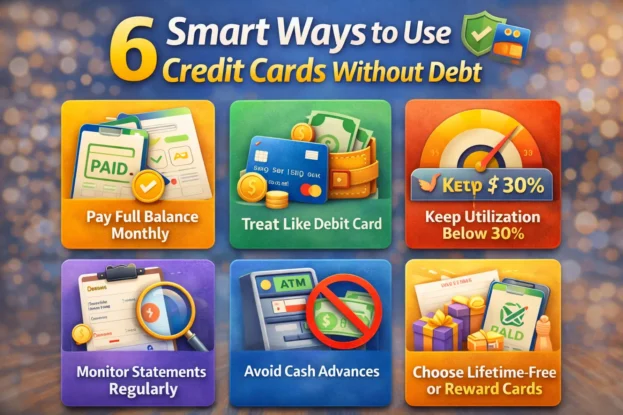
1. Pay Full Balance Every Month
Paying the full outstanding amount ensures you avoid interest completely. Setting auto-debit reminders can help prevent missed payments.
Consistent full payments also improve your credit score. This makes future loans or credit approvals easier.
2. Treat Credit Cards Like Debit Cards
Spend only what you can repay from your monthly income. This mindset prevents overspending and maintains financial stability.
Keeping a spending budget helps track purchases. It also reduces impulse buying.
3. Maintain Low Credit Utilization
Keeping usage below 30% signals responsible credit behavior. It also positively impacts your credit score over time.
If needed, make mid-cycle payments to keep balances low. This strategy improves financial discipline.
4. Monitor Statements Regularly
Regular monitoring helps detect fraud quickly. It also keeps you aware of spending patterns.
Most banks offer mobile apps with instant alerts. These tools simplify financial tracking.
5. Avoid Cash Advances
Cash withdrawals carry higher costs compared to regular transactions. Interest starts immediately without any grace period.
Using debit cards or savings for cash needs is safer. This avoids unnecessary financial burden.
6. Choose Lifetime-Free or Reward Cards Wisely
Lifetime-free cards eliminate annual fees and reduce cost pressure. Reward cards can offer cashback, travel points, or shopping discounts.
Choose cards aligned with your spending habits. This maximizes benefits without increasing expenses.
Improving Your Credit Score After Mistakes
If you have already made credit card mistakes, recovery is possible. Consistent on-time payments and controlled utilization can gradually improve your credit score.
Credit scores usually improve within a few months of disciplined usage. Patience and consistency are key to rebuilding financial credibility.
Steps to Improve Credit Health
| Issue | Improvement Strategy | Expected Impact |
|---|---|---|
| Late payments | Enable autopay | Faster score recovery |
| High balances | Reduce utilization | Score improvement |
| Multiple inquiries | Limit applications | Stable credit profile |
| Errors in report | Dispute inaccuracies | Score correction |
These steps help repair credit health over time. Responsible financial habits ensure long-term stability.
Final Thoughts
Credit cards are powerful financial tools when used responsibly. Avoiding common credit card mistakes helps you stay debt-free while enjoying rewards and convenience.
By paying on time, keeping spending controlled, and monitoring accounts regularly, you can use credit cards smartly without financial stress. Responsible usage builds strong credit history and supports long-term financial success.