


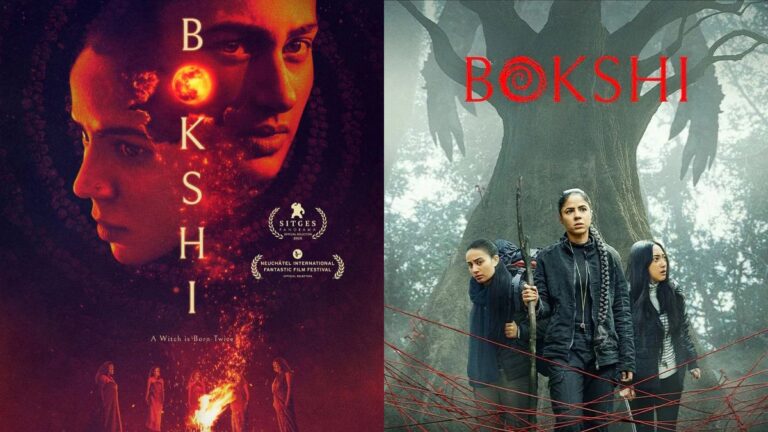
Most Indian horror films lean on jump scares and familiar tropes to get the job done. Bokshi takes a completely different route, building its horror from real folklore, real forests, and even an invented language created specifically for the film. After a genuinely impressive festival run, Bokshi finally releases in Indian cinemas on October 9, 2026.
A Festival Journey Before the Theatrical Release
Bokshi had its world premiere at the 54th International Film Festival Rotterdam in January 2025, and from there, it went on to screen at several major genre festivals, including the Sitges International Fantastic Film Festival, the Neuchatel International Fantastic Film Festival, and SXSW Sydney.
According to Indian Broadcasting World, Bokshi was the only Indian feature film officially selected at all three of these major genre festivals in 2025, a genuinely rare achievement for an independent Indian horror film.
That festival journey has clearly built real anticipation ahead of its theatrical release, and now, nearly two years after its Rotterdam debut, Indian audiences will finally get to see it on the big screen.
What’s the Story?
Directed and produced by Bhargav Saikia, marking his feature directorial debut, and written by Harsh Vaibhav, Bokshi follows Anahita, who’s still haunted by the traumatic disappearance of her mother.
She finds genuine comfort in her history teacher Shalini, and the two end up on an unconventional school excursion that leads them to a mysterious prehistoric site. From there, Anahita’s life becomes entangled with the supernatural and ancient folklore in ways she never could have anticipated.
Rather than relying on traditional jump scares, Bokshi leans heavily into atmosphere, mythology and psychological dread, a slower, more unsettling approach that’s clearly resonated with genre festival audiences internationally.
Sikkim’s Landscape and Folklore at the Centre of It All
What makes Bokshi genuinely distinctive is how deeply it’s rooted in Sikkim and Northeast India’s landscape and folk mythology. The film was shot in the dense forests of Sikkim, and that remote, atmospheric setting plays a real role in establishing the film’s unsettling tone throughout.
Even more unusual is the film’s multilingual approach. Alongside Hindi, English and Nepali, Bokshi features a fictional language called Boksirit, specially created for the film by Dutch linguist Jan van Steenbergen. That kind of linguistic world-building is genuinely rare in Indian cinema, and it adds a layer of authenticity to the film’s folklore-driven mythology.
The Cast
Prasanna Bisht leads the film as Anahita, with Mansi Multani playing Shalini. Shernaz Patel voices the titular Bokshi character, while Siddharth Shaw, Swaroopa Ghosh, Javed Khan King, Dagi Ngomdir and several others round out the supporting cast.
A Practical, Grounded Approach to Horror
Rather than depending heavily on VFX-driven scares, the filmmakers reportedly leaned on real locations and practical effects to build the film’s atmosphere, a choice that fits naturally with the story’s folklore roots and gives the horror a genuinely grounded, tactile quality.
Why This Release Matters
Bokshi arrives in a Hindi-dominated theatrical calendar as something genuinely different, an experimental, festival-tested folk horror film that doesn’t follow the usual mainstream horror playbook. Its international festival run, Sikkim-rooted mythology, and multilingual storytelling all make it a genuinely interesting option for anyone tired of formulaic horror releases.
Should You Watch It?
If you’re drawn to slow-burn, atmosphere-driven horror that prioritizes mood and mythology over cheap scares, Bokshi looks like a genuinely unique addition to Indian cinema this October.
While you’re planning your October watchlist, there’s more worth checking out too. Small Prophets Season 2 is also generating plenty of buzz over on Apple TV, and if romantic thrillers are more your speed, Ishqa Ishqa’s OTT release date on MX Player is also worth a look this month.
Bokshi releases in Indian theatres on October 9, 2026.