


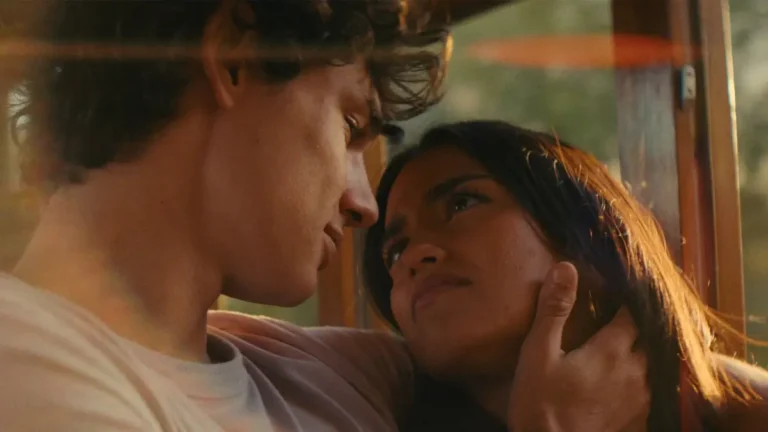
The Last Sunrise Review: ★★★☆☆ (3/5)
The Last Sunrise has a beautiful setting, easy chemistry between its young leads, and a sincere story about love, freedom, and mortality. But while the film has all the right ingredients for a moving romance, its thin character development and predictable drama keep it from reaching its full potential.
Rating: ★★★☆☆ (3/5)
Language: English
Genre: Romantic Drama
Runtime: 1 hour 46 minutes
Director: Carlson Young
Cast: Maia Reficco, Fernando Lindez, Eva Longoria, Andrés Velencoso
There is something naturally appealing about a romance set on a sunny Spanish island. Add a young woman trying to make the most of her life, a charming local boy, and a complicated family situation, and The Last Sunrise has all the ingredients for a genuinely emotional summer love story.
Directed by Carlson Young and adapted from Anna Todd’s 2025 novel, this Prime Video film follows Oriah “Ry” Pera, played by Maia Reficco. Ry is a young woman whose health has forced her to live under strict rules, juggling medication, medical appointments, and constant worry about what might happen next.
When Ry travels to Mallorca with her mother, Isolde, played by Eva Longoria, she finally gets a chance to step away from the carefully controlled life she has always known. There, she meets Julián, a local young man played by Fernando Lindez, and starts discovering a world that feels completely different from home.
For Ry, this is not simply about falling in love. She wants to experience life on her own terms. After spending so much time thinking about her health and her future, she becomes determined to actually enjoy the present, even if some of her choices come with real risks.
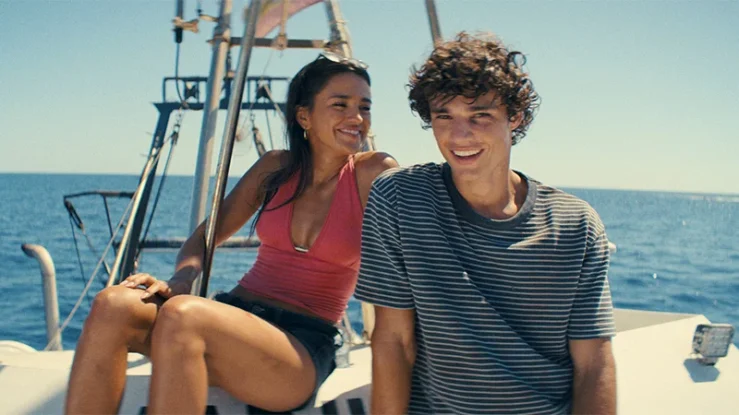
That is honestly one of the film’s most interesting ideas. Ry’s rebellion is not really about turning into a completely different person. She just wants the limited time she has to genuinely feel like her own.
The problem is that the screenplay does not dig into this conflict deeply enough. There is an important difference between choosing how to live and simply running from everything frightening, and the film occasionally edges toward exploring that difference before quickly pulling back into romance and summer fun.
Maia Reficco gives Ry a genuinely controlled performance. She does not turn every emotional beat into a big dramatic scene, which works well for this character. Her illness stays an important part of the story without completely swallowing up her personality.
Fernando Lindez also brings a natural ease to Julián. His relaxed, easygoing personality plays nicely against Ry’s tightly controlled life, and the two actors share believable chemistry throughout.
Some of their best scenes are the quieter ones. Julián introduces Ry to parts of Mallorca that feel far removed from the world she knows, and these moments let their relationship grow without leaning too hard on dramatic dialogue.
Still, Julián could have been a much stronger character overall. For much of the film, his main job is essentially opening the door to Ry’s new life. We get far less sense of what he actually wants, what scares him, or what he stands to lose.
The relationship between Ry and her mother is a bit more layered. Isolde is not simply the overprotective parent standing between her daughter and happiness. Her controlling behaviour clearly comes from fear, and Eva Longoria brings genuine emotional weight to the role.
That makes the mother-daughter conflict one of the film’s more promising threads. Both women have understandable reasons behind their choices, but the screenplay sometimes makes their arguments feel like convenient stepping stones to the next dramatic scene, rather than the product of years of genuinely complicated emotion.
The film’s Mallorca setting really should have been another major character in its own right. The beaches, sea, streets, and warm sunlight all make for a beautiful backdrop, especially during the scenes between Ry and Julián.
At its best, the location captures exactly what the film is trying to say about living in the moment. Ry has spent much of her life worrying about tomorrow, while Mallorca gently encourages her to slow down and actually experience today.
That said, the film does not always make the island feel as rich or distinctive as it could. It looks lovely, sure, but at times it feels more like a postcard than a genuinely lived-in place.
The story also brings in a conflict involving Isolde’s real estate business and Julián’s family’s fishing business, creating a real obstacle for the couple. That issue, though, could have used a lot more depth and detail.
Instead, some key developments happen too quickly, or get explained through conversation rather than actually shown on screen. As a result, the emotional stakes sometimes feel smaller than they probably should.
Despite these issues, The Last Sunrise is genuinely easy to watch. Its 106-minute runtime moves along briskly, and the young leads bring enough warmth to keep the central romance engaging throughout.
Similar Article: Toxic Movie Review
The film may not offer anything particularly groundbreaking to the romance genre, but it does have moments of real sweetness. Its best scenes understand that love does not always need grand speeches or dramatic twists to feel meaningful.
In the end, The Last Sunrise is a pleasant, if uneven, romantic drama. Maia Reficco and Fernando Lindez give the film its youthful charm, while Eva Longoria adds real emotional depth whenever the script gives her enough room to work with.
There is a genuinely touching story here about freedom, family, love, and the fear of losing time. Unfortunately, the film often reaches for the simplest path instead of exploring those ideas more honestly. What is left is a pretty, watchable summer romance with more potential than the finished film ever quite manages to realise.