


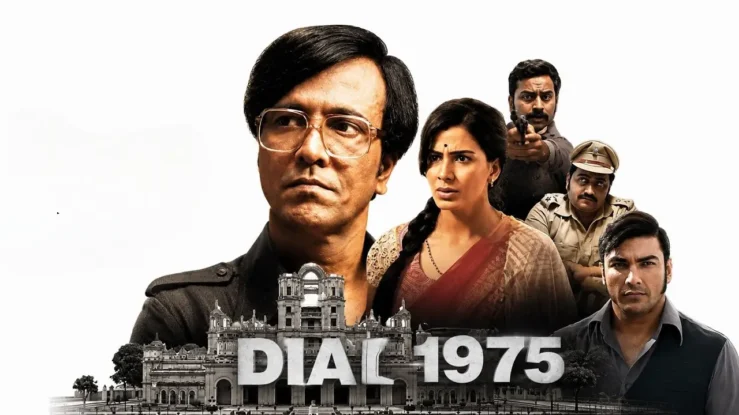
Dial 1975 Movie Review: ★★★☆☆ (3/5)
Dial 1975 has a genuinely fascinating premise about a secret wireless phone during India’s Emergency era, but a confusing, overstuffed screenplay and underdeveloped characters squander that potential almost entirely.
Rating: ★★★☆☆ (3/5)
Platform: Waves OTT
Genre: Thriller, Period Drama
Language: Hindi
Directors: Navneet Behal, Vibhu Kashyap
Cast: Kay Kay Menon, Pravessh Rana, Kirti Kulhari, Tom Alter
Some films arrive with a genuinely fascinating premise and then simply do not know what to do with it. Dial 1975, which has apparently been sitting on the shelf for almost a decade before finally releasing on Waves OTT, is exactly one of those cases.
Set during India’s Emergency period, one of the most tense and paranoid chapters in the country’s political history, the film follows the hunt for a wireless telephone device that could let people communicate freely without government surveillance. On paper, this is the kind of premise that could make for a genuinely gripping thriller. On screen, unfortunately, it becomes something far messier.
The story follows Govind, played by Kay Kay Menon, a soldier who was court-martialled during the 1962 Indo-China War after killing his own comrades. He crosses paths with Ram Avtar, a science teacher secretly recording conversations on the orders of an army officer named Thapar.
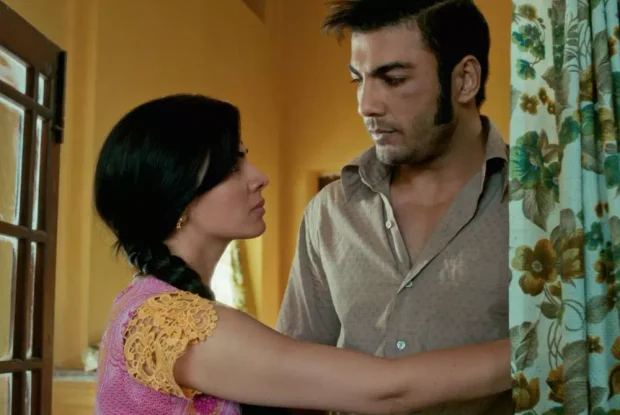
During one such recording, Ram Avtar stumbles upon a deal involving a wireless phone being brought in from Germany for a powerful politician. Thapar immediately orders a jailer named Irish, played by the late Tom Alter, to recover the tape before it falls into the wrong hands.
Govind, meanwhile, kills Ram Avtar after learning about both the tape and the money tied to the deal, setting off a chase that eventually pulls in an ex-convict named Prakash, played by Pravessh Rana, and his girlfriend Meena, played by Kirti Kulhari.
The film actually starts reasonably well. The opening stretch does a solid job recreating the anxious, tightly controlled atmosphere of the Emergency era, and there is real energy in the early scenes. The problem is that as more characters and plot threads get introduced, the story steadily loses its grip.
Govind’s transformation from a disgraced soldier into someone capable of cold-blooded killing happens far too quickly, without the film ever properly explaining what pushed him there.
Characters keep arriving with motivations the audience is simply expected to accept rather than actually understand, and by the film’s midpoint, keeping track of who wants the tape and why becomes more work than the suspense the story is actually generating.
An unusual framing device, where the wireless phone itself narrates parts of the story, pops up occasionally throughout the film. It is a genuinely interesting idea on paper, but it appears so sparingly and awkwardly that it ends up feeling more like a patch job stitched on to help confused viewers follow along rather than a meaningful creative choice.
The performances mostly survive the writing better than the writing deserves, though only just. Kay Kay Menon, who has built a career playing morally complicated characters, brings real conviction to Govind, but the script never gives him enough material to make the character feel fully understood.
Pravessh Rana carries a good portion of the film’s second half with an honest, grounded sincerity, even while working against a screenplay that often mistakes incident for actual drama.
Similar Article: Bethlehem Kudumba Unit Review
Kirti Kulhari, unfortunately, gets the thinnest role of the main cast, present mostly to fill out the story rather than shape it in any meaningful way.
The supporting cast, including Tom Alter in one of his final performances before his death, remain competent but ultimately forgettable given how little the script asks of them.
What lingers after Dial 1975 ends is not so much frustration as a genuine sense of missed opportunity. The Emergency remains one of the most underused settings in Indian cinema, full of dramatic potential that very few films have actually explored well.
Dial 1975 had a genuinely clever hook, a story about the right to communicate freely, set during a period when that very freedom was being stripped away.
What it needed was a screenplay disciplined enough to trust that idea and let it breathe, rather than burying it under an overcomplicated web of subplots and characters.
In the end, Dial 1975 is a film with sharp instincts but a soft spine, a clear reminder that even the best premise cannot carry a story on its own.