


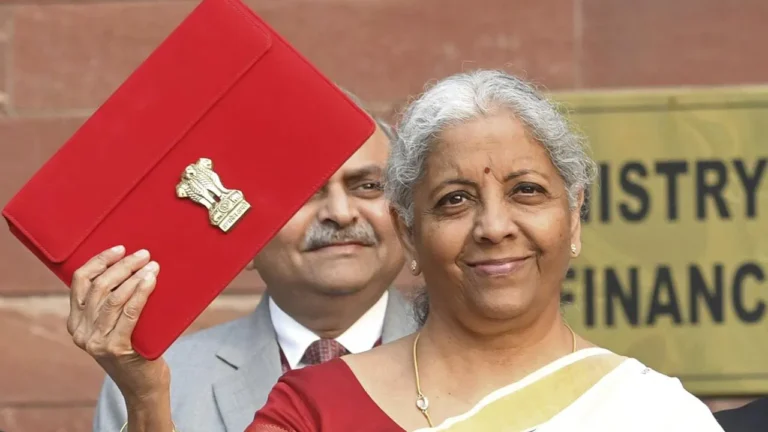
February has always been an important month for taxpayers, but this year the curiosity is much higher because of Union Budget 2026. On 1 February, when Finance Minister Nirmala Sitharaman presents the budget in Parliament, millions of salaried employees and middle-class taxpayers across the country will be watching closely. The big question is whether the government will once again change the tax slabs or increase the exemption limit to offer fresh relief.
Government’s focus on the new tax regime
Over the past few years, the Finance Minister has focused on making the income tax system simpler and more transparent. In Union Budget 2020, the government introduced the new tax regime, which offered lower tax rates in exchange for giving up most deductions and exemptions. The aim was to provide relief to taxpayers who did not want to go through the complicated process of tax-saving investments. Since then, the government has tried to make the new regime more attractive from time to time. In this context, Union Budget 2025 is seen as a major turning point.
Also Read: EPFO: PF Interest Rate Increased to 8.25%; Finance Ministry Makes Decision Ahead of Union Budget
A big relief in Budget 2025
In last year’s budget, the Finance Minister announced that annual income of up to ₹12 lakh would be tax-free under the new tax regime. Along with this, tax slabs were revised and the basic exemption limit was increased to ₹4 lakh. For salaried individuals, the standard deduction had already been raised to ₹75,000, providing direct relief to the salary class.
New Income Tax Act to come into effect from 1 April
Another major development ahead of Budget 2026 is the implementation of the Income Tax Act, 2025, which will come into force from 1 April, replacing the decades-old Income Tax Act, 1961. While there are no major changes in tax rates or slabs, special emphasis has been placed on simplifying the language and making the law easier to understand.
Tax administration may be the key focus
Experts believe that this budget may focus more on making tax administration user-friendly. Faster return processing, ending delays in refunds, and introducing new schemes to resolve tax disputes could be among the government’s priorities. This would not only provide relief to taxpayers but also help increase compliance and boost government revenue.
Will deductions be added to the new regime?
Tax experts feel that the government may introduce some important deductions under the new tax regime. If benefits such as deductions on term life insurance, health insurance, and home loan interest are included, it could further encourage taxpayers to shift towards the new system.