


The rise of text to video AI has significantly changed how digital content is produced. Instead of relying on traditional editing workflows, creators can now convert written prompts into dynamic visual stories within minutes. This shift has made video production more accessible to marketers, educators, and content creators who may not have advanced editing skills.
As text to video AI continues to evolve, different tools are emerging with unique strengths—ranging from cinematic rendering to fast social media content generation. The following list highlights five of the most notable platforms currently shaping this space, with a focus on usability, flexibility, and real-world applications.
1. Pollo AI
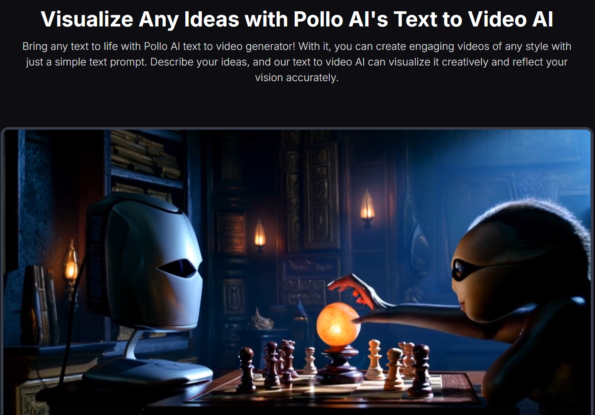
Pollo AI stands out as one of the most adaptable text to video AI tools available today. It enables users to transform written ideas into structured video sequences with consistent visual styles and smooth transitions. The system is capable of handling both simple prompts and more complex multi-scene narratives, making it suitable for a wide range of creative and professional workflows.

In addition, Pollo AI offers a balance between automation and control. Users can rely on AI to generate scenes, motion, and effects while still adjusting pacing, tone, and composition. This flexibility makes it accessible to beginners while also supporting more advanced creators who want efficiency without sacrificing creative direction.
Why Recommend
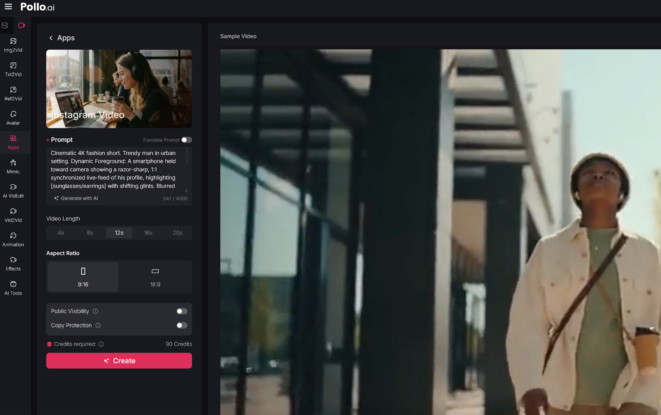
Pollo AI is often recommended due to its versatility across formats and industries. It supports vertical, square, and landscape outputs, making it adaptable for social media, presentations, and marketing campaigns. Features such as voice-over integration, scene transitions, and templates further improve usability and consistency.
Another reason it is frequently highlighted among text to video AI tools is its ability to scale production. Users can move from simple clips to more complex storytelling workflows without switching platforms, which helps streamline content pipelines.
Best Use Cases
Pollo AI is well-suited for marketing teams, educators, and content creators who need to produce videos efficiently at scale. It is particularly useful for social media campaigns, product storytelling, and educational explainers.
Many creators rely on Pollo AI to generate video content for Instagram, as well as for TikTok and other short-form platforms where consistent output and quick turnaround are essential. Its flexibility also makes it a practical choice for multi-format digital content strategies.
2. Seedance 2.0
Seedance 2.0 is designed for users who require structured and detailed outputs from text to video AI systems. It focuses on converting complex scripts into coherent video sequences, making it especially suitable for narrative-driven content. Compared to more lightweight tools, it emphasizes logical scene progression and storytelling clarity.
The platform incorporates advanced scene understanding, allowing it to process longer prompts with multiple elements. This enables it to maintain thematic consistency across scenes, which is particularly valuable for educational content, explainers, and scripted marketing materials.
Why Recommend
Seedance 2.0 is recommended for its strength in handling structured narratives. It is capable of maintaining continuity across multiple scenes, which reduces the need for manual adjustments during editing. This makes it a strong option for users who prioritize clarity and organization in their video outputs.
It is also useful in professional environments where precision matters more than speed. Its ability to interpret detailed prompts and convert them into cohesive sequences helps streamline complex production workflows.
Best Use Cases
Seedance 2.0 is ideal for training videos, product demonstrations, and educational explainers that require clear storytelling. It is commonly used by teams that need consistent, structured outputs rather than quick iterations.
Creators often turn to structured text to video AI workflows with Seedance 2.0 when producing long-form or narrative-heavy content that benefits from logical sequencing and reduced manual editing.
3. Pika AI
Pika AI focuses on speed and ease of use, making it one of the more efficient text to video AI tools for rapid content creation. Its interface is designed to be intuitive, allowing users to generate short videos with minimal setup. This makes it particularly appealing for creators working under tight deadlines.
The platform uses AI-driven animation and simplified controls to support fast experimentation. Users can quickly test different styles, motion effects, and visual directions without needing advanced editing skills, which helps accelerate the creative process.
Why Recommend
Pika AI is recommended for its ability to produce results quickly. It allows users to generate multiple variations in a short time, which is especially useful for testing creative concepts or optimizing engagement across platforms.
Its streamlined workflow reduces the complexity often associated with video production. This makes it accessible to beginners while still providing enough flexibility for marketers and content creators who need efficient output.
Best Use Cases
Pika AI is best suited for short-form video content, including social media clips, ads, and quick promotional videos. It is particularly effective in environments where speed and iteration are more important than detailed storytelling.
Many users rely on quick text to video AI generation with Pika AI when producing high volumes of content for platforms like TikTok, Instagram Reels, and other fast-paced digital channels.
4. Runway
Runway is a creative-focused text to video AI platform that combines video generation with editing capabilities. Unlike more automated tools, it offers a hybrid approach that allows users to both generate and refine video content within the same environment.
The platform is known for producing visually rich outputs, including stylized scenes and experimental effects. This makes it particularly appealing to artists, filmmakers, and designers who want to explore creative possibilities beyond standard video formats.
Why Recommend
Runway is recommended for its flexibility and creative control. Users can go beyond basic text prompts and actively shape the final output using built-in editing tools. This makes it suitable for projects that require a more hands-on approach.
It also supports a wide range of creative workflows, from concept visualization to experimental storytelling. This versatility allows users to explore new formats and push the boundaries of AI-generated video content.
Best Use Cases
Runway is ideal for creative professionals working on visual storytelling, concept videos, and artistic projects. It is often used in filmmaking, design, and digital art workflows where originality and visual experimentation are key.
Creators exploring creative text to video AI applications often use Runway to develop mood boards, prototype ideas, or produce visually distinctive content that stands out from more conventional outputs.
5. Kling 3.0
Kling 3.0 is recognized for its emphasis on high-quality visual output within the text to video AI space. It focuses on generating realistic motion, detailed environments, and cinematic effects, making it suitable for users who prioritize visual fidelity.
The platform incorporates advanced rendering techniques to improve lighting, texture, and motion consistency. These enhancements contribute to more polished and immersive video results compared to simpler tools.
Why Recommend
Kling 3.0 is recommended for its ability to deliver high-quality visuals. It is particularly effective for projects where realism and detail are important, such as promotional content or concept videos.
Its rendering capabilities make it a strong option for users who are willing to trade speed for improved visual output. This focus on quality helps differentiate it from tools designed primarily for rapid content generation.
Best Use Cases
Kling 3.0 is best suited for cinematic projects, promotional videos, and high-end digital content that require strong visual impact. It is often used for concept trailers, brand storytelling, and visually detailed presentations.
Many creators rely on high-quality text to video AI outputs from Kling 3.0 when working on projects that demand a more refined and realistic aesthetic.
Selecting the best text to video AI platform depends largely on the intended use case. Some tools prioritize speed and ease of use, while others focus on storytelling depth or visual quality. Understanding these differences can help users choose a solution that aligns with their specific needs.
Pollo AI offers a balanced approach suitable for a wide range of applications. Seedance 2.0 is better suited for structured narratives, while Pika AI excels in rapid content creation. Runway provides creative flexibility, and Kling 3.0 focuses on high-quality visual output.