


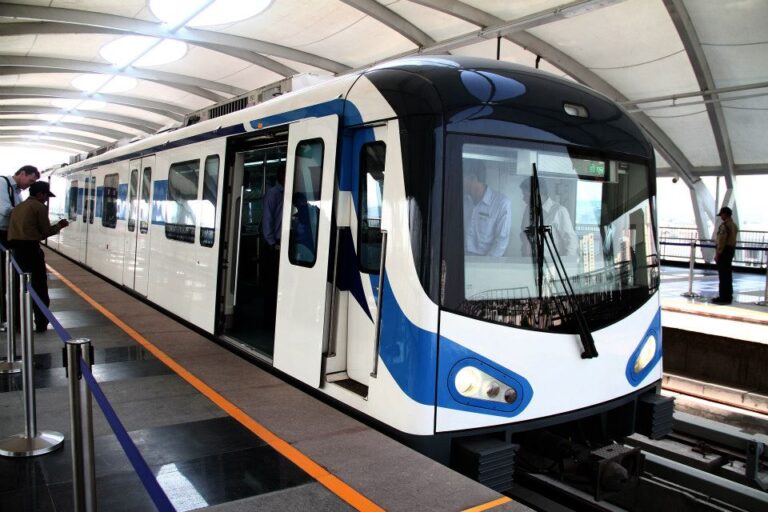
The state government has prepared a blueprint to strengthen metro connectivity in Cyber City, which is already recognised worldwide as a hub for IT, telecom, automobiles, garments, and the medical sector.
In the coming years, most parts of the city and its surrounding areas will be connected through the metro. As part of this plan, a feasibility report will soon be prepared for a corridor from Gurgaon Railway Station to Bhondsi village.
This corridor will pass through busy areas like Sadar Bazar, Jail Road, and Rajiv Chowk. Beyond Rajiv Chowk, it will be developed along the service lane of the Gurgaon–Sohna Highway. The feasibility report will decide whether the corridor should be elevated on the service lane or built underground.
Several metro stations in the city will offer interchange facilities to connect with new corridors. This will allow passengers to switch to different routes without exiting stations, thereby reducing road traffic pressure.
With the district’s population now crossing 5 million, traffic pressure is constant, 24 hours a day, across Cyber City and its surroundings. Despite highway expansion, road widening, and extended service lanes, congestion has not reduced. Keeping this in mind, the state government has decided to expand metro connectivity to more areas.
Union Urban Development Minister Manohar Lal, who was Haryana’s Chief Minister for a long time, is well aware of Cyber City’s problems. He has assured that his ministry is ready to approve as many corridors as needed. The faster the state government finalises its plans, the quicker approvals will be given. Accordingly, Gurugram Metro Rail Limited (GMRL) has started preparing feasibility reports for various routes.
A feasibility report has already been prepared for the Sector-56 to Pachgaon Chowk corridor. Now, a similar report will be prepared for the Gurgaon Railway Station–Bhondsi corridor. This new line is expected to significantly transform Cyber City.
Currently, traffic pressure is highest around Gurgaon Railway Station, Old Railway Road, New Railway Road, Sadar Bazar, Jail Road, Rajiv Chowk, and along the Gurgaon–Sohna Highway up to Badshahpur. Beyond Badshahpur, towards Bhondsi, the rise of new societies and malls has further added to congestion. To address this, development of the corridor will be prioritised.
Interchanges to Link Multiple Corridors
The new corridors will be interconnected through interchanges at several stations. Interchange facilities will be available at Millennium City Centre Gurgaon, Hero Honda Chowk, Sector-10, Gurgaon Railway Station, Palam Vihar, and Cyber City metro stations. Sector-56 Rapid Metro Station will also serve as an interchange, linking the Sector-56–Pachgaon Chowk corridor.
At Palam Vihar, the interchange will connect to Dwarka in Delhi. Sector-10 station will connect to the Global City project. The Gurgaon Railway Station interchange will link the corridor to Bhondsi. Hero Honda Chowk and Pachgaon Chowk will connect to the Regional Rapid Transit System (RRTS), which is being developed from Sarai Kale Khan in Delhi to Alwar in Rajasthan, along the Delhi–Jaipur Highway.
These interchanges will link the old Gurgaon corridor with Rapid Metro, improving connectivity all the way to Alwar. Better connectivity will reduce population pressure in NCR, as people working in Delhi and Gurgaon will be able to live farther away due to improved public transport.
28.5 km Corridor for Old Gurgaon
A 28.5 km metro corridor will be built to provide connectivity in Old Gurgaon. Work on the first package has already begun, while the tender process for the second package is expected to start soon. The project is targeted for completion by December 2028.
There will be eight model stations on this route. A total of 35 trains, each with three coaches, will operate on the line, with a maximum speed of 80 km/h. The project cost is estimated at ₹5,452.72 crore. The first station after Millennium City Centre Gurgaon will be Sector-45, followed by Cyber Park, Sector-47, Subhash Chowk, Sector-48, Sector-72A, Hero Honda Chowk, Udyog Vihar Phase-6, Sector-10, Sector-37, Basai Village, Sector-9, Sector-7, Sector-4, Sector-5, Ashok Vihar, Sector-3, Bajghera Road, Palam Vihar Extension, Palam Vihar, Sector-23A, Sector-22, Udyog Vihar Phase-4, Udyog Vihar Phase-5, and Cyber Hub. In the first phase, the metro will be extended up to Sector-9, covering around 15.5 km.
Boosting Development Through Connectivity
According to Dinesh Nagpal, patron of the Gurgaon Home Developers Association, Cyber City continues to attract global interest despite its challenges. Once connectivity improves, its appeal will grow even faster. He added that rapid development in any area is only possible when public transport facilities are strong.
With improved metro links, development will extend from Cyber City to Alwar. Many people will prefer to live in Alwar while working in Gurgaon, as traffic pressure on roads will reduce. Currently, commuters hesitate to travel even a few kilometres due to congestion.
Dr. Chandrashekhar Khare, Managing Director of GMRL, said that work has already begun on preparing the feasibility report for the Gurgaon Railway Station–Bhondsi corridor. Once the detailed report is finalised, work on the DPR will begin.
In the near future, metro connectivity across Cyber City and nearby areas will not only ease road traffic but also reduce pollution levels and accelerate development. The state government is taking metro expansion very seriously.