


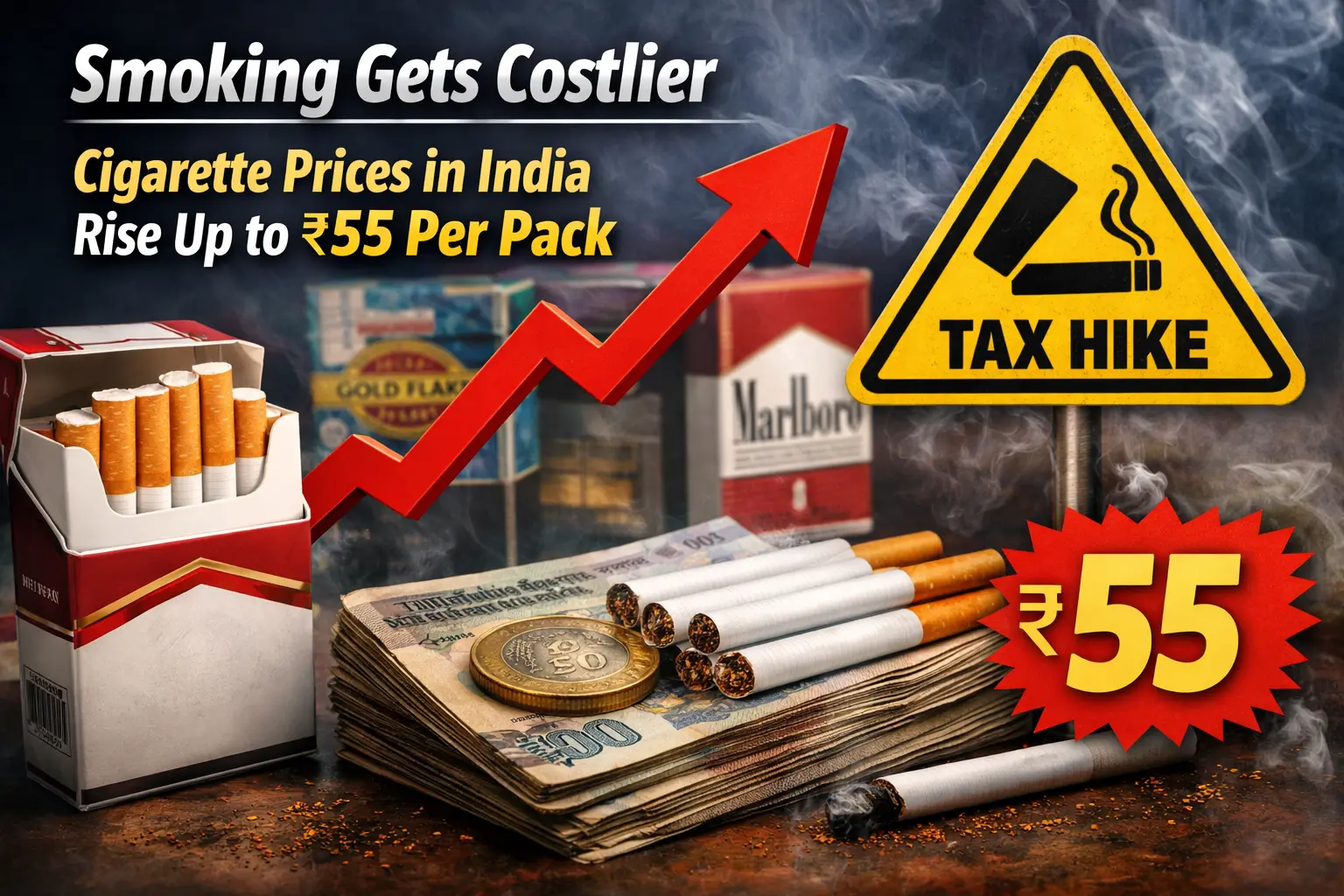
Cigarette prices in India have risen sharply starting February 1, 2026, following major tax changes announced in Budget 2026. The increase has already hit retail counters across cities, with smokers paying significantly more per pack.
The government replaced the old GST compensation cess with a new excise duty and Health & National Security Cess, while continuing to levy 40% GST. This move has led to price hikes ranging from ₹22 to ₹55, depending on the brand and cigarette length.
Table of Contents
What Changed in Budget 2026
Under the new structure, cigarettes are taxed through a length-based excise duty system. Shorter cigarettes attract a lower per-stick duty, while longer and premium variants face higher charges.

This excise duty is applied over and above the existing 40% GST, making cigarettes one of the most heavily taxed consumer products in India. The policy officially came into effect on February 1, 2026.
Why the Government Raised Cigarette Prices in India
The primary reason behind the hike is public health. Tobacco-related illnesses place a heavy burden on India’s healthcare system, and higher prices are seen as a strong deterrent to smoking.
Another key reason is revenue protection. With the GST compensation cess nearing its end, the government needed a stable alternative to maintain fiscal inflows from tobacco products.
Price Hike: How Much More Are You Paying?
Distributors have confirmed that new stock carrying revised prices has started reaching markets. While official MRPs are still being updated, the price jump is already visible at retail shops.
Here is a snapshot of estimated cigarette price hikes across popular brands:
| Brand | Pack Size | Old Price (₹) | New Price (₹) | Approx Hike (₹) |
|---|---|---|---|---|
| Wills Navy Cut | 10 sticks | 95 | 120 | 25 |
| Gold Flake Lights | 10 sticks | 170 | 220–225 | 50–55 |
| Wills Classic Milds | 10 sticks | 170 | 220–225 | 50–55 |
| Classic Connect | 20 sticks | 300 | 350 | 50 |
| Short Filter | Per stick | 18 | 21–22 | 3–4 |
These prices may vary slightly by city as old stock clears and new consignments arrive.
Duty Structure Explained Simply
The new excise duty is calculated based on cigarette length and type. Short non-filter cigarettes are taxed at around ₹2.05 per stick, while longer cigarettes can attract up to ₹5.40 per stick.
Non-standard and premium variants face duties as high as ₹8.50 per stick. Similar tax logic now applies to gutkha and chewing tobacco, with rates exceeding 80%.
Key Industry Players: The ‘Cast’ Behind Cigarettes
India’s cigarette market is dominated by a few major players. ITC remains the biggest name, with brands like Gold Flake, Classic, and Navy Cut under its portfolio.
Godfrey Phillips India, which sells Marlboro and other premium cigarettes, is another major stakeholder. These companies are expected to pass most of the tax burden directly to consumers.
Impact on Smokers’ Monthly Budgets
For regular smokers, the hike translates into a noticeable annual expense. Even a small per-stick increase adds up over time, especially for daily users.
Here’s an estimate of extra spending based on daily consumption:
| Daily Consumption | Monthly Extra Cost (₹) | Annual Extra Cost (₹) |
|---|---|---|
| 10 sticks | 900–1,500 | 10,800–18,000 |
| 20 sticks | 2,400–4,800 | 28,800–57,600 |
| Premium pack-a-day | 3,000–6,600 | 36,000–79,200 |
The final cost depends on brand choice and local pricing.
Will Higher Prices Reduce Smoking?
Global and Indian studies suggest that higher cigarette prices do reduce smoking rates. Young smokers and low-income users are usually the most affected and tend to cut back first.
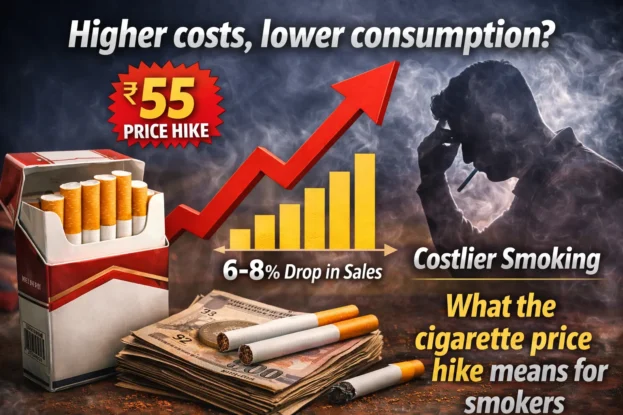
Industry analysts expect cigarette volumes in India to fall by 6–8% following the 2026 hike. However, concerns remain about illegal sales and counterfeit cigarettes filling the gap.
Retailers Raise Counterfeit Concerns
Shopkeepers across major cities have warned about a possible rise in fake and smuggled cigarettes. Large price gaps often push some consumers toward illegal alternatives.
The government has said that stricter enforcement and tracking measures will accompany the new tax regime to limit such risks.
Expected Impact on Government Revenue
Despite a projected dip in sales volume, experts believe the government will still gain financially. Tobacco taxes already generate close to ₹50,000 crore annually for the exchequer.
Even with reduced consumption, the higher tax rates are expected to deliver a net revenue boost in the coming financial year.
Also Read: Grammy 2026 Winners: Bad Bunny Makes History, Kendrick Lamar Dominates
Final Word
The cigarette price hike from February 1, 2026, marks one of the steepest increases in recent years. It reflects the government’s clear intent to prioritise public health while securing steady tax revenue.
For smokers, the message is equally clear. Smoking has become significantly more expensive, and the cost is likely to rise further in the years ahead.